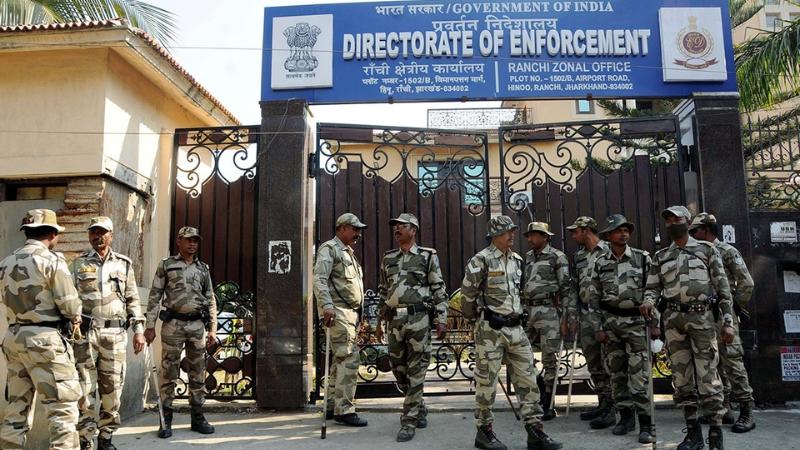
The Supreme Court of India has come down hard on the Enforcement Directorate (ED), accusing the central agency of “crossing all limits” during its recent raids on Tamil Nadu’s TASMAC – the state-run liquor distribution corporation. These raids, conducted in March and again in May, have drawn sharp criticism from the judiciary for targeting a government-owned monopoly and allegedly overstepping legal protocols.
A Supreme Court bench led by Chief Justice BR Gavai issued a notice to the ED on Thursday and ordered the agency to halt further proceedings related to the case until the court returns from vacation. The Chief Justice remarked sternly, “You may register cases against individuals... but corporations? Your ED is passing all limits!” The comment highlights growing judicial unease over the perceived misuse of investigative authority by federal agencies, especially in politically sensitive states.
The top court’s decision to grant a temporary stay aligns with a previous order from the Madras High Court issued in March, which had similarly criticized the ED's aggressive tactics. The intervention was prompted by senior advocate Kapil Sibal, who argued that the agency had not only carried out raids but also seized and cloned mobile phones during the operations on March 14 and May 16. These actions, he suggested, raised serious privacy and legal concerns.
The ED has defended its actions by claiming that raids on TASMAC properties uncovered massive financial irregularities, including unaccounted cash worth Rs 1,000 crore. The agency stated that it found “incriminating” evidence regarding corporate appointments, bar and transport licensing tenders, and indent orders allegedly structured to benefit certain distilleries at the cost of public interest.
Moreover, the ED’s report claimed the discovery of fraudulent price hikes, with an extra Rs 10 to Rs 30 reportedly added per bottle sold through TASMAC outlets. According to the agency, this surcharge was imposed with the complicity of TASMAC officials and contributed to large-scale financial misconduct.
These allegations led to a second round of searches at 10 locations across Tamil Nadu last week under the Prevention of Money Laundering Act (PMLA). The raids intensified political tensions in the state, already fraught with Centre-state disagreements over jurisdiction and the perceived politicization of central agencies.
The Supreme Court’s intervention is seen as a major setback for the ED and a potential turning point in the ongoing debate around the agency’s expanding powers. By staying further action, the court has effectively paused the momentum of the ED’s investigation into TASMAC, while also signaling that constitutional checks must be respected even in corruption probes.
This case has drawn national attention not only due to the large sums of money involved but also because of the constitutional implications. Critics argue that using PMLA provisions against a state-run monopoly raises questions about federalism, legal overreach, and due process. Furthermore, political observers have noted the timing of the raids and their potential impact on upcoming elections in Tamil Nadu. The state's ruling party has accused the ED of acting under political influence to damage its credibility.
As the case continues to unfold, the Supreme Court’s firm stance may have far-reaching consequences for how investigative agencies operate across India. For now, the ED has been asked to explain its actions and await further instructions from the judiciary after the summer recess. The next hearing will be crucial in determining whether the ED can proceed with its investigation or if the court will lay down stricter boundaries on how and when central agencies can intervene in state matters, particularly involving public sector undertakings like TASMAC.