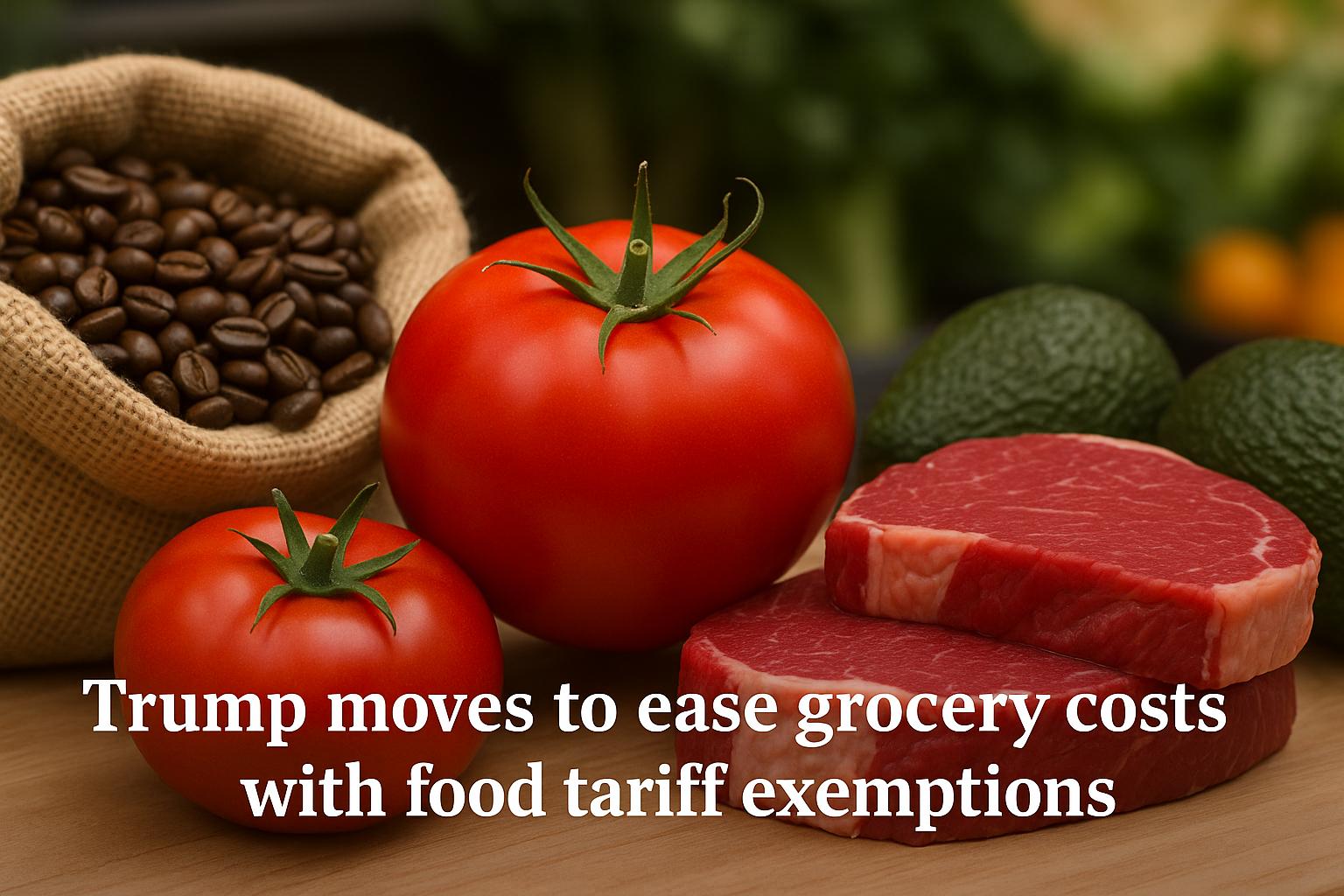
US President Donald Trump has issued an executive order removing import tariffs on a broad selection of food products in an effort to curb rising grocery costs and ease pressure on consumers. The decision marks one of the most significant adjustments to his trade policy since tariffs were introduced as a central feature of his economic agenda. The order comes at a moment when Americans have voiced growing frustration over inflation, particularly food prices, following last week’s election results that signaled dissatisfaction among voters.
The administration said the exempted goods include coffee, bananas, beef and more than 100 additional items ranging from teas, spices and nuts to tropical fruits that the US does not produce in meaningful quantities. Officials stated that maintaining tariffs on products with no domestic supply would offer no practical protection to American industries, while continuing to push up grocery bills for households already concerned about affordability.
Trump has repeatedly defended his tariff strategy as necessary to narrow the trade deficit and counter countries he accuses of exploiting the US through unfair practices. He previously dismissed concerns that tariffs contributed to higher consumer prices. However, rising beef costs and elevated grocery inflation have increasingly become political liabilities. In recent weeks, Trump called for an investigation into pricing practices within the meat-packing sector, alleging collusion and manipulation that he argued harmed US consumers.
To bolster public support for his trade approach, Trump has also proposed $2,000 tariff rebate payments to Americans, a plan currently under review by the US Supreme Court, which is determining whether he possessed the authority to impose the sweeping levies. Despite this broader legal battle, the newly announced exemptions represent a notable shift, suggesting the administration is willing to scale back duties when they directly affect food staples and everyday costs.
Speaking to reporters, Trump said the rollback targets products that the US does not manufacture, making the tariff removal a logical step to help lower prices without undermining domestic producers. He expressed confidence that additional reversals would not be needed, characterizing the current action as a limited adjustment intended to provide immediate relief on items such as coffee, where prices have climbed steadily.
Economists have long cautioned that import taxes are typically passed along to consumers, and recent inflation data from the Department of Labor reflected broad price increases. Although inflation moderated somewhat in September, groceries still rose 2.7% compared with the previous year, reinforcing concerns that tariffs were contributing to higher food costs.
The White House confirmed that the tariff exemptions took effect retroactively beginning at midnight on 13 November. In a related initiative, the administration announced reductions in import taxes on coffee and bananas as part of trade agreements concluded with four Latin American nations. The president, alongside Treasury Secretary Scott Bessent, pledged that coffee prices in the US would decline by 20% this year as a result of these measures.
The detailed exemption list covers a wide range of everyday and specialty goods, including multiple varieties of beef, tropical fruits such as mangoes, coconuts and pineapples, and numerous spices such as cinnamon, saffron, and turmeric. It also includes nuts, grains and specialty items like cashews, tapioca, miso and palm hearts. The administration emphasized that excluding these items from tariffs will support efforts to stabilize grocery shelves and relieve pressure on American households facing persistent food inflation.