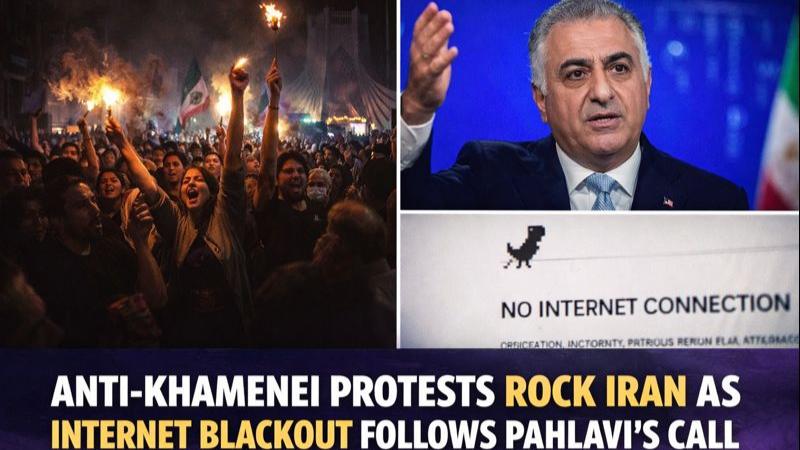
Iran witnessed a dramatic escalation in nationwide unrest as anti-Khamenei protests intensified following a rallying call by exiled crown prince Reza Pahlavi. Demonstrations entered their 12th consecutive day, with residents across Tehran and other cities chanting slogans from homes and marching through streets despite heavy restrictions imposed by authorities.
Late Thursday, internet connectivity and telephone services were abruptly cut across the country, triggering what monitoring groups described as a near-total communications blackout. The shutdown came just hours after thousands responded to Pahlavi’s appeal for mass protests, marking a significant turning point in Iran’s ongoing civil unrest fueled by rising prices, unemployment, and worsening living conditions.
Internet watchdog NetBlocks confirmed that live metrics showed connectivity collapsing across multiple service providers, effectively isolating large sections of the population. Flights were suspended at Tabriz International Airport, and aviation alerts were issued in several regions, signaling heightened security concerns.
Pahlavi condemned the Iranian leadership for cutting communication lines and accused the regime of attempting to silence public voices. He also thanked US President Donald Trump for reiterating his stance against Tehran’s leadership and urged global leaders to take stronger action in support of Iranian citizens. According to human rights groups, at least 39 people have been killed so far, while over 2,260 have been detained during the ongoing protests. Markets in several cities closed in solidarity with demonstrators, reflecting the deepening impact of the unrest on everyday life.
Pahlavi urged Iranians to unite and take to the streets, warning authorities that global attention remained fixed on their actions. Protesters responded with chants condemning the Islamic Republic and praising the former monarchy, signaling a shift in public sentiment and political expression.
Iranian authorities, meanwhile, appeared to prepare for further unrest, with reports suggesting the deployment of surveillance drones to identify participants. State-linked media acknowledged injuries among security forces but downplayed the scale of the demonstrations.
US President Donald Trump also issued a stern warning, stating that severe consequences would follow if Iranian authorities intensified violence against protesters. However, he declined to meet Reza Pahlavi, maintaining diplomatic distance while voicing support for human rights. As protests continue without a centralized leadership, analysts believe the coming days will be crucial in determining whether Pahlavi’s intervention reshapes the movement or if Iran’s unrest will evolve in a new and unpredictable direction.