Bhai Dooj vs Raksha Bandhan Differences: Rituals and Meaning
Raksha Bandhan and Bhai Dooj celebrate the bond between brothers and sisters, but they are not the same festival. Bhai Dooj vs Raksha Bandhan differences can be seen in their rites, dates, myths, meaning and customs. One centers on tying a rakhi, while the other is marked by a sacred tilak and prayers for a brother’s well-being.
Rites
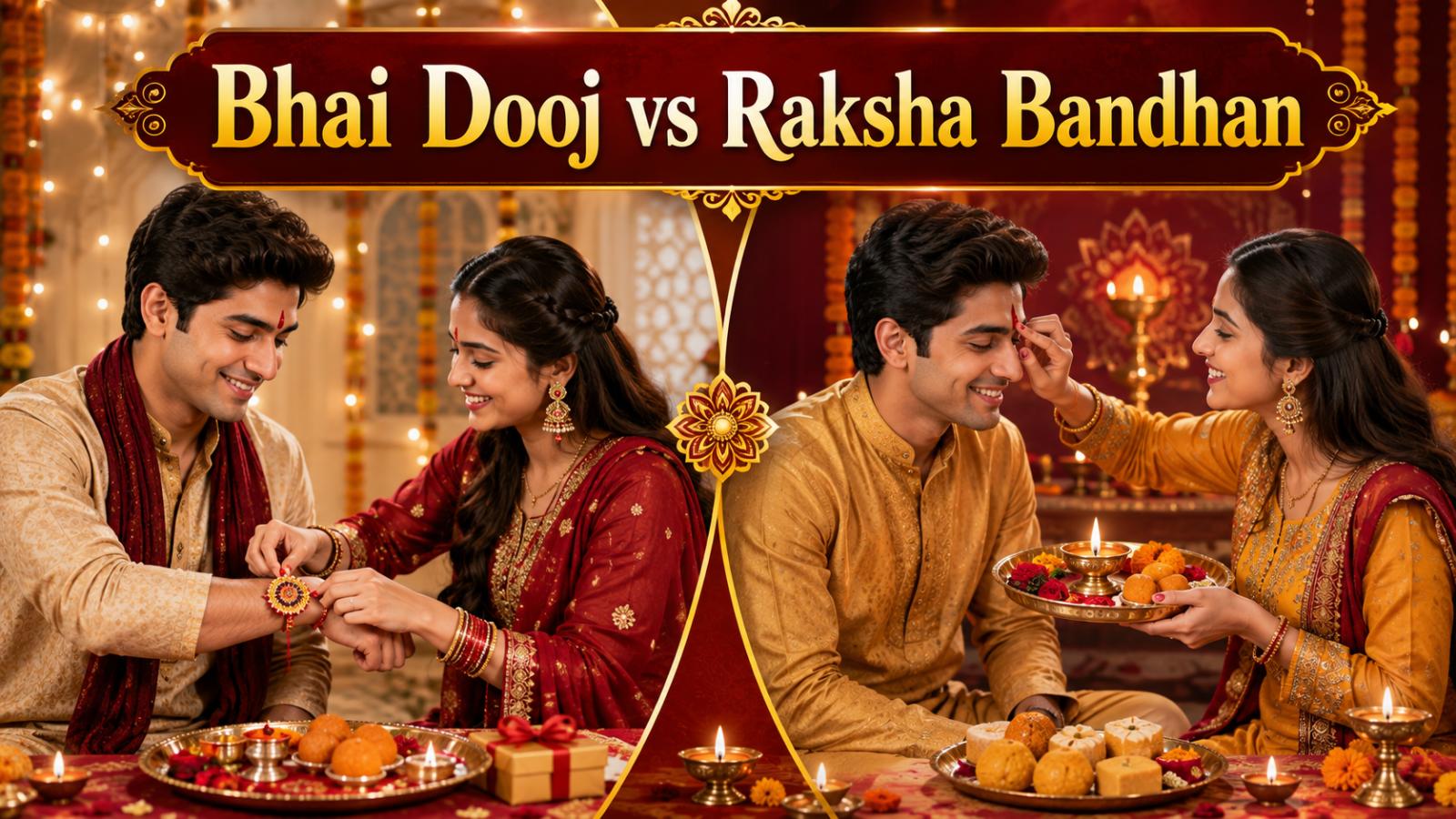
Raksha Bandhan is traditionally observed with a sister tying a rakhi around her brother’s wrist after applying tilak and performing aarti. She offers sweets and prays for his happiness and success, while the brother traditionally gives her a gift and promises his support.
Bhai Dooj follows a different ceremony. A sister applies tilak to her brother’s forehead, performs aarti and prays for his health, prosperity and long life. Families may also share a festive meal. Unlike Raksha Bandhan, tying a rakhi is not the main ritual of Bhai Dooj.
Dates
Raksha Bandhan falls on Shravan Shukla Purnima, the full moon day of the Hindu month of Shravan. It generally occurs in July or August.
Bhai Dooj is celebrated on Kartik Shukla Dwitiya, shortly after Diwali, usually in October or November. Since Hindu festivals follow lunar tithis, their Gregorian dates change every year. Families following traditional practices often check the local panchang for the appropriate ceremony time.
Myths
Several traditional stories are linked with Raksha Bandhan. One popular account describes Draupadi tying a piece of cloth around Krishna’s injured finger, after which Krishna pledged to protect her. Another tradition connects the festival with Goddess Lakshmi and King Bali.
Bhai Dooj is strongly associated with Yama and his sister Yamuna. Tradition says Yamuna welcomed her brother with tilak, prayers and a meal. Pleased by her affection, Yama blessed the occasion, helping establish its association with longevity. Another story describes Subhadra welcoming Krishna with tilak after his victory over Narakasura.
Meaning
The symbolic difference between the festivals is straightforward. Raksha Bandhan traditionally represents protection, responsibility and support between siblings. The rakhi becomes a visible symbol of that relationship.
Bhai Dooj places greater emphasis on a sister’s prayers for her brother’s health, happiness and long life. The tilak on the forehead is the central symbol of the occasion.
Modern families increasingly interpret both celebrations as expressions of mutual care rather than one-sided obligations. Brothers and sisters may exchange gifts, promises and blessings regardless of traditional gender roles.
Customs
Regional customs give both festivals several variations. Bhai Dooj is also known as Bhau Beej, Bhai Phonta and Yama Dwitiya in different parts of India, while Raksha Bandhan is commonly called Rakhi.
The clearest Bhai Dooj vs Raksha Bandhan differences are therefore their lunar dates, central rituals and traditional symbolism. Raksha Bandhan is identified by the rakhi tied on the wrist, while Bhai Dooj is marked by tilak on the forehead. Despite those differences, both traditions celebrate affection, gratitude and the lasting relationship between siblings.