Rakhi Hand Guide: Which Wrist Should You Tie Rakhi On?
Raksha Bandhan celebrates the bond of love, care and support between siblings, but one practical question often comes up before the ceremony: which hand should the Rakhi be tied on? This Rakhi hand guide explains the traditional right wrist custom, why the right hand has ritual significance, how Lumba Rakhi differs and when using the left wrist is perfectly reasonable.
Right Wrist: Where Is Rakhi Traditionally Tied?
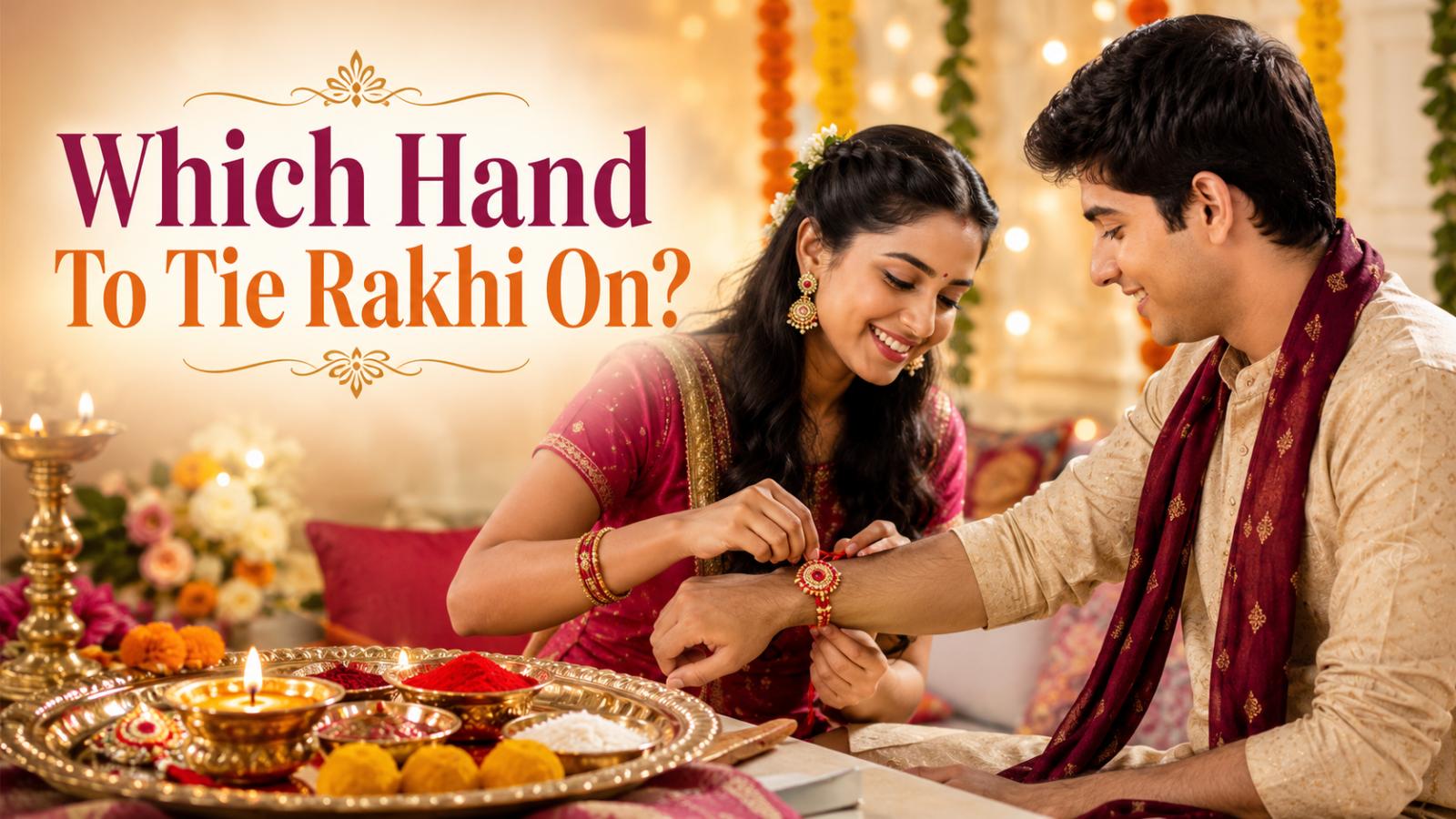
In most Hindu families, a sister traditionally ties Rakhi on her brother's right wrist. The custom is connected to the wider use of the right side during auspicious religious activities. Giving offerings, receiving prasad, applying tilak and taking part in several ceremonies are commonly associated with the right hand.
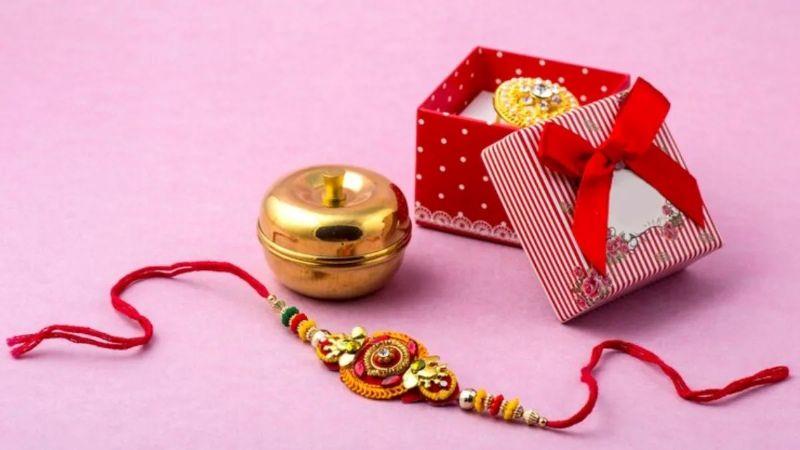
Rakhi is also regarded as a Raksha Sutra, or protective thread. Wearing it on the right wrist therefore carries symbolic meaning connected with blessings, responsibility and protection. However, regional and family customs are not identical, so the practice should be understood as a widely followed tradition rather than an absolute rule for every household.
Right Hand: Why Does Tradition Prefer It?
The right hand has traditionally been associated with giving, action and auspicious ritual duties in many Hindu customs. This helps explain why a brother's right wrist became the usual place for Rakhi and why sisters commonly use their right hand while performing the ceremony.
Some online explanations connect the Rakhi wrist custom with Ayurveda, pressure points or the balance of Vata, Pitta and Kapha. Such claims should not be presented as established medical facts without reliable evidence. The clearer explanation comes from longstanding religious and cultural practices surrounding sacred threads and auspicious ceremonies.
Lumba Rakhi: Does the Same Wrist Rule Apply?
Lumba Rakhi follows a somewhat different tradition. It is especially associated with Marwari and Rajasthani communities and is traditionally offered to a sister-in-law as part of the Raksha Bandhan celebration.
Instead of following the ordinary brother's right-wrist rule in every family, a Lumba Rakhi may be attached to a woman's bangle or bracelet. The method differs across communities, making household tradition particularly important. Families that already follow a Lumba custom can continue their established practice rather than imposing one universal rule.
Rakhi Ritual: How Is the Ceremony Performed?
A traditional Rakhi ritual usually begins with the sister preparing a thali containing Rakhi, kumkum, rice, a diya and sweets. She applies tilak to her brother's forehead, may place rice grains over it and performs aarti before tying the Rakhi around his right wrist.
She then offers sweets and wishes for his health, happiness and prosperity. Traditionally, the brother gives his sister a gift and promises to support and protect her. Modern families increasingly view the festival as a mutual commitment in which both siblings promise care, respect and support throughout life.
Left Wrist: When Is It Acceptable?
The right wrist remains the traditional choice even when a brother is left-handed because the custom is based on ritual symbolism rather than the person's dominant hand. However, tradition should never create unnecessary discomfort.
If the right wrist is injured, bandaged, affected by a skin problem or occupied by a medical device, Rakhi can be tied on the left wrist. Families may also adapt the ritual according to disability, personal circumstances or established household customs. For siblings living in different countries, a brother tying a mailed Rakhi himself may still place it on his right wrist.
Ultimately, Raksha Bandhan is not defined by a strict wrist rule. The right wrist carries traditional significance, but the Rakhi itself represents affection, trust, remembrance and a promise to stand by one another. Following tradition can enrich the ceremony, but the relationship behind the thread remains more important than which wrist carries it.