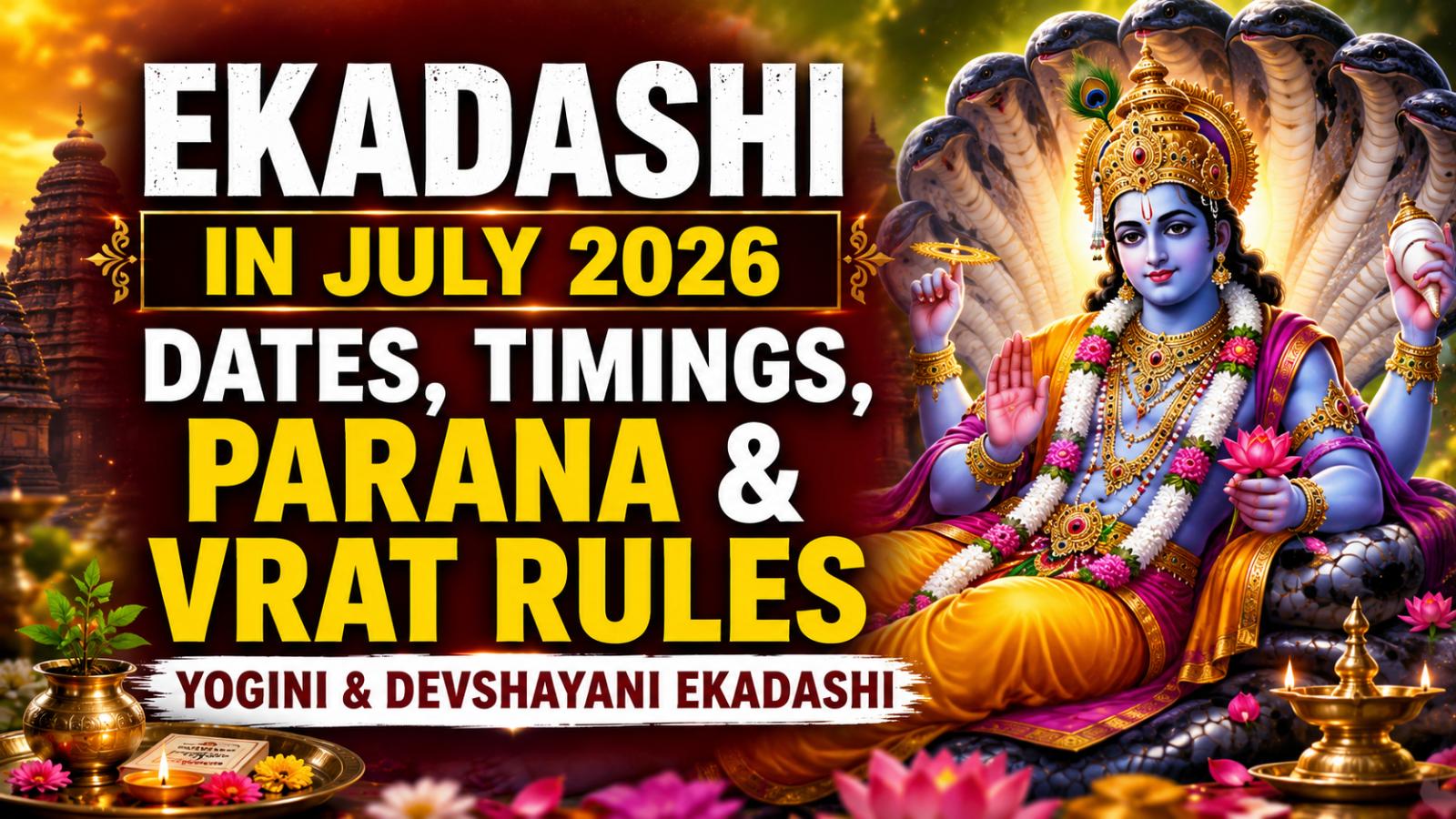
Dates: Yogini Ekadashi was observed on Friday, July 10, 2026, while Devshayani Ekadashi falls on Saturday, July 25, 2026.
Ekadashi in July 2026 Dates and Timings
July 2026 includes two major Ekadashi observances dedicated to Lord Vishnu. Yogini Ekadashi falls during the Krishna Paksha of the Ashadha month, while Devshayani Ekadashi is observed during Ashadha Shukla Paksha.
Yogini Ekadashi 2026 timings:
• Vrat date: Friday, July 10, 2026
• Ekadashi Tithi begins: 8:16 AM on July 10
• Ekadashi Tithi ends: 5:22 AM on July 11
• Parana date: Saturday, July 11
• Parana time: 1:50 PM to 4:36 PM
• Hari Vasara ends: 10:32 AM on July 11
Devshayani Ekadashi 2026 timings:
• Vrat date: Saturday, July 25, 2026
• Ekadashi Tithi begins: 9:12 AM on July 24
• Ekadashi Tithi ends: 11:34 AM on July 25
• Parana date: Sunday, July 26
• Parana time: 5:39 AM to 8:22 AM
• Dwadashi Tithi ends: 1:57 PM on July 26
Devotees should check a local Panchang because sunrise, Tithi and Parana timings can change according to geographical location.
Ekadashi History and Traditional Stories
Ekadashi is the eleventh lunar day of each fortnight in the Hindu calendar. Two Ekadashis generally occur every lunar month—one during the waxing phase and another during the waning phase of the Moon. The observance has long been associated with fasting, restraint, prayer and worship of Lord Vishnu.
According to the traditional Yogini Ekadashi Vrat Katha, Hemamali was a servant of Kubera who collected flowers for worship. One day, he neglected his responsibility and was cursed to live on Earth while suffering from illness and separation from his wife. Hemamali later met Sage Markandeya, who advised him to observe Yogini Ekadashi. The story says that sincere observance of the fast freed him from the curse and reunited him with his wife.
The traditional Devshayani Ekadashi story is connected with King Mandhata. His kingdom suffered from a severe drought and famine, prompting him to seek guidance from Sage Angira. The sage advised the king to observe Devshayani Ekadashi. According to the Vrat Katha, rainfall returned after the king and his people completed the observance with devotion.
Devshayani Ekadashi also has a major cultural connection with Maharashtra. Thousands of Varkari devotees traditionally travel to Pandharpur while singing devotional compositions associated with Sant Dnyaneshwar and Sant Tukaram. The pilgrimage centres on the worship of Lord Vitthal, a form of Lord Vishnu.
Yogini and Devshayani Ekadashi Significance
Yogini Ekadashi is traditionally associated with purification, forgiveness and freedom from the consequences of past mistakes. Devotees use the day to control their thoughts, avoid anger and harmful behaviour, offer charity and strengthen their spiritual discipline.
Devshayani Ekadashi is also known as Ashadhi Ekadashi, Padma Ekadashi and Hari Shayani Ekadashi. Hindu tradition holds that Lord Vishnu enters Yoga Nidra on this day and awakens four months later on Prabodhini or Dev Uthani Ekadashi.
The day marks the beginning of Chaturmas, a sacred four-month period dedicated to prayer, fasting, charity and self-restraint. Weddings, housewarming ceremonies and several other auspicious celebrations are traditionally avoided during this period, while devotees increase religious and charitable activities.
Ekadashi Vrat Rules, Puja and Parana
Devotees may follow a complete fast or choose a lighter form depending on health, age and family tradition.
Common fasting guidelines include:
• Avoid rice, wheat, lentils, beans and other grains
• Avoid onion, garlic, meat, alcohol and tobacco
• Consume fruits, milk, nuts, potatoes, sabudana or permitted vrat foods
• Use sendha namak instead of regular table salt
• Maintain calm behaviour and avoid arguments or negative speech
• Offer food, clothes or other essentials to people in need
The puja usually begins after an early bath. Devotees clean the worship area, light a lamp, offer flowers, fruits and Tulsi leaves to Lord Vishnu and recite prayers such as “Om Namo Bhagavate Vasudevaya.” Vishnu Sahasranama, Bhagavad Gita passages and Ekadashi Vrat Katha may also be read.
Parana means formally completing and breaking the fast. It should be performed on Dwadashi after sunrise and after Hari Vasara has ended. Devotees should ideally break the fast during the prescribed local Parana window rather than delaying it beyond Dwadashi.
People who are pregnant, elderly, unwell or taking regular medication should avoid severe fasting and select a safer form of observance based on medical advice.