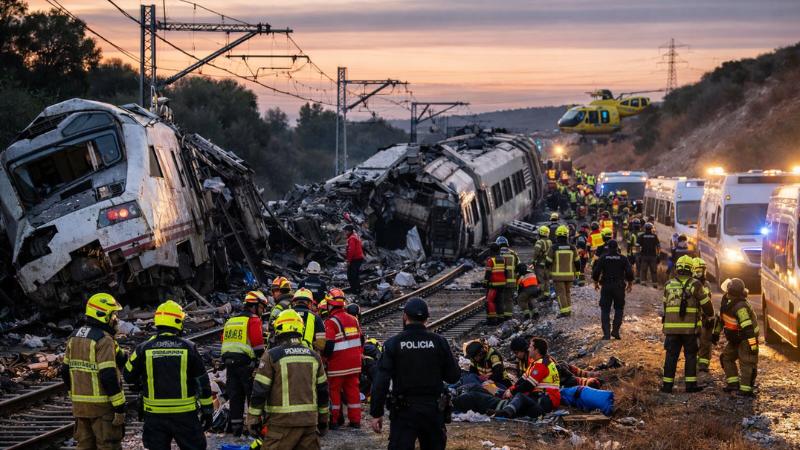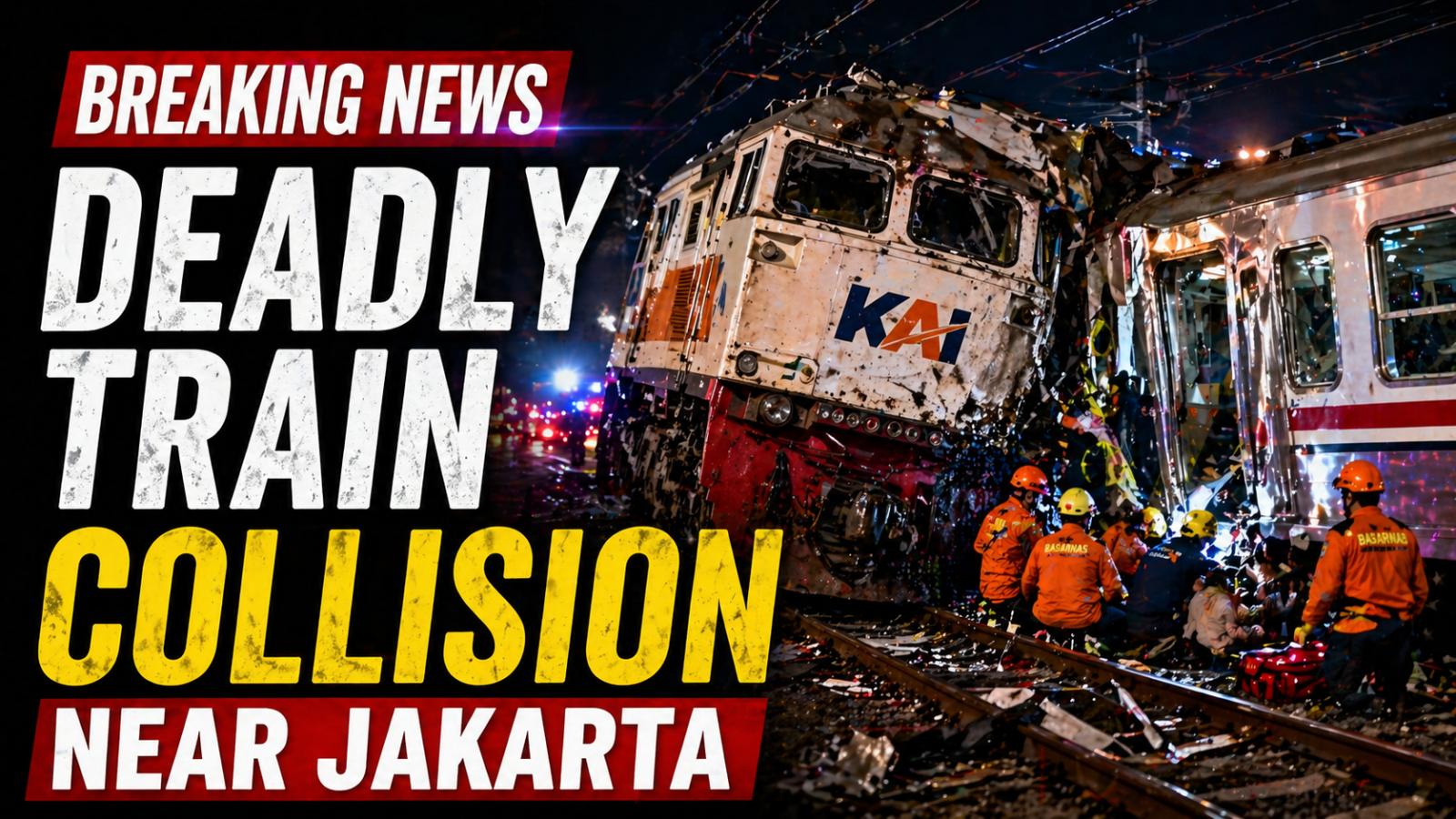
At least 22 people were killed and more than 30 others injured after a construction crane collapsed onto a passenger train in northeast Thailand on Wednesday morning, derailing multiple coaches and triggering a fire, local authorities said. The incident occurred during peak travel hours, turning a routine commute into one of the deadliest rail disasters the country has seen in recent years.
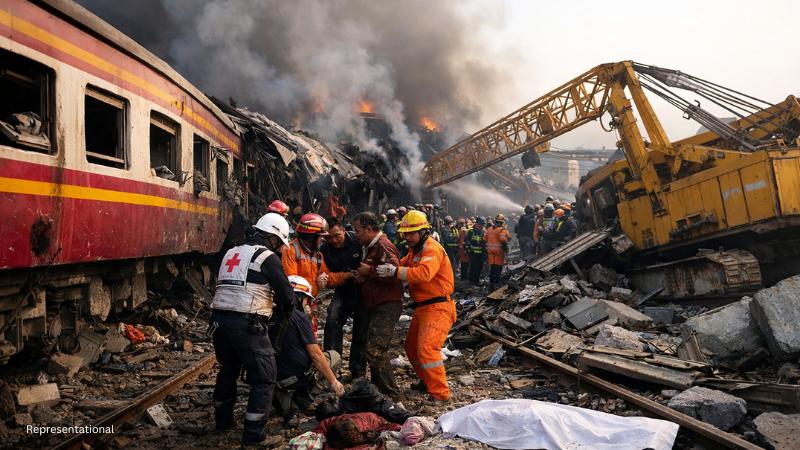
Police officials confirmed that the accident took place at around 9:00 am local time in Nakhon Ratchasima province, approximately 250 kilometres northeast of Bangkok. According to preliminary findings, the crane was part of ongoing construction work on a high-speed rail project and fell onto the tracks just as the train was passing beneath it. The impact caused several carriages to leave the tracks and overturn, while sparks from the collision ignited a blaze that spread through parts of the wreckage.
Emergency footage aired by local broadcasters showed a brightly painted train lying on its side amid twisted metal, with thick plumes of smoke rising into the air. Rescue teams, firefighters, and medical personnel rushed to the scene, working against time to pull survivors from damaged coaches. Injured passengers were treated at the site before being transported to nearby hospitals, while authorities cordoned off the area to allow emergency operations to continue.
Officials said the train had been travelling from Bangkok to Ubon Ratchathani province and was carrying 195 passengers at the time of the crash. Identification of the victims was underway, with officials coordinating efforts to notify families and provide assistance. Authorities said the number of casualties could change as rescue and recovery operations continued and a full assessment of the wreckage was completed.
The crane involved in the accident was being used in the construction of a high-speed rail line valued at approximately $5.4 billion. The project forms part of a broader regional infrastructure push under China’s Belt and Road initiative and is intended to eventually link Bangkok with Kunming in southern China via Laos by 2028. The accident has raised fresh concerns about safety standards at major infrastructure sites and the risks posed to public transport systems operating near large-scale construction zones.
Investigators have launched an inquiry to determine the cause of the crane collapse, including whether equipment failure, human error, or lapses in safety oversight played a role. Rail services along the affected route were suspended as engineers assessed damage to the tracks and surrounding infrastructure.
Industrial and construction-related accidents are not uncommon in Thailand, where safety enforcement has long been criticised by labour groups and safety advocates. The latest tragedy has renewed calls for stricter regulation, improved oversight, and stronger coordination between construction projects and active transport networks to prevent similar incidents in the future.
As the nation mourns the victims, officials said support services would be made available to survivors and bereaved families, while the investigation continues into how a major infrastructure project became the site of such a devastating and fatal accident.