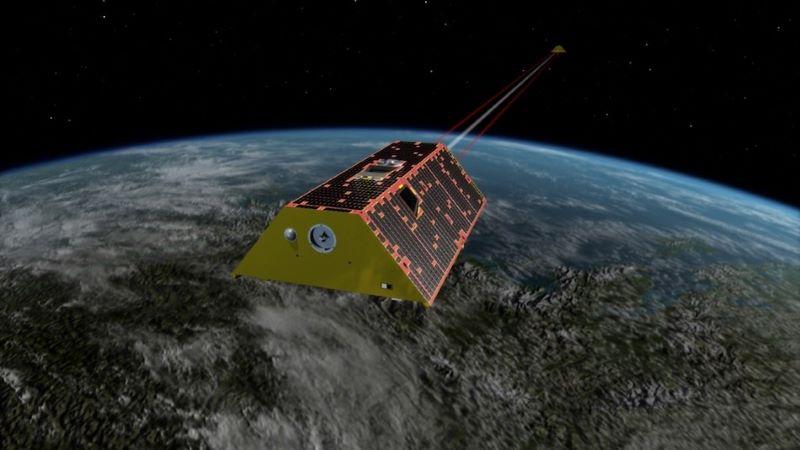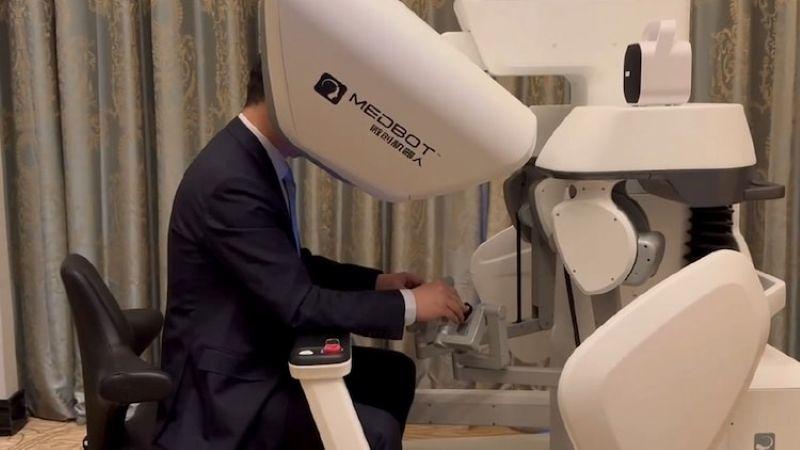
In a pioneering advancement for global healthcare, Chinese doctors have successfully conducted the world’s first satellite-powered robotic surgeries over a distance exceeding 5,000 kilometers. Utilizing the Apstar-6D satellite, the medical team led by Professor Rong Liu at the PLA General Hospital remotely operated from Lhasa on two patients in Beijing a 68-year-old with liver cancer and a 56-year-old with hepatic hemangioma. Both surgeries were completed with high precision, minimal blood loss, and remarkable recovery rates, with patients discharged within 24 hours.
This breakthrough overcomes the limitations of traditional 5G telesurgery, which is often constrained by range and infrastructure and is typically limited to 5,000 km. Satellite communication usually introduces latency over 600 milliseconds — above the 200 ms threshold considered safe for surgery. However, Prof. Liu’s team introduced three core innovations to address this challenge: adaptive latency compensation via neural network-based prediction models, dual-link redundancy with auto-switching to 5G backup in case of signal loss, and dynamic bandwidth allocation that reduced data load without compromising high-definition imaging.
The surgeries mark a historic moment in telesurgery, expanding the functional range of surgical robotics from 5,000 km to over 1,50,000 km. This leap not only enables care in remote and rural areas but also paves the way for emergency procedures in disaster zones, battlefields, and even space missions. The procedure maintained a robotic arm error margin of just 0.32 mm under high latency, showcasing the system’s exceptional accuracy. As clinical trials continue, China aims to integrate this model into mainstream healthcare, setting the stage for a future where medical boundaries are no longer defined by geography.