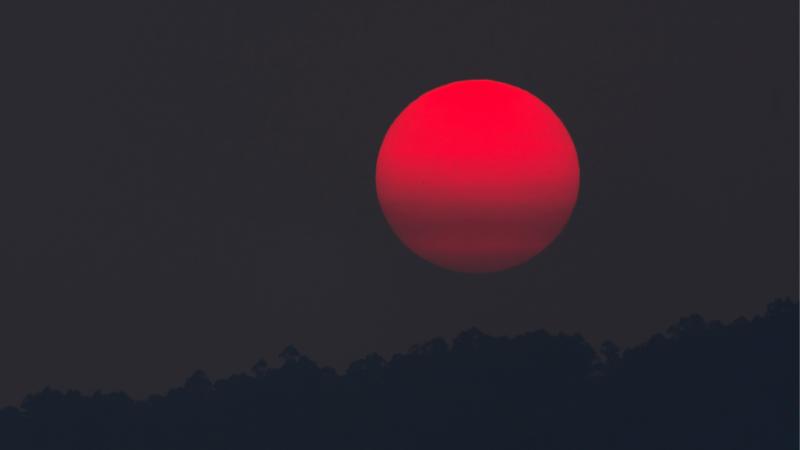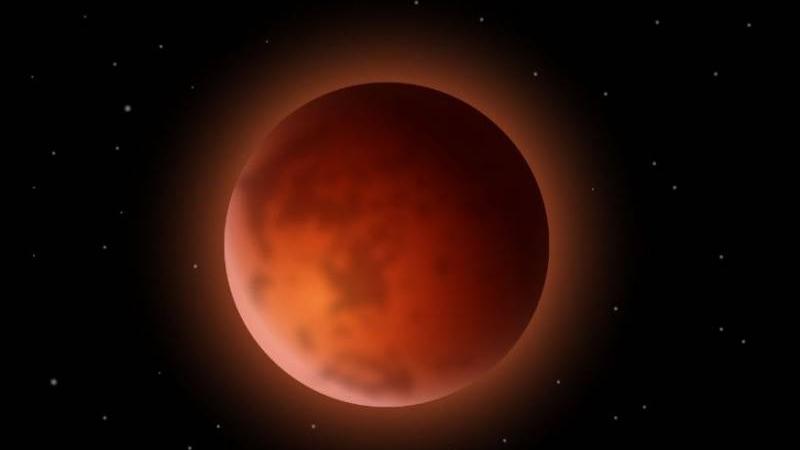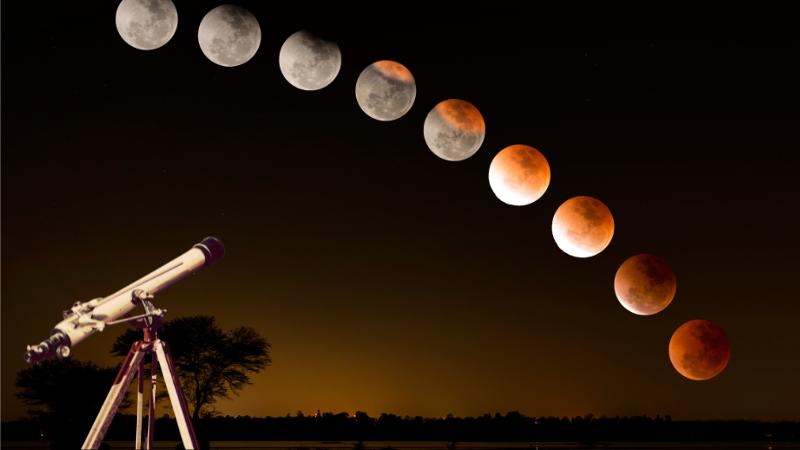
Skywatchers across the globe are eagerly preparing for a rare celestial spectacle on the night of September 7–8, 2025, when a total lunar eclipse will transform the Moon into a glowing copper-red orb, famously known as the Blood Moon. The event will last for approximately 82 minutes, marking the second and final total lunar eclipse of the year. Nearly 77 percent of the world’s population will be able to witness the eclipse, making it one of the most widely visible astronomical events of 2025.
The eclipse will reach its peak at 20:55 UTC. In India, this corresponds to 2:25 AM IST on September 8. The Moon will already be high in the night sky, ensuring excellent visibility across the country. Observers in India will have one of the best opportunities to enjoy the total eclipse in full, provided the skies remain clear. Across Asia and Western Australia, conditions will also be favorable, while Europe and Africa will witness at least part of the total phase depending on location. In the United Kingdom, the Moon will rise during the total phase but remain low on the horizon, prompting skywatchers to seek elevated points with clear eastern views.
For the United States, the timing is less favorable. The eclipse begins at 11:28 AM EDT (15:28 UTC) on September 7, long after the Moon has set below the horizon. This means Americans will not be able to view the eclipse directly overhead. However, enthusiasts in the US can still experience the event through live online coverage, with streams beginning at 1:45 PM EDT (17:45 UTC), shortly after moonrise in Europe. This ensures that viewers in the US can still follow the Blood Moon in real time, even if not from their skies.
India, along with large parts of Asia and Africa, will require no special equipment to witness the Blood Moon. Experts recommend finding areas away from city lights, such as rural or countryside locations, to reduce light pollution and maximize the experience. While the eclipse is fully visible to the naked eye, binoculars or small telescopes can enhance the details and reveal a more vivid red hue. Observers are advised to monitor local weather conditions, as cloud cover could obstruct the view, and prepare in advance since the days leading up to the eclipse often provide better skies for stargazing.
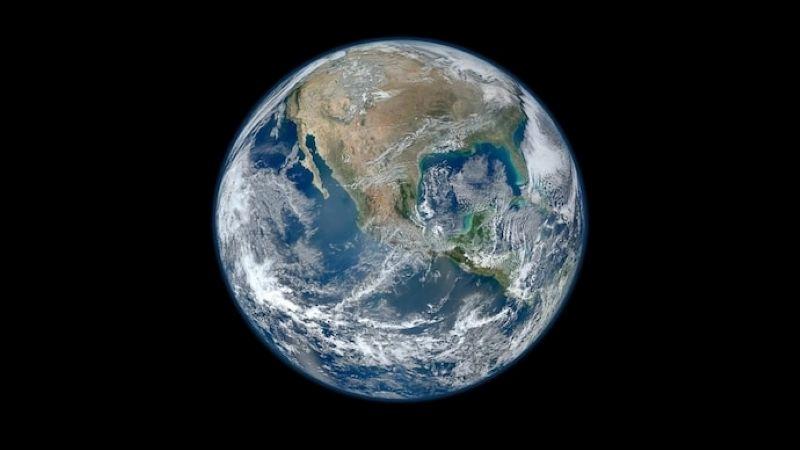
The dramatic transformation of the Moon’s color occurs because Earth passes directly between the Sun and the Moon during a total lunar eclipse. Instead of disappearing into darkness, the Moon glows red as sunlight filters through Earth’s atmosphere. The atmosphere scatters shorter blue wavelengths and bends longer red wavelengths into Earth’s shadow, which then strikes the lunar surface, giving it the striking copper-red glow of a Blood Moon.
The September 2025 event is particularly significant as it marks the year’s second total lunar eclipse. The first occurred between March 13–14, though it appeared lighter due to the Moon’s passage through a shallower section of Earth’s shadow. The September Blood Moon promises a deeper and more vibrant red, making it especially memorable for astronomers and skywatchers.
Total lunar eclipses are rare, occurring only every couple of years, which adds to the importance of this event. After September 2025, the next opportunity to witness a lunar eclipse will come on August 28, 2026, though it will only be a partial eclipse. This makes the September Blood Moon the last chance for stargazers to enjoy a total eclipse until later in the decade.
For India, the night of September 7–8 will bring a vivid cosmic display as the Blood Moon dominates the skies, visible well past midnight into the early hours. For the United States, while direct visibility will not be possible, the livestream ensures Americans can still share in the wonder of this rare cosmic event. No matter the location, the September 2025 lunar eclipse will be remembered as a night when much of the world looked up to witness the beauty of a red-tinted Moon.