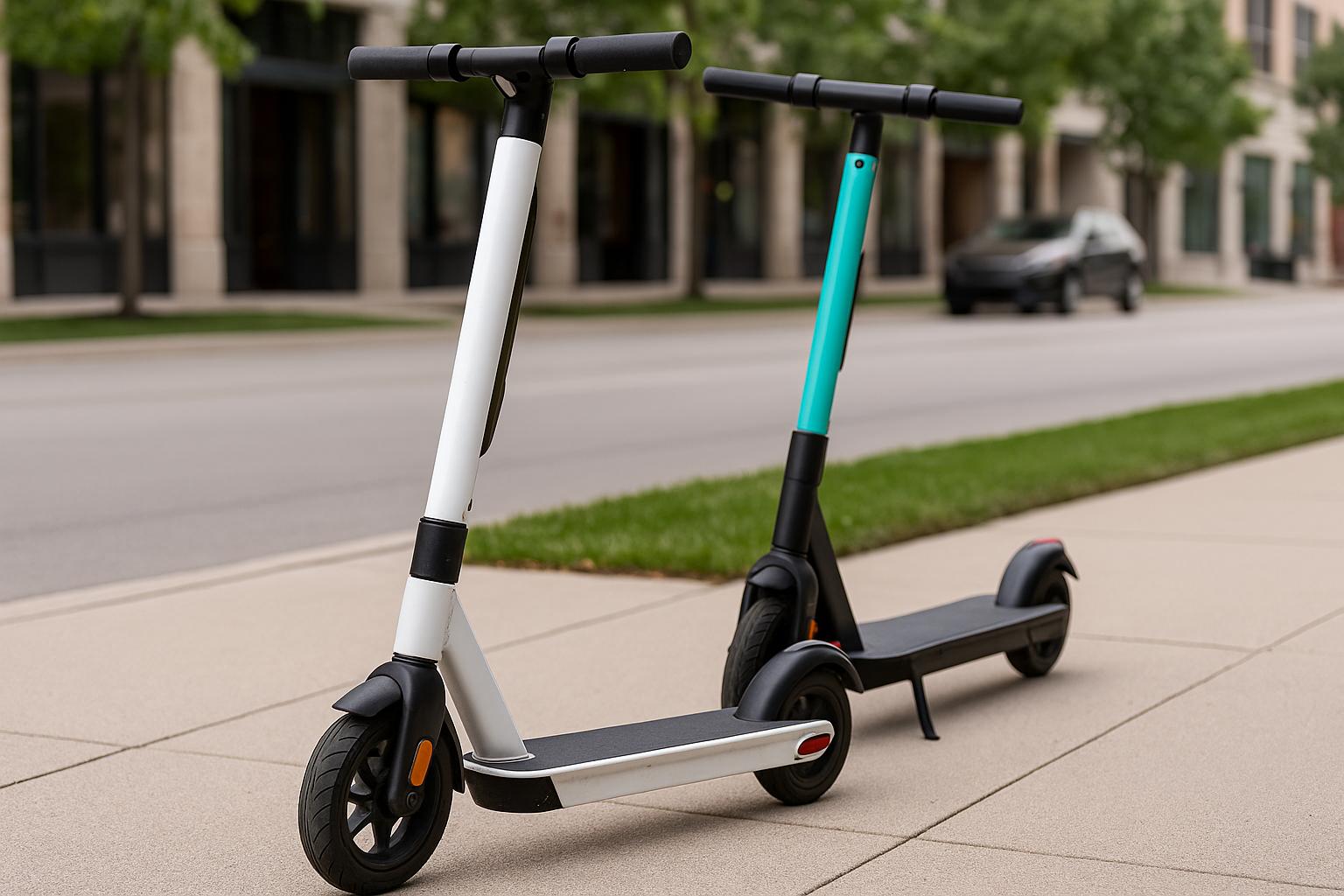
New Albany officials are weighing new regulations that could significantly change how residents and visitors use electric bikes and scooters within city limits. During recent meetings, members of the New Albany City Council discussed proposed legislation that would redefine how these increasingly popular modes of transportation are classified and where they can operate.
Under the proposed ordinance, electric bikes and scooters would be formally categorized as vehicles under city law. This change would give law enforcement officers the authority to issue traffic citations to riders who violate rules, similar to penalties imposed on motorists. Officials say the move is intended to improve safety and bring consistency to how different types of vehicles are regulated on public roads and pathways.
The legislation would also prohibit e-bikes and scooters from operating on sidewalks and shared-use paths across New Albany. Council members have expressed interest in expanding the ban to other busy or pedestrian-heavy areas, such as Taylor Farms and Market Center, to reduce the risk of collisions and unsafe behavior. “I am all for a complete zero in places like Taylor Farms and Market Center,” one council member said, referencing a desire to make certain areas entirely off-limits to electric vehicles.
City leaders are also discussing speed restrictions for these vehicles. The debate centers around setting a limit of either 10 or 15 miles per hour for riders on shared-use paths. Once that threshold is exceeded, e-bikes and scooters may be required to move onto roadways or face additional restrictions. Council members argue that controlling speed is essential to balancing safety with convenience, especially as more residents adopt these technologies for short commutes and recreation.
Another potential measure being explored is a registration requirement for electric bikes and scooters. Councilmember Michael Durik said several residents have voiced frustration about not being able to identify riders who cause disruptions or unsafe conditions. “I’ve had many people call me and would love to be able to identify who the kids were, but you can’t do that as they’re riding away,” Durik said. He emphasized that registration could serve as a way to hold riders accountable and deter reckless use, particularly among younger users.
However, the idea of registration has raised practical and legal concerns. New Albany Law Director Benjamin Albrecht noted that enforcing registration rules could prove challenging, especially when nonresidents are involved. “One of the difficulties we’ve talked about with requiring registration for these things is, OK, that’s great for people who live in New Albany. But what about people from other communities? Are we going to flag them down and enforce it against them?” Albrecht said. “There were a lot of difficulties with working through that issue.”
As the popularity of e-bikes and scooters grows nationwide, cities across the country are grappling with how to regulate their use. Supporters argue that these electric vehicles offer a clean, efficient form of transportation and help reduce traffic congestion. Critics, however, say that without clear rules, they pose safety risks for pedestrians and drivers alike, especially on narrow or mixed-use paths.
New Albany’s council members appear focused on striking a balance between embracing new forms of mobility and maintaining public safety. Officials say they want to encourage environmentally friendly transportation options without compromising the comfort and safety of pedestrians and cyclists who share the same spaces.
Residents have expressed mixed opinions about the proposed rules. Some support the idea of tighter controls, citing near-misses and speeding incidents involving young riders. Others worry the restrictions could discourage responsible users or create unnecessary barriers for those who rely on e-bikes and scooters for daily travel.
The New Albany City Council plans to continue its discussion during tonight’s meeting at 6:30 p.m., where members are expected to review public input and consider adjustments to the proposal. If approved, the new legislation could take effect later this year, reshaping how electric mobility fits into the city’s transportation landscape.
For now, the debate underscores a broader question facing cities nationwide: how to safely integrate emerging technologies into established urban infrastructure while preserving community safety and accessibility.