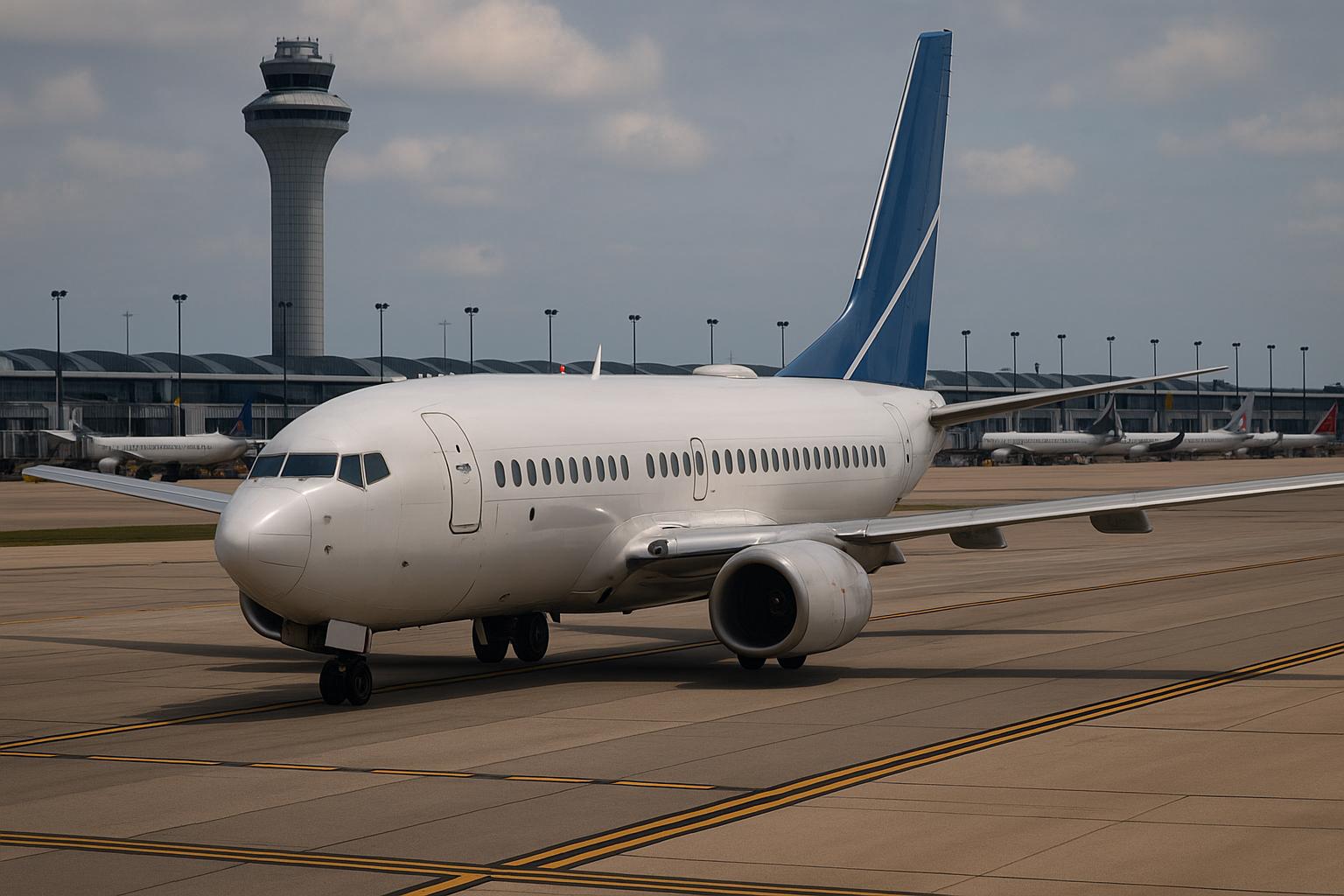
According to official information from the Federal Aviation Administration, the issue began in the late morning when a technical problem affected air traffic management systems at O’Hare. The situation initially prompted a temporary ground stop at 10:52 a.m., during which departing aircraft from other airports were instructed to remain on the ground until further notice. This precautionary step allowed safety teams to assess the issue and coordinate a response before allowing limited operations to resume.
By 11:50 a.m., the ground stop was lifted and replaced with a ground delay program. This procedure is used when an airport’s capacity is reduced due to technical or operational issues, requiring controllers to increase the spacing between flights and reduce the overall flow of air traffic. The measure ensures that operations continue safely while technicians work to resolve underlying problems. At the time, the average delay for arrivals and departures was reported to be about 38 minutes, though some flights experienced longer waits.
The technical malfunction forced air traffic controllers to combine positions and adjust departure intervals to maintain safe distances between aircraft. Such measures are standard protocol during disruptions that affect navigation, communication, or radar systems. While safety remained the top priority, the slowdown created a temporary backlog of flights waiting for clearance to take off or land. Passengers faced extended waiting times at gates and on taxiways as airlines coordinated with airport authorities to manage the situation.
Despite the inconvenience, all runways and terminals at O’Hare remained operational, and no flight cancellations were directly linked to the incident. Airlines worked to keep travelers informed about rescheduled departures and arrival adjustments. The delays also caused ripple effects at connecting airports across the country, as aircraft arriving from or departing to Chicago were subject to altered departure slots.
Technicians were immediately dispatched to diagnose and repair the malfunctioning equipment. The specific system affected was not detailed, but officials indicated that it was essential to airfield management and safe aircraft spacing. Systems like these are critical at O’Hare, which handles hundreds of flights per hour and ranks among the busiest airports in the world.
As the day progressed, the FAA continued to monitor flight operations while technicians worked to restore full functionality. By early afternoon, delays began to gradually decrease, and normal traffic flow slowly resumed. The agency confirmed that the ground delay program remained in effect for a limited period to manage residual congestion and ensure continued safety during the recovery process.
Travelers were advised to check flight status information before heading to the airport, as delays were expected to persist through parts of the afternoon. Airport personnel coordinated with airline representatives and air traffic officials to help manage the high passenger volume and minimize disruptions. Ground crews also assisted in reorganizing gate assignments to prevent additional congestion at terminals.
The incident highlighted how critical even a single equipment issue can be within the complex network of air traffic management systems. With O’Hare serving as a key national and international hub, any disruption can have widespread effects on flight schedules across the United States. While delays are frustrating for passengers, safety measures like ground delay programs are essential for preventing risks during technical outages.
By late afternoon, airport operations were returning closer to normal levels as technicians completed repairs and verified that all systems were functioning properly. Officials reaffirmed that safety would always take precedence over speed and emphasized that such disruptions, while rare, demonstrate the effectiveness of established contingency protocols.
Travelers affected by the slowdown were encouraged to contact their airlines for the latest flight information and rebooking assistance. The situation underscored the importance of patience and preparedness during large-scale travel interruptions, as well as the precision required to safely coordinate thousands of daily flights through one of the nation’s busiest airports.