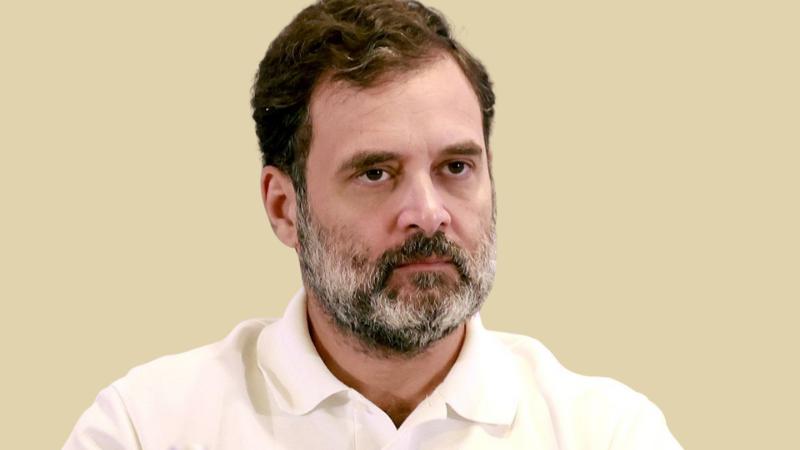
At a high-profile press conference in Delhi, Congress leader Rahul Gandhi escalated his longstanding vote chori campaign by presenting what he termed “100 percent proof” of massive electoral malpractice in the 2024 Haryana assembly elections. Gandhi claimed that approximately 25 lakh entries on the voter list were fake roughly one in eight of the state’s 2 crore electorate. Among his evidence was a startling claim that a Brazilian model’s photograph appeared 22 times in electoral rolls under multiple assumed identities such as “Seema”, “Sweety”, and “Saraswati”. This, he asserted, was part of a coordinated manipulation to convert an anticipated Congress surge into a BJP victory. He further alleged detection of 5.21 lakh duplicate entries and over 19 lakh “bulk” entries at single addresses.
In response, the Election Commission of India (ECI) strongly denied Gandhi’s claims and questioned his stance on the Special Intensive Revision (SIR) of voter rolls. The commission pointed out that no formal appeal challenging the Haryana electoral roll had been filed by Congress polling agents. Moreover, it argued that even if duplicates existed, Gandhi had no proof they all voted for the BJP, suggesting some might have supported the Congress instead. With election activity heating up ahead of the Bihar polls, the timing of the allegations has heightened political tensions and drawn scrutiny to the integrity of electoral roll maintenance and verification processes.
Gandhi alleged that thousands of BJP-linked workers and local leaders were registered in multiple states, citing addresses showing unusually high numbers of voters. He accused the BJP and the ECI of working in tandem to orchestrate large-scale electoral manipulation and warned that the same strategy was likely to be deployed in Bihar. The controversy adds a new dimension to India’s electoral discourse, placing questions around voter roll accuracy, identity verification, and institutional accountability at the forefront of democratic debate.