The renaming effort follows Trump’s consolidation of influence over the Kennedy Center’s leadership. In February, Trump appointed members to the Board of Trustees, which later voted in favor of the name change. He also named himself chair of the board, further solidifying his role in guiding the institution’s direction. According to White House Press Secretary Karoline Leavitt, the board’s decision was unanimous. That characterization, however, has been challenged by Rep. Joyce Beatty of Ohio, an ex officio member of the board, who disputed the claim that all members supported the change.
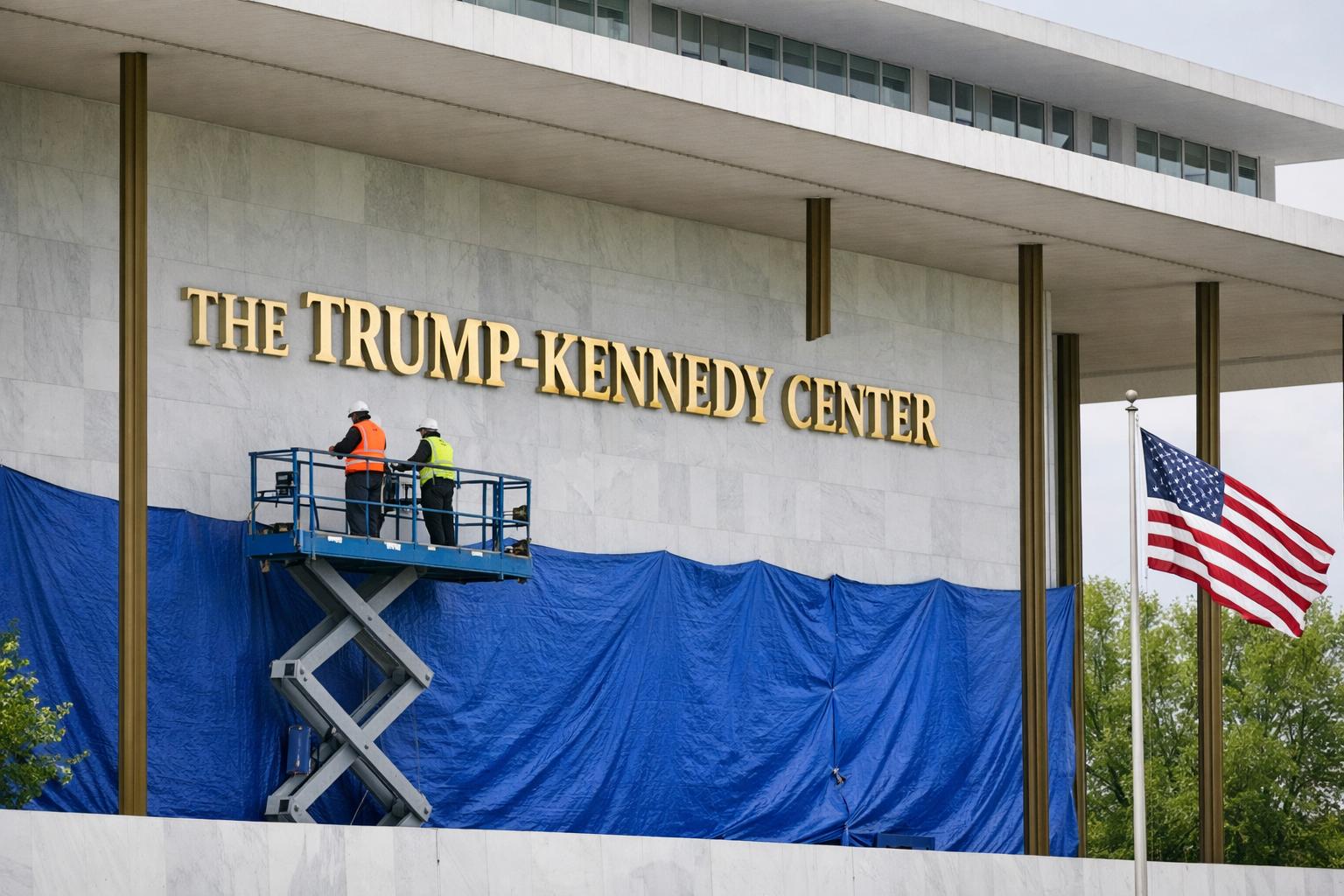
On Friday, workers were seen installing Trump’s name on the building’s facade. The activity took place behind blue tarps positioned in front of the Kennedy Center’s existing signage, partially obscuring the work from public view. At the same time, the institution’s official website was updated to reflect the new branding, now identifying the venue as “The Trump Kennedy Center.” The coordinated physical and digital updates signaled an effort to move forward quickly with the rebranding following the board’s vote.
Despite these steps, the renaming may face significant legal and procedural hurdles. The Kennedy Center was originally named by an act of Congress, and its designation is embedded in federal statute. As a result, any formal change to the institution’s name would likely require congressional approval to amend the law that established it. Legal experts note that while the board oversees operations and programming, altering the name set forth in statute is a separate matter that falls under legislative authority.
The situation has prompted renewed debate over governance and oversight of federally chartered cultural institutions. Supporters of the board’s action argue that the trustees have broad discretion to guide the center’s identity and mission, while critics contend that bypassing Congress undermines the legal framework that governs the venue. As lawmakers consider their options, the future of the Kennedy Center’s name remains uncertain, even as visible changes continue to take shape at the iconic performing arts complex in Washington, D.C.