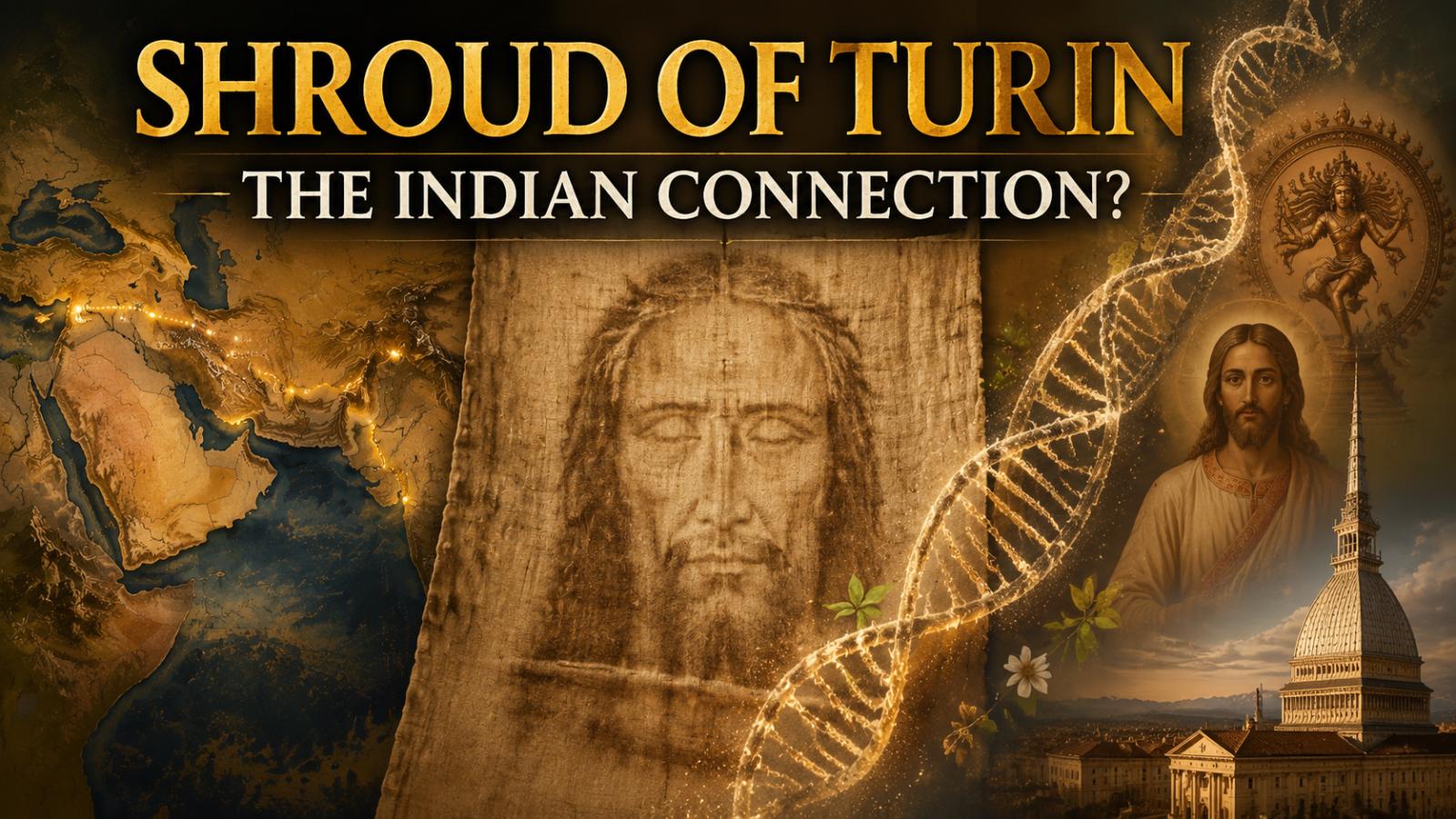
Genomic analysis of the Shroud of Turin, a 4.4‑meter linen cloth long associated with Jesus Christ, has revealed that nearly 40% of the human dna traces on the fabric correspond to indian lineage dna. Researchers at the University of Padova in Italy conducted advanced environmental dna (eDNA) tests on dust and linen fibers from the relic. The scientists detected genetic markers linked to the Indian subcontinent, as well as botanical dna traces, including cowpea and other plants native to india, suggesting either that the indus valley linen was used or that people of indian descent handled the cloth. Experts underline that the findings do not prove Jesus himself was Indian; instead, the evidence points to ancient textile trade routes and the complex movement of materials over centuries.
Historical relic movement from france to Italy
The Shroud was first documented in 1354 in Lirey, France, where the knight Geoffrey de Charny publicly displayed the cloth, and it began drawing pilgrims who believed it bore the image of Christ’s body. In 1453, the artifact was taken into possession by the House of Savoy and moved to Chambéry before being permanently relocated to the Cathedral of Saint John the Baptist in Turin, Italy in 1578. During its long journey across europe, the cloth was handled and transported by pilgrims, traders, and clergy, leading to a mixture of dna and plant evidence from many regions.
Linking india through silk route history
The dna evidence aligns with historical records of silk route history and medieval relic handling. Linen textiles from asia, especially from india’s rich textile regions, once traveled by land across Kashmir, Central Asia, Persia, and Mesopotamia, and by sea from Indian ports through the Red Sea and Mediterranean. These ancient textile trade routes carried fabrics that were treated with plant fibers or spices for preservation, which may account for the botanical traces now identified on the Shroud.
Artistic and cultural portrayals of jesus in india
Beyond scientific analysis, cultural reinterpretation of Christ’s image has been notable in India. Indian artists have depicted Jesus in local cultural forms—such as tribal features or yogic poses—in an effort to make the figure relatable to local audiences. In 2017, a major stage production in Kerala presented Jesus with Indian features, challenging traditional European portrayals and reflecting a broader conversation about religious imagery and identity.
Conclusion: A relic and historical time capsule
The Shroud of Turin now stands not only as a religious relic, but also as a historical time capsule. Through dna evidence india, botanical analysis, and its documented passage from france to italy, the cloth reflects centuries of human interaction, global trade connections like the Silk Route, and evolving cultural interpretations of one of history’s most studied artifacts.