In a momentous development for India's space program, Indian astronaut Shubhanshu Shukla is all set for his maiden journey to the International Space Station (ISS) as part of the Axiom Mission 4 (Ax-4). The mission, a private endeavor organized by Axiom Space in collaboration with NASA, SpaceX, and the Indian Space Research Organisation (ISRO), will see Shukla take flight aboard a SpaceX Falcon 9 rocket. The launch is scheduled for 10:33 pm IST on May 29, 2025, from NASA’s Kennedy Space Center in Florida.
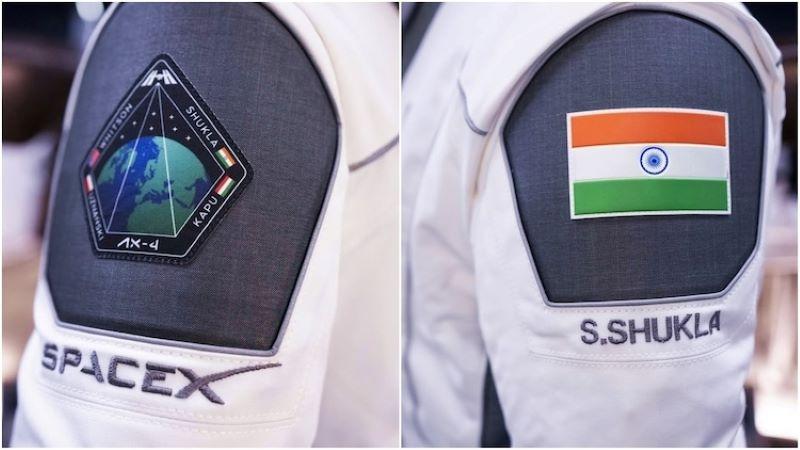
Shukla, a key member of the four-person Ax-4 crew, recently completed extensive training with SpaceX in California. As part of the final preparations, he conducted tests in a mock Dragon spacecraft while fully suited in the SpaceX space gear, simulating various scenarios he may face during the flight. He is set to pilot the Dragon spacecraft during this historic mission, which marks the first time an Indian astronaut will visit the ISS.
Joining Shukla on this 14-day mission are three other distinguished astronauts: Commander Peggy Whitson, a veteran NASA astronaut with multiple spaceflights to her name; Sawosz Uznaski-Winiewski, a European Space Agency astronaut from Poland; and Tibor Kapu from Hungary. The international crew is tasked with conducting a variety of research experiments, with each member representing unique scientific contributions from their home countries.
Shubhanshu Shukla’s journey to space began in 2019 when he was selected as one of four candidates for India’s ambitious Gaganyaan mission—India’s first human spaceflight initiative. To prepare for his future in space, Shukla underwent rigorous training at the renowned Yuri Gagarin Cosmonaut Training Center in Russia, followed by further technical preparation at the Astronaut Training Facility located within ISRO’s Propulsion Complex in Bangalore. Though the Gaganyaan mission is yet to launch, Shukla’s inclusion in the Ax-4 mission offers India a vital opportunity to gain invaluable experience with manned space missions and contribute to international research on space habitats and life sciences.
During his time aboard the ISS, Shukla will lead seven scientific experiments designed and developed by Indian institutions. These experiments focus on several critical areas relevant to human spaceflight and Earth-based health challenges. The research topics include the cognitive effects of prolonged screen use, microbial behavior in microgravity, muscle atrophy, and agricultural crop resilience in space environments. These studies are expected to offer deeper insights into the challenges of sustaining human life during long-duration space missions and aid India’s progress in developing its own space station.
Additionally, Shukla plans to connect his journey with India's rich cultural heritage by performing yoga in microgravity aboard the ISS. This symbolic act will represent India's holistic approach to health and wellness and is expected to resonate globally as a blend of science and tradition. This mission is not just a scientific endeavor but a significant cultural milestone, showcasing how India is integrating its own identity into global space exploration efforts. ISRO has expressed strong support for the Ax-4 mission, stating that the experiments conducted will aid in shaping India's long-term vision for space exploration, especially the development of the proposed Bharatiya Antriksh Station.
Shukla’s participation also marks a symbolic continuation of India’s human spaceflight legacy. He becomes the second Indian to travel to space, following the historic 1984 mission of Rakesh Sharma aboard the Soviet Soyuz T-11. Unlike Sharma’s short-duration mission, Shukla's 14-day stay on the ISS with modern scientific tools and global collaboration highlights how far India has come in space research and diplomacy.
As the countdown begins, the entire nation and the global scientific community will be watching with great anticipation. The Ax-4 mission represents a new chapter not only in India’s space narrative but also in international cooperation, showcasing the potential of private-public partnerships in pushing the frontiers of human space travel. Shubhanshu Shukla's journey to the ISS is more than a solo achievement it is a symbol of India’s growing stature in the global space community and a stepping stone toward the realization of the country's larger ambitions in outer space.