#science-news
Indian Space Startups Build NavIC Support Layer For Defence And Navigation
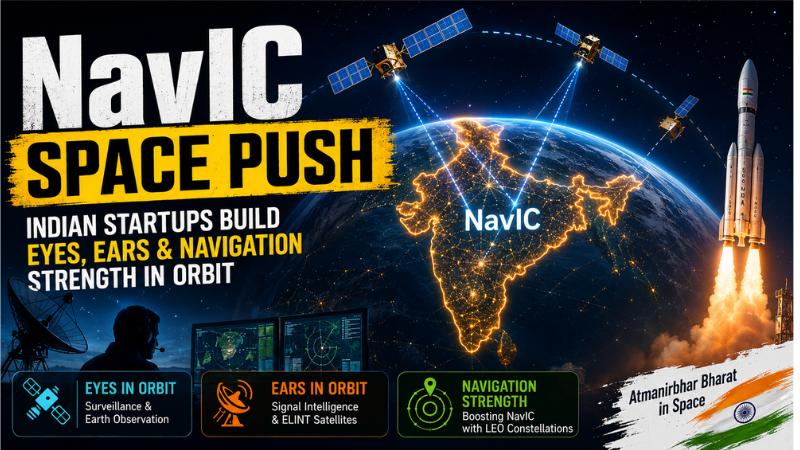
Indian Space Startups Strengthen NavIC Push With Eyes And Ears In Orbit India’s private space companies are no longer just supporting Isro — they are building satellites that could help the country watch borders, track signals, and strengthen NavIC. At the India Space Congress 2026 in New Delhi, several Indian firms showcased satellite technologies focused on surveillance, si
Indian Space Startups Build NavIC Support Layer For Defence And Navigation
Indian Space Startups Strengthen NavIC Push With Eyes And Ears In Orbit India’s private space companies are no longer just supporting Isro — they are building satellites that could help the country watch borders, track signals, and strengthen NavIC. At the India Space Congress 2026 in New Delhi, several Indian firms showcased satellite technologies focused on surveillance, si
Chicago’s Griffin Museum Ranked Among World’s Best Museums
Chicago Museum Earns Global Recognition Griffin Museum of Science and Industry has been named among the world’s best museums by Travel + Leisure, giving Chicago another major cultural milestone and strengthening its reputation as a top tourism destination in the United States. The internationally recognized travel publication included the museum in its list of the “27 Best Museums in the World for Art, History, and Cultural Wonders,” placing the Chicago institution alongside some of the most celebrated museums globally. Why the Griffin Museum Stands Out Located in Chicago, Illinois, the Griffin Museum of Science and Industry is one of the largest science museums in the world and is widely known for its immersive, hands-on exhibits. Officials and travel experts highlighted the museum’s ability to combine education, innovation, and entertainment through interactive displays focused on technology, energy, engineering, manufacturing, and design. The museum attracts families, students, tourists, and science enthusiasts looking for engaging experiences that go beyond traditional exhibits. Its large-scale installations and educational programs continue to make it one of the top science museums in America. Boost for Chicago Tourism The recognition is expected to increase tourism interest in Chicago, a city already known for major attractions including Art Institute of Chicago and Field Museum. Travel analysts say rankings from globally trusted publications often influence travel decisions, especially for families planning educational vacations and cultural trips in the United States. Visitors can find updated exhibit schedules, tickets, and museum information through the museum’s official website.
Chicago’s Griffin Museum Ranked Among World’s Best Museums
Chicago Museum Earns Global Recognition Griffin Museum of Science and Industry has been named among the world’s best museums by Travel + Leisure, giving Chicago another major cultural milestone and strengthening its reputation as a top tourism destination in the United States. The internationally recognized travel publication included the museum in its list of the “27 Best Museums in the World for Art, History, and Cultural Wonders,” placing the Chicago institution alongside some of the most celebrated museums globally. Why the Griffin Museum Stands Out Located in Chicago, Illinois, the Griffin Museum of Science and Industry is one of the largest science museums in the world and is widely known for its immersive, hands-on exhibits. Officials and travel experts highlighted the museum’s ability to combine education, innovation, and entertainment through interactive displays focused on technology, energy, engineering, manufacturing, and design. The museum attracts families, students, tourists, and science enthusiasts looking for engaging experiences that go beyond traditional exhibits. Its large-scale installations and educational programs continue to make it one of the top science museums in America. Boost for Chicago Tourism The recognition is expected to increase tourism interest in Chicago, a city already known for major attractions including Art Institute of Chicago and Field Museum. Travel analysts say rankings from globally trusted publications often influence travel decisions, especially for families planning educational vacations and cultural trips in the United States. Visitors can find updated exhibit schedules, tickets, and museum information through the museum’s official website.
Interstellar comet 3I/ATLAS reveals origins in an alien solar system
Interstellar comet 3I/ATLAS reveals origins in an alien solar system as astronomers analyzing the rare celestial object have uncovered evidence suggesting it formed in conditions vastly different from those that shaped our own planetary system. The comet, known as 3I/ATLAS, was first detected passing through our solar system in July and is only the third known interstellar object ever observed in such a trajectory. New findings, published on Wednesday, April 23, 2026, in the journal Nature Astronomy, indicate that the comet likely originated in an extremely cold and distant region of another planetary system. Researchers used the Atacama Large Millimeter/submillimeter Array (ALMA) in Chile to observe the comet in early November, shortly after it made its closest approach to the sun. The study marks the first time scientists have detected deuterium, a heavier isotope of hydrogen, in an interstellar object. This form of hydrogen is typically found in deuterated water, also known as semi-heavy water. According to lead researcher Luis Eduardo Salazar Manzano of the University of Michigan, the concentration of deuterium in 3I/ATLAS is more than 40 times higher than levels found in Earth’s oceans and over 30 times higher than in comets within our solar system. Such unusually high levels suggest that the comet formed in an environment with extremely low temperatures—below 30 Kelvin, or approximately minus 405 degrees Fahrenheit. Scientists believe this indicates formation in the outer regions of a protoplanetary disk, far from its host star, where icy materials can preserve their original chemical signatures for billions of years. Further analysis suggests that 3I/ATLAS may be up to 11 billion years old, making it significantly older than our solar system, which formed about 4.5 billion years ago. The preserved water within the comet likely dates back to the early stages of the Milky Way, offering a rare glimpse into the galaxy’s ancient conditions. Researchers also noted that standard water (H₂O) was not directly detected during observations, likely due to instrument sensitivity limits. However, the clear detection of deuterated water underscores the comet’s unusual composition and reinforces its value as a scientific “time capsule.” Experts say interstellar objects like 3I/ATLAS provide unique insights into how planetary systems form and evolve across the universe. Future observations from facilities such as the Vera C. Rubin Observatory are expected to identify more such objects, potentially helping scientists determine whether 3I/ATLAS is an anomaly or part of a broader population of chemically distinct comets. By studying these rare visitors, astronomers hope to better understand how the composition of planets—and even the building blocks of life—may differ across the galaxy, offering new perspectives on the origins of planetary systems beyond our own.
Interstellar comet 3I/ATLAS reveals origins in an alien solar system
Interstellar comet 3I/ATLAS reveals origins in an alien solar system as astronomers analyzing the rare celestial object have uncovered evidence suggesting it formed in conditions vastly different from those that shaped our own planetary system. The comet, known as 3I/ATLAS, was first detected passing through our solar system in July and is only the third known interstellar object ever observed in such a trajectory. New findings, published on Wednesday, April 23, 2026, in the journal Nature Astronomy, indicate that the comet likely originated in an extremely cold and distant region of another planetary system. Researchers used the Atacama Large Millimeter/submillimeter Array (ALMA) in Chile to observe the comet in early November, shortly after it made its closest approach to the sun. The study marks the first time scientists have detected deuterium, a heavier isotope of hydrogen, in an interstellar object. This form of hydrogen is typically found in deuterated water, also known as semi-heavy water. According to lead researcher Luis Eduardo Salazar Manzano of the University of Michigan, the concentration of deuterium in 3I/ATLAS is more than 40 times higher than levels found in Earth’s oceans and over 30 times higher than in comets within our solar system. Such unusually high levels suggest that the comet formed in an environment with extremely low temperatures—below 30 Kelvin, or approximately minus 405 degrees Fahrenheit. Scientists believe this indicates formation in the outer regions of a protoplanetary disk, far from its host star, where icy materials can preserve their original chemical signatures for billions of years. Further analysis suggests that 3I/ATLAS may be up to 11 billion years old, making it significantly older than our solar system, which formed about 4.5 billion years ago. The preserved water within the comet likely dates back to the early stages of the Milky Way, offering a rare glimpse into the galaxy’s ancient conditions. Researchers also noted that standard water (H₂O) was not directly detected during observations, likely due to instrument sensitivity limits. However, the clear detection of deuterated water underscores the comet’s unusual composition and reinforces its value as a scientific “time capsule.” Experts say interstellar objects like 3I/ATLAS provide unique insights into how planetary systems form and evolve across the universe. Future observations from facilities such as the Vera C. Rubin Observatory are expected to identify more such objects, potentially helping scientists determine whether 3I/ATLAS is an anomaly or part of a broader population of chemically distinct comets. By studying these rare visitors, astronomers hope to better understand how the composition of planets—and even the building blocks of life—may differ across the galaxy, offering new perspectives on the origins of planetary systems beyond our own.
NASA Artemis II Mission: Crew Prepares for Pacific Ocean Splashdown
NASA is preparing for the safe return of the Artemis II mission after successfully completing its 10-day journey around the Moon. The spacecraft is expected to splash down in the Pacific Ocean, off the coast of California, on Friday, April 10 at around 8 PM EDT (5:37 AM IST, April 11). NASA officials have confirmed that all mission operations are going smoothly and are on track.
NASA Artemis II Mission: Crew Prepares for Pacific Ocean Splashdown
NASA is preparing for the safe return of the Artemis II mission after successfully completing its 10-day journey around the Moon. The spacecraft is expected to splash down in the Pacific Ocean, off the coast of California, on Friday, April 10 at around 8 PM EDT (5:37 AM IST, April 11). NASA officials have confirmed that all mission operations are going smoothly and are on track.
China sets world record with 700 km/h superconducting maglev train test
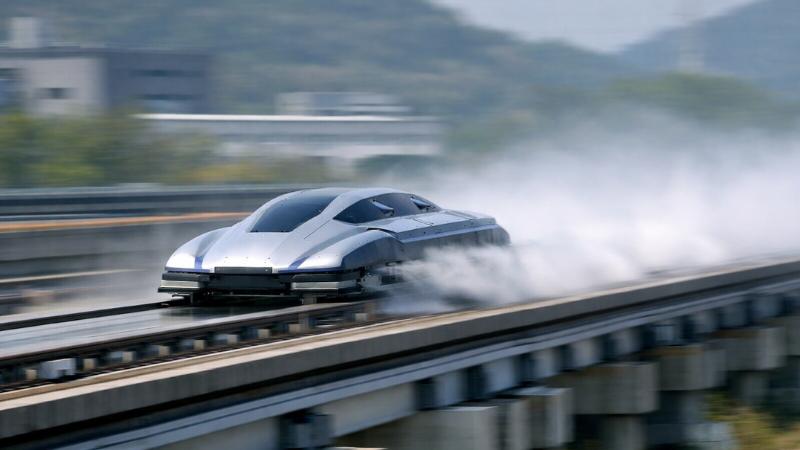
China has set a new global benchmark in rail transportation technology after successfully accelerating a superconducting magnetic levitation train to a speed of 700 kilometres per hour in just two seconds. The achievement marks the fastest acceleration ever recorded for a maglev system and positions China as the first country to demonstrate this capability using superconducting electric maglev technology. The experiment was conducted by researchers at the National University of Defe
China sets world record with 700 km/h superconducting maglev train test
China has set a new global benchmark in rail transportation technology after successfully accelerating a superconducting magnetic levitation train to a speed of 700 kilometres per hour in just two seconds. The achievement marks the fastest acceleration ever recorded for a maglev system and positions China as the first country to demonstrate this capability using superconducting electric maglev technology. The experiment was conducted by researchers at the National University of Defe
7 Reasons Harvard Scientist Thinks Interstellar Comet 3I/ATLAS Could Be Alien Technology
NASA’s discovery of interstellar comet 3I/ATLAS has sparked global interest after Harvard astrophysicist Avi Loeb suggested it could be a form of alien technology. Detected on July 1, 2025, the comet is only the third known interstellar object to pass through our solar system. While NASA confirmed that 3I/ATLAS poses no threat to Earth, Loeb and other researchers argue that its unique chemical and physical properties set it apart from natural space objects, warranting a deeper investigation
7 Reasons Harvard Scientist Thinks Interstellar Comet 3I/ATLAS Could Be Alien Technology
NASA’s discovery of interstellar comet 3I/ATLAS has sparked global interest after Harvard astrophysicist Avi Loeb suggested it could be a form of alien technology. Detected on July 1, 2025, the comet is only the third known interstellar object to pass through our solar system. While NASA confirmed that 3I/ATLAS poses no threat to Earth, Loeb and other researchers argue that its unique chemical and physical properties set it apart from natural space objects, warranting a deeper investigation
Blue Origin advances toward human spaceflight with NS-12 rocket launch and safe return
Blue Origin, the aerospace company founded by Jeff Bezos, marked another milestone in its journey toward commercial space tourism with the successful completion of its NS-12 mission. On Thursday, the company launched its New Shepard rocket for the twelfth time, further validating the system’s reliability and reusability. The 18-meter-tall suborbital rocket lifted off from Blue Origin’s test facility in West Texas at 12:46 p.m. Eastern Time. While no humans were aboard this particu
Blue Origin advances toward human spaceflight with NS-12 rocket launch and safe return
Blue Origin, the aerospace company founded by Jeff Bezos, marked another milestone in its journey toward commercial space tourism with the successful completion of its NS-12 mission. On Thursday, the company launched its New Shepard rocket for the twelfth time, further validating the system’s reliability and reusability. The 18-meter-tall suborbital rocket lifted off from Blue Origin’s test facility in West Texas at 12:46 p.m. Eastern Time. While no humans were aboard this particu
Mysterious Metallic Sphere Found in Colombia Sparks UFO Theories
A strange metallic sphere discovered in the town of Buga, Colombia, has triggered a wave of speculation and debate among scientists, skeptics, and UFO enthusiasts. The sphere, which reportedly landed on March 2, has caught the attention of researchers due to its unusual physical characteristics. According to posts on the social media page Truthpolex, the object was seen flying in the sky before it descended and made contact with the ground. The object is now under investigation by researchers
Mysterious Metallic Sphere Found in Colombia Sparks UFO Theories
A strange metallic sphere discovered in the town of Buga, Colombia, has triggered a wave of speculation and debate among scientists, skeptics, and UFO enthusiasts. The sphere, which reportedly landed on March 2, has caught the attention of researchers due to its unusual physical characteristics. According to posts on the social media page Truthpolex, the object was seen flying in the sky before it descended and made contact with the ground. The object is now under investigation by researchers
Indian Astronaut Shubhanshu Shukla Set to Pilot SpaceX Mission to ISS on May 29
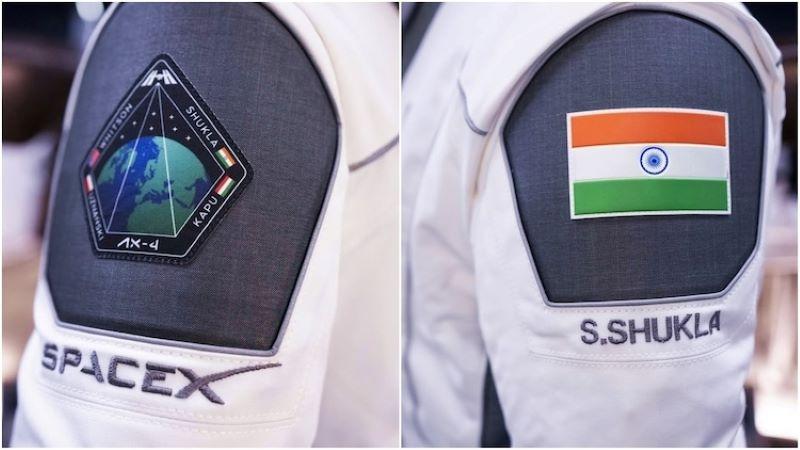
In a momentous development for India's space program, Indian astronaut Shubhanshu Shukla is all set for his maiden journey to the International Space Station (ISS) as part of the Axiom Mission 4 (Ax-4). The mission, a private endeavor organized by Axiom Space in collaboration with NASA, SpaceX, and the Indian Space Research Organisation (ISRO), will see Shukla take flight aboard a SpaceX Falcon 9 rocket. The launch is scheduled for 10:33 pm IST on May 29, 2025, from NASA’s Kennedy S
Indian Astronaut Shubhanshu Shukla Set to Pilot SpaceX Mission to ISS on May 29
In a momentous development for India's space program, Indian astronaut Shubhanshu Shukla is all set for his maiden journey to the International Space Station (ISS) as part of the Axiom Mission 4 (Ax-4). The mission, a private endeavor organized by Axiom Space in collaboration with NASA, SpaceX, and the Indian Space Research Organisation (ISRO), will see Shukla take flight aboard a SpaceX Falcon 9 rocket. The launch is scheduled for 10:33 pm IST on May 29, 2025, from NASA’s Kennedy S
NASA Captures Stunning Solar Eclipse Visible Only From Space, Upcoming Eclipses Also Announced
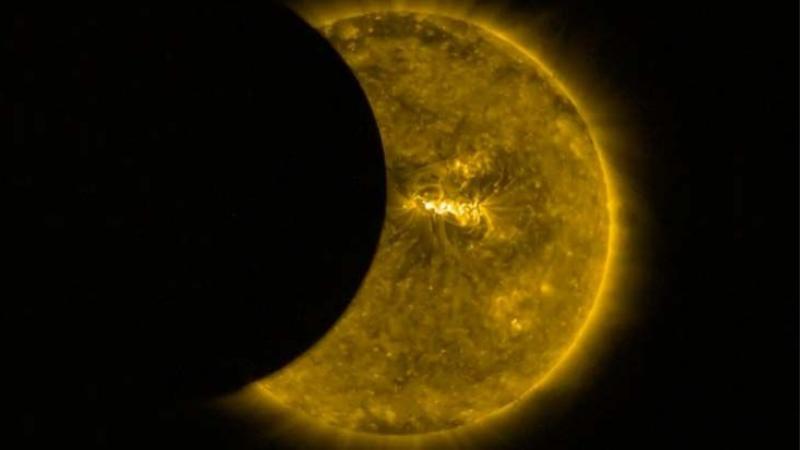
In a spectacular display of cosmic alignment, NASA’s Solar Dynamics Observatory (SDO) captured rare and stunning images of a solar eclipse visible only from space. This event, known as a "lunar transit," took place on Sunday, April 27, 2025. Unlike solar eclipses witnessed from Earth, this particular event was not visible to ground-based observers. The moon passed between the SDO and the sun, covering approximately 23% of the sun’s surface, creating a dramatic yet serene
NASA Captures Stunning Solar Eclipse Visible Only From Space, Upcoming Eclipses Also Announced
In a spectacular display of cosmic alignment, NASA’s Solar Dynamics Observatory (SDO) captured rare and stunning images of a solar eclipse visible only from space. This event, known as a "lunar transit," took place on Sunday, April 27, 2025. Unlike solar eclipses witnessed from Earth, this particular event was not visible to ground-based observers. The moon passed between the SDO and the sun, covering approximately 23% of the sun’s surface, creating a dramatic yet serene
US Scientists 3D-Print Walking Robots Without Electronics for Just $20 Each
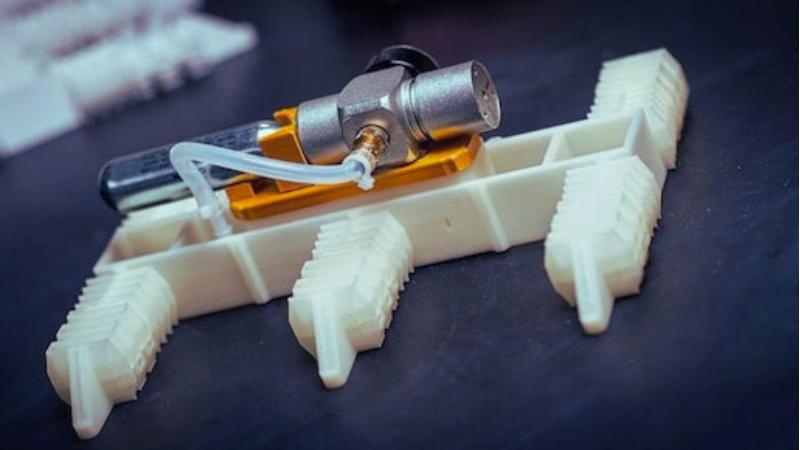
In a groundbreaking innovation that could redefine the future of robotics, researchers from the University of California San Diego have developed a six-legged robot that walks entirely without electronics, powered solely by compressed air. These robots can be produced in a single 3D-printing process using a flexible filament, meaning they can quite literally "walk off the printer" once connected to an air source. Designed to perform in environments too hazardous for traditional elec
US Scientists 3D-Print Walking Robots Without Electronics for Just $20 Each
In a groundbreaking innovation that could redefine the future of robotics, researchers from the University of California San Diego have developed a six-legged robot that walks entirely without electronics, powered solely by compressed air. These robots can be produced in a single 3D-printing process using a flexible filament, meaning they can quite literally "walk off the printer" once connected to an air source. Designed to perform in environments too hazardous for traditional elec