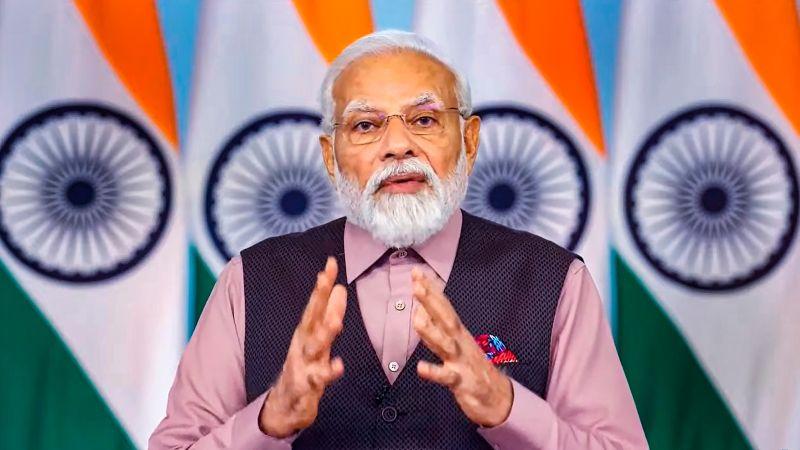
In a strong and nationally broadcasted address, Prime Minister Narendra Modi today outlined a dramatic shift in India's defense and anti-terror strategy, declaring that Operation Sindoor is not just a military operation, but a new doctrine that defines how India will respond to state-sponsored terrorism going forward. The speech comes amid a tense ceasefire with Pakistan, following India's targeted strikes on terror infrastructure in Pakistan and Pakistan-Occupied Jammu and Kashmir (PoJK).
“Operation Sindoor marks the beginning of a decisive and sustained policy against terror,” said PM Modi, addressing the nation just hours after the ceasefire took effect. This was his first public statement since India launched cruise missile strikes against terror camps across the border in retaliation for deadly attacks on Indian citizens. He emphasized that India will no longer tolerate provocations and that any future attacks on Indian soil will be met with decisive force.
"This is not just a response. This is the new normal,” said Modi, repeating the language used by India’s military leadership over the past 48 hours. For many defense analysts, this statement marks a formal end to India's earlier restraint-based posture. The Prime Minister made it clear that going forward, India's policy will be defined by preemptive and punitive strikes a bold departure from decades of diplomatic appeals and reactive defense. “India will strike at the heart of terror decisively if our citizens are attacked. The time for warnings is over. Now is the time for action,” the Prime Minister said in his sharpest message yet to Islamabad. Referring to repeated terror incidents with cross-border linkages over the years, PM Modi said India has paid a heavy price for patience and has now chosen a path that ensures the safety of its citizens over diplomacy alone.
The Prime Minister also addressed Pakistan’s nuclear posturing, warning that "nuclear blackmail will not work against India." This is viewed as a clear rebuttal to past rhetoric from Pakistan’s leadership that implied the threat of nuclear retaliation in the face of Indian strikes.
Operation Sindoor, according to sources in the defense establishment, involved precise cruise missile attacks and intelligence-led operations to eliminate terror camps across the border. The Prime Minister stated that the operation has not ended, and will continue in various forms as part of a larger campaign against terrorism. He added that India’s armed forces will be supported fully to defend the country's sovereignty, and the government will not be restrained by traditional diplomatic protocols when it comes to counterterrorism actions.
Experts note that the fact that the Prime Minister himself delivered this message, rather than routing it through the Ministry of External Affairs or defense officials, underscores the gravity of the message. It sends a powerful signal to the international community and serves as a warning to any state that shelters or sponsors terrorist activities targeting India. With the doctrine of “strategic restraint” now replaced by “strategic assertion,” India is signaling a policy that prioritizes national security above all else. Operation Sindoor, which has already drawn global attention, may well become the benchmark for India’s future responses to terrorism both regionally and globally. This address from Prime Minister Modi is being hailed as a turning point in India’s modern counterterrorism narrative, setting the tone for how the country will engage with hostile elements across its borders in the years to come.
“Operation Sindoor marks the beginning of a decisive and sustained policy against terror,” said PM Modi, addressing the nation just hours after the ceasefire took effect. This was his first public statement since India launched cruise missile strikes against terror camps across the border in retaliation for deadly attacks on Indian citizens. He emphasized that India will no longer tolerate provocations and that any future attacks on Indian soil will be met with decisive force.
"This is not just a response. This is the new normal,” said Modi, repeating the language used by India’s military leadership over the past 48 hours. For many defense analysts, this statement marks a formal end to India's earlier restraint-based posture. The Prime Minister made it clear that going forward, India's policy will be defined by preemptive and punitive strikes a bold departure from decades of diplomatic appeals and reactive defense. “India will strike at the heart of terror decisively if our citizens are attacked. The time for warnings is over. Now is the time for action,” the Prime Minister said in his sharpest message yet to Islamabad. Referring to repeated terror incidents with cross-border linkages over the years, PM Modi said India has paid a heavy price for patience and has now chosen a path that ensures the safety of its citizens over diplomacy alone.
The Prime Minister also addressed Pakistan’s nuclear posturing, warning that "nuclear blackmail will not work against India." This is viewed as a clear rebuttal to past rhetoric from Pakistan’s leadership that implied the threat of nuclear retaliation in the face of Indian strikes.
Operation Sindoor, according to sources in the defense establishment, involved precise cruise missile attacks and intelligence-led operations to eliminate terror camps across the border. The Prime Minister stated that the operation has not ended, and will continue in various forms as part of a larger campaign against terrorism. He added that India’s armed forces will be supported fully to defend the country's sovereignty, and the government will not be restrained by traditional diplomatic protocols when it comes to counterterrorism actions.
Experts note that the fact that the Prime Minister himself delivered this message, rather than routing it through the Ministry of External Affairs or defense officials, underscores the gravity of the message. It sends a powerful signal to the international community and serves as a warning to any state that shelters or sponsors terrorist activities targeting India. With the doctrine of “strategic restraint” now replaced by “strategic assertion,” India is signaling a policy that prioritizes national security above all else. Operation Sindoor, which has already drawn global attention, may well become the benchmark for India’s future responses to terrorism both regionally and globally. This address from Prime Minister Modi is being hailed as a turning point in India’s modern counterterrorism narrative, setting the tone for how the country will engage with hostile elements across its borders in the years to come.