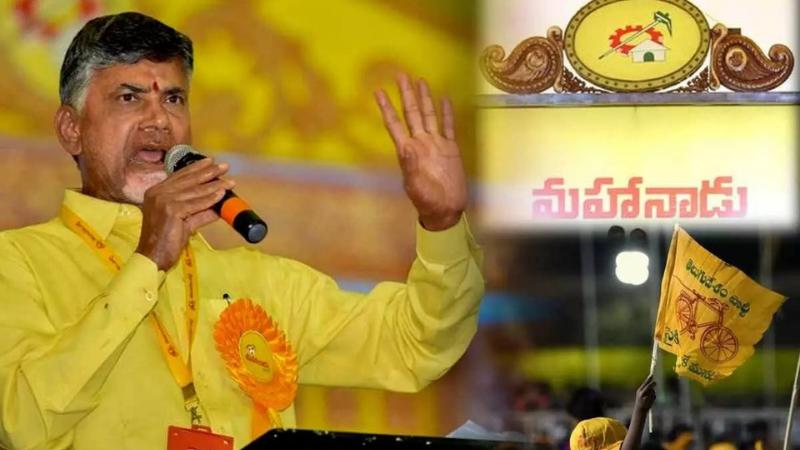
Andhra Pradesh Chief Minister and Telugu Desam Party (TDP) president N Chandrababu Naidu kickstarted the party’s annual Mahanadu conclave in Kadapa with a powerful speech outlining the party’s legacy, achievements, and futuristic vision for the state and the nation. Speaking on the first day of the three-day event, Naidu highlighted the TDP's pivotal role in influencing national policy and setting benchmarks in welfare, reforms, and development.
Addressing a massive gathering, Naidu emphasized that the TDP has been a guiding light in shaping India’s governance, having introduced key initiatives that were later adopted at the national level. He declared, “What Andhra Pradesh thinks today, India thinks tomorrow,” underlining the innovative contributions of the party. Naidu pointed out that during demonetisation in 2016, it was TDP that suggested the concept of Direct Benefit Transfer (DBT) and the move towards a digital currency. He urged the central government to consider removing high-denomination notes such as ₹500 and ₹2,000 to combat corruption effectively and promote a cashless economy.
Naidu showcased the TDP’s commitment to justice, citing its past stance against the Obulapuram mining scam and asserting that the party would never tolerate corruption under the NDA alliance. He said the government's focus will be “State First” and follow the path of “Positive Politics.” The chief minister recalled TDP’s 43-year history of resilience, stating that the sacrifices of party workers, especially during the previous YSRCP rule, would not be forgotten. He celebrated the party’s resounding victory in the 2024 assembly elections with a 93% strike rate, calling it a testament to the strength and spirit of the cadre.
The TDP chief listed welfare reforms initiated by the party, from abolishing the outdated patel–patwari system to launching programs like ₹2/kg rice and welfare pensions which have grown from ₹30 to ₹4,000. Naidu reiterated the party’s focus on social justice and development, mentioning the empowerment of Backward Classes (BCs) by integrating them into governance roles — a trend other political parties later followed.
Naidu promised completion of the Polavaram project and plans to channel Godavari river water to drought-prone Rayalaseema. He discussed initiatives aimed at reducing logistics costs, building green energy infrastructure, and introducing hydrogen projects. He laid out a roadmap for transforming Andhra Pradesh into a future-ready state operating in “auto-pilot mode” over the next decade, aspiring to put the Telugu community on the global map.
A key announcement during the event was that women across Andhra Pradesh will enjoy free RTC bus travel from August 15 this year. Promoting transparency and accountability, Naidu advocated for all political donations to be made via bank transfers to reduce the influence of black money in politics.
TDP general secretary Nara Lokesh introduced six resolutions aimed at shaping the party’s direction. These included global recognition for the Telugu identity, empowering youth and women, ensuring social justice through restructured policies, and giving a stronger voice to farmers and workers. Lokesh described the resolutions not just as strategies but as a blueprint for a progressive and united future.
In a sharp rebuttal, YSRCP spokesperson Pothina Venkata Mahesh criticized the TDP for allegedly failing to fulfill its election promises, dismantling the village secretariat system, and foisting false cases on opposition leaders. He accused the government of neglecting welfare programs and lacking transparency in governance. Despite the criticism, the Mahanadu meet served as a platform for Naidu to rally support, redefine TDP's mission, and project a vision of a digital, inclusive, and developed Andhra Pradesh.