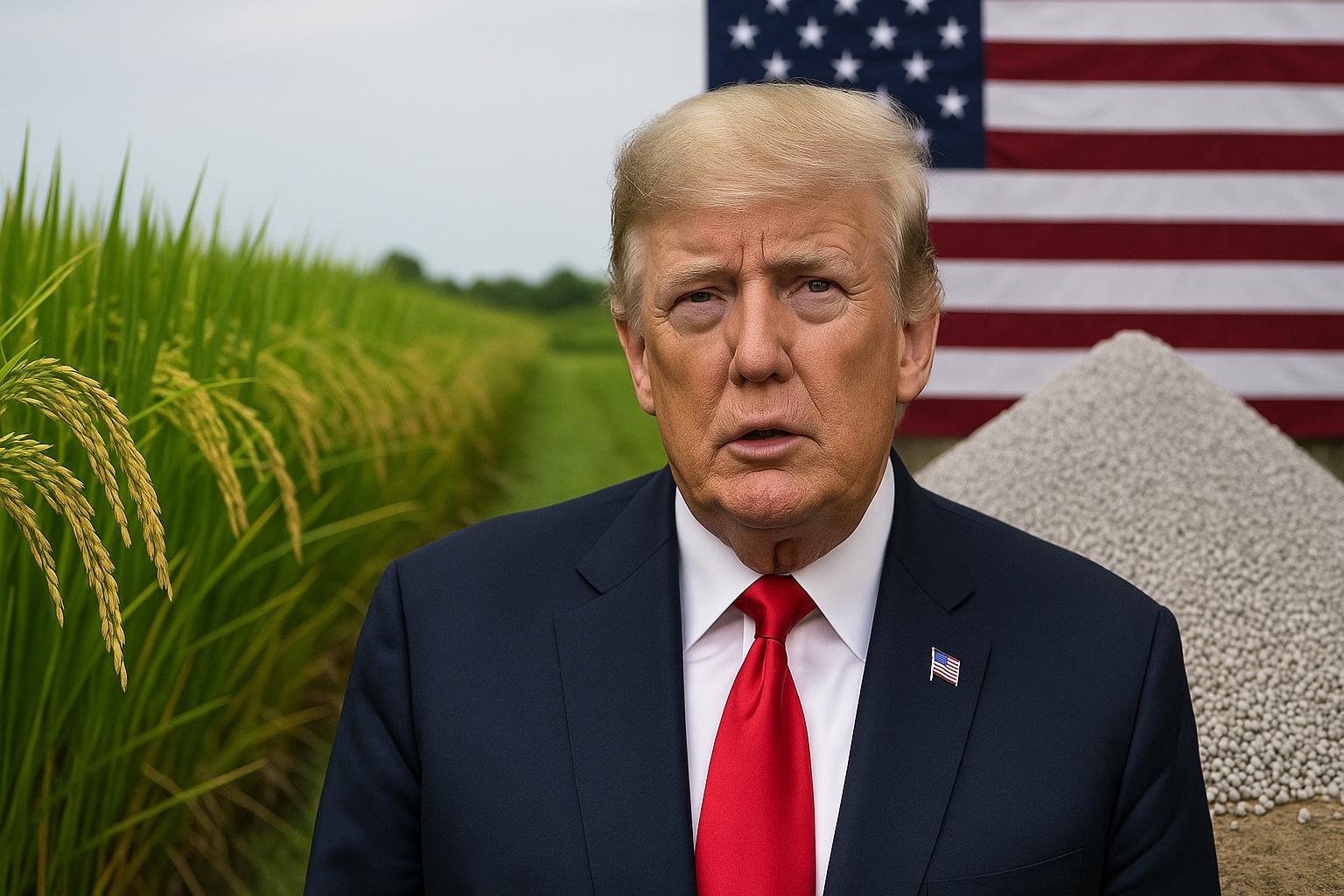
Trump told farmers that the government would investigate allegations that several countries were dumping rice into the US market at prices far below domestic production costs. He described the situation as unfair to American producers and signalled that tariffs could be deployed if investigators confirmed the claims. The President also referenced the growing volume of fertiliser shipments entering the United States from Canada, suggesting that substantial duties could be considered to stimulate domestic manufacturing and reduce reliance on foreign suppliers.
Industry representatives at the meeting urged the administration to act swiftly. Meryl Kennedy, CEO of the Louisiana-based Kennedy Rice Mill, said India, Thailand and China were among the largest contributors to the inflow of cheap rice, adding that some Chinese shipments were being routed to Puerto Rico rather than the mainland. She told Trump that producers across the southern United States were facing significant strain as imports continued to rise. Trump responded by asking Treasury Secretary Scott Bessent to list the countries identified by the farmers, saying the matter would be addressed promptly.
During the discussion, Kennedy asserted that India could be providing unlawful subsidies that distort global prices. Before she completed her explanation, Trump asked for the names of the countries again, emphasising that the administration intended to confront what he described as unfair practices. Bessent reiterated that India, Thailand and China were primary contributors to the issue and noted that additional countries might also be involved. Trump assured the room that his team would pursue corrective action and reinforce measures that he argued were already showing results.
The President’s remarks come as several nations, including India and Canada, continue to engage Washington in negotiations aimed at stabilising trade relations. Despite ongoing efforts, progress has been slow, with disagreements persisting over market access, tariff structures and regulatory barriers. In recent months, the United States has adopted a firmer stance, including the imposition of a 50 per cent tariff on a range of Indian goods earlier this year, a move the administration said was necessary to respond to trade barriers and India’s continued purchase of Russian oil.
Efforts to restore momentum in bilateral talks are expected to resume this week, when a senior delegation from the Office of the US Trade Representative, led by Deputy USTR Rick Switzer, travels to New Delhi for a new round of discussions. Scheduled for December 10 and 11, the meetings will focus on advancing the proposed Bilateral Trade Agreement, which both sides have been attempting to finalise. India’s Commerce Secretary and chief negotiator, Rajesh Agarwal, will lead the Indian delegation. Agarwal recently stated that he remained optimistic about concluding the first phase of the agreement before the end of the year, expressing hope that the ongoing negotiations would deliver tangible results for both economies.