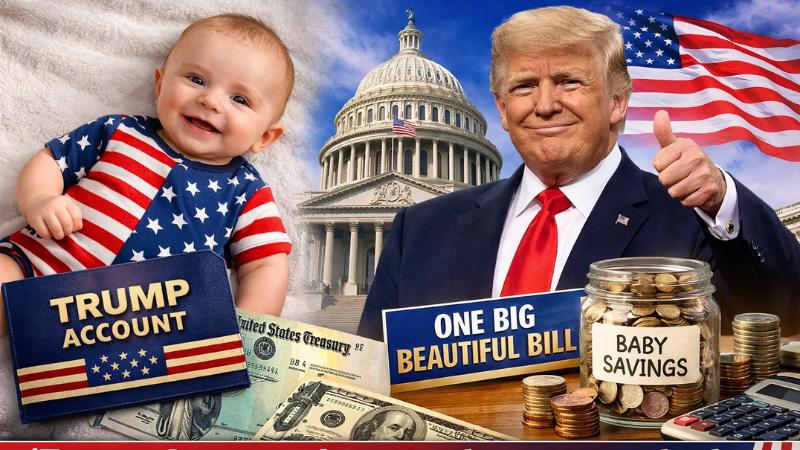
The United States government has officially launched a new investment program for newborns, called ‘Trump accounts,’ designed to help families start saving for their children’s future. The initiative, established under the One Big Beautiful Bill, provides an initial government deposit of $1,000 for every child born between 2025 and 2028. Officials estimate that approximately 25 million families will be eligible to participate over the next three years. Early adoption has been strong, with more than 500,000 families already signing up for the program, highlighting interest in this new savings opportunity.
The rollout emphasized that the accounts are intended to address a longstanding gap in financial preparedness among families across the United States. Many households currently lack dedicated savings accounts for their children, leaving families unprepared for future educational and living expenses. By providing an initial government investment and encouraging additional contributions from parents and private investors, the initiative aims to instill long-term financial habits from the earliest stages of life. These accounts are expected to become a foundational tool for building financial security for millions of children nationwide.
Private investors have also shown interest in supporting the program. Large contributions from prominent business figures have already added billions of dollars to the accounts, supplementing the government’s initial deposit. Officials noted that these private contributions can significantly increase the value of individual accounts over time, giving families a stronger financial foundation as their children grow.
The program also has a political dimension, coinciding with efforts to address affordability concerns ahead of the November midterm elections. By offering a tangible financial benefit for families, the initiative reflects broader policy goals aimed at supporting households and demonstrating commitment to family-focused policies. Officials describe the program as a means to ensure that children born over the next several years have access to financial resources that can support education, personal development, and long-term stability.
Families participating in the program can contribute additional funds to their child’s account, allowing for potential growth through regular deposits. Private investors are also permitted to make contributions, further increasing account balances. Treasury guidelines ensure transparency and oversight of the accounts, protecting the funds and ensuring they are used for the benefit of the child.
The government emphasizes that the program is also intended to foster financial literacy among families. By introducing children and their parents to the concepts of saving and investing early on, the initiative seeks to cultivate a generation more aware of financial management and planning. While the initial $1,000 deposit provides a starting point, the combination of government support, parental contributions, and private investment is designed to create meaningful long-term value.
The launch of these accounts represents one of the largest government-led initiatives targeting early childhood financial planning. Over the next three years, the government plans to enroll millions of eligible children, encourage active participation by families, and monitor the growth and impact of the accounts. By combining initial government investment with opportunities for private contributions, the program seeks to improve household financial security, encourage long-term planning, and provide a model for early investment in children’s futures.
The rollout emphasized that the accounts are intended to address a longstanding gap in financial preparedness among families across the United States. Many households currently lack dedicated savings accounts for their children, leaving families unprepared for future educational and living expenses. By providing an initial government investment and encouraging additional contributions from parents and private investors, the initiative aims to instill long-term financial habits from the earliest stages of life. These accounts are expected to become a foundational tool for building financial security for millions of children nationwide.
Private investors have also shown interest in supporting the program. Large contributions from prominent business figures have already added billions of dollars to the accounts, supplementing the government’s initial deposit. Officials noted that these private contributions can significantly increase the value of individual accounts over time, giving families a stronger financial foundation as their children grow.
The program also has a political dimension, coinciding with efforts to address affordability concerns ahead of the November midterm elections. By offering a tangible financial benefit for families, the initiative reflects broader policy goals aimed at supporting households and demonstrating commitment to family-focused policies. Officials describe the program as a means to ensure that children born over the next several years have access to financial resources that can support education, personal development, and long-term stability.
Families participating in the program can contribute additional funds to their child’s account, allowing for potential growth through regular deposits. Private investors are also permitted to make contributions, further increasing account balances. Treasury guidelines ensure transparency and oversight of the accounts, protecting the funds and ensuring they are used for the benefit of the child.
The government emphasizes that the program is also intended to foster financial literacy among families. By introducing children and their parents to the concepts of saving and investing early on, the initiative seeks to cultivate a generation more aware of financial management and planning. While the initial $1,000 deposit provides a starting point, the combination of government support, parental contributions, and private investment is designed to create meaningful long-term value.
The launch of these accounts represents one of the largest government-led initiatives targeting early childhood financial planning. Over the next three years, the government plans to enroll millions of eligible children, encourage active participation by families, and monitor the growth and impact of the accounts. By combining initial government investment with opportunities for private contributions, the program seeks to improve household financial security, encourage long-term planning, and provide a model for early investment in children’s futures.