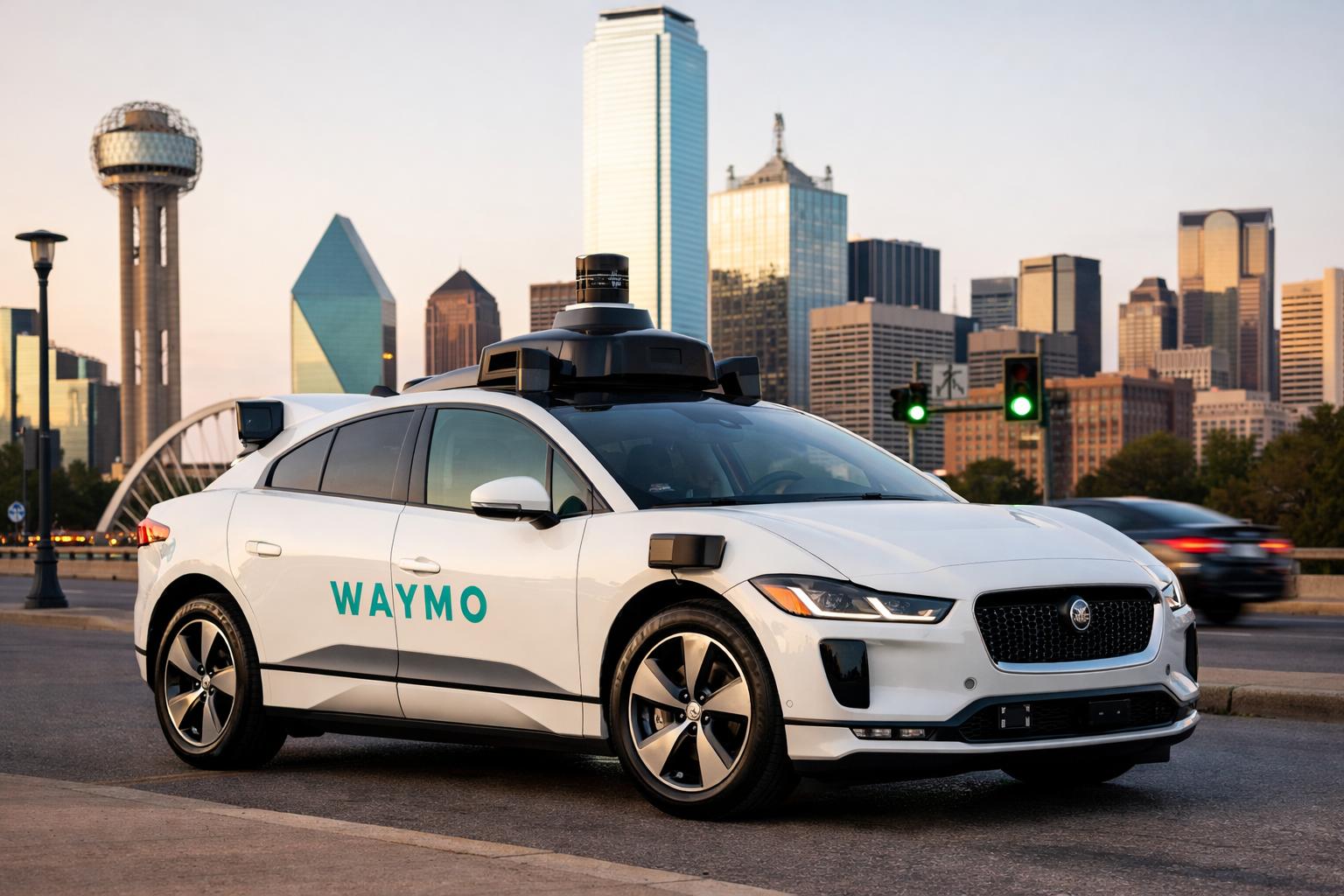
Waymo has officially launched its driverless taxi service in Dallas, marking another major step in the company’s nationwide expansion of autonomous ride-hailing. The service is currently available to a limited group of riders who joined the app’s waitlist, with a broader public rollout expected later this year. The move has generated both enthusiasm about the future of transportation and renewed debate about the safety of autonomous vehicles.
Company officials said early access in Dallas will allow select users to experience the robotaxi service before it becomes widely available. Interested riders can download the app and join the growing waitlist as Waymo gradually increases access. According to the company, fares for the driverless taxi rides are designed to remain competitive with traditional ride-hailing services that use human drivers.
Waymo spokesperson Chris Bonelli described the Dallas debut as an important milestone for the company’s autonomous vehicle program. City leaders have also welcomed the launch, highlighting its potential to strengthen Dallas’s reputation as a hub for transportation innovation. Officials say the introduction of autonomous cars could help expand mobility options for residents and visitors while supporting the city’s broader smart mobility goals.
Despite the excitement surrounding the rollout, the expansion comes at a time of heightened scrutiny. Federal regulators are currently investigating a recent incident in Santa Monica, California, where a Waymo vehicle struck a child in a school zone. The child sustained minor injuries, but the case has intensified questions about how driverless systems perform in complex real-world conditions.
Additional concerns have emerged in Austin, Texas, where local authorities reported instances of Waymo robotaxi vehicles failing to properly respond to police hand signals and construction barricades. School district officials in the city also released videos appearing to show some vehicles passing stopped school buses with flashing red lights and extended stop arms, a violation that has drawn criticism from safety advocates.
In San Francisco, a separate incident involving a power outage earlier this year led to multiple Waymo vehicles shutting down in traffic, briefly disrupting city streets. While the company maintains that autonomous technology continues to improve, such events have contributed to growing public expectations and regulatory attention.
Waymo representatives say their internal data indicates the autonomous system is significantly less likely to be involved in pedestrian collisions compared with human drivers. The company says it is cooperating fully with federal investigators and continues to refine its artificial intelligence and safety protocols.
As Dallas riders begin testing the new driverless taxi service, transportation experts note that public confidence will likely depend on consistent performance and transparent safety results. The rollout represents both a technological milestone and a critical test of whether autonomous ride-hailing can meet the high safety standards expected by regulators and the public alike.