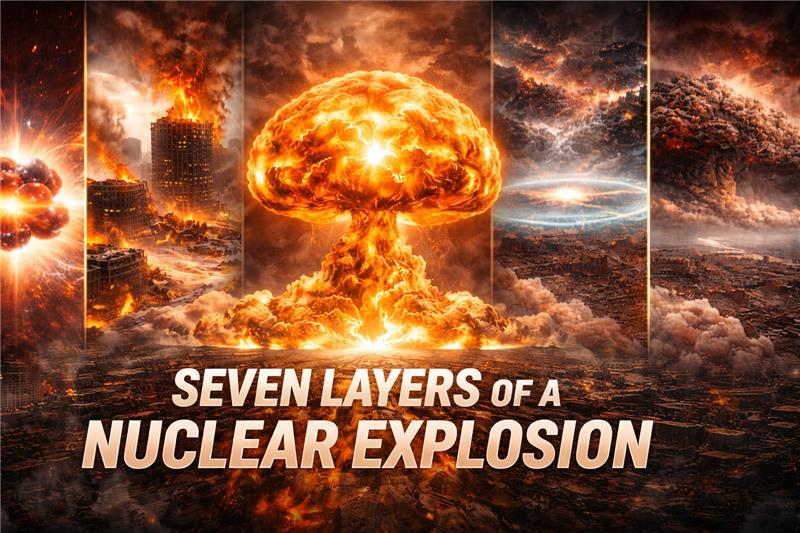
A nuclear weapon explosion unleashes an overwhelming amount of energy through either nuclear fission or fusion, resulting in devastating consequences that can persist for decades. Upon detonation, a rapid chain reaction occurs, converting a tiny amount of mass into an enormous amount of energy, based on Einstein’s Mass–energy equivalence principle. This energy is released in multiple destructive layers, each contributing to the profound impact on the environment and living organisms.
Here’s a breakdown of the seven destructive layers that unfold during a nuclear explosion:
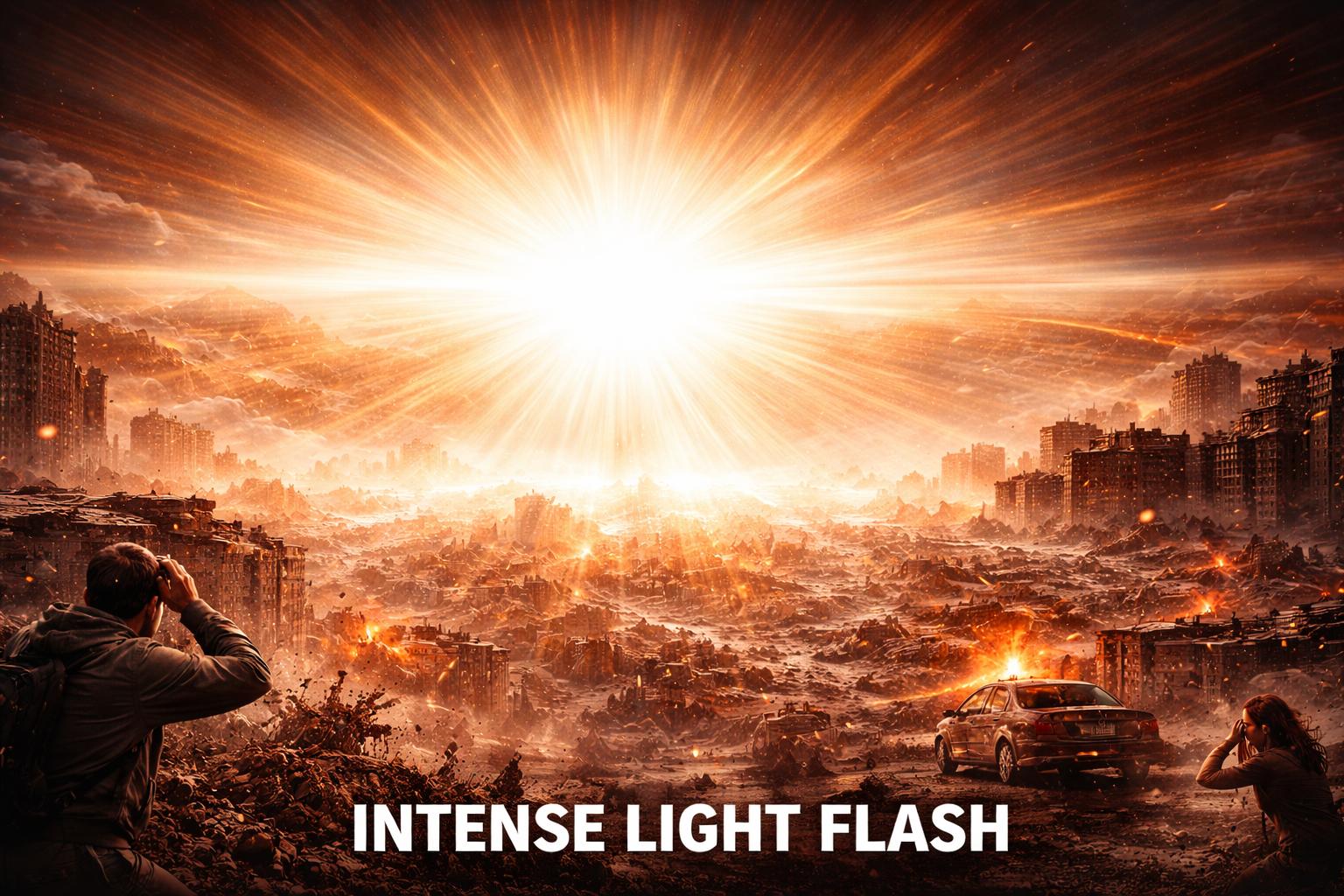
Intense Light Flash: The first immediate effect is a blinding flash of light, brighter than the sun. This flash can cause temporary or permanent blindness even at significant distances. The emitted radiation includes ultraviolet, visible, and infrared light, which can cause severe retinal burns if viewed directly.
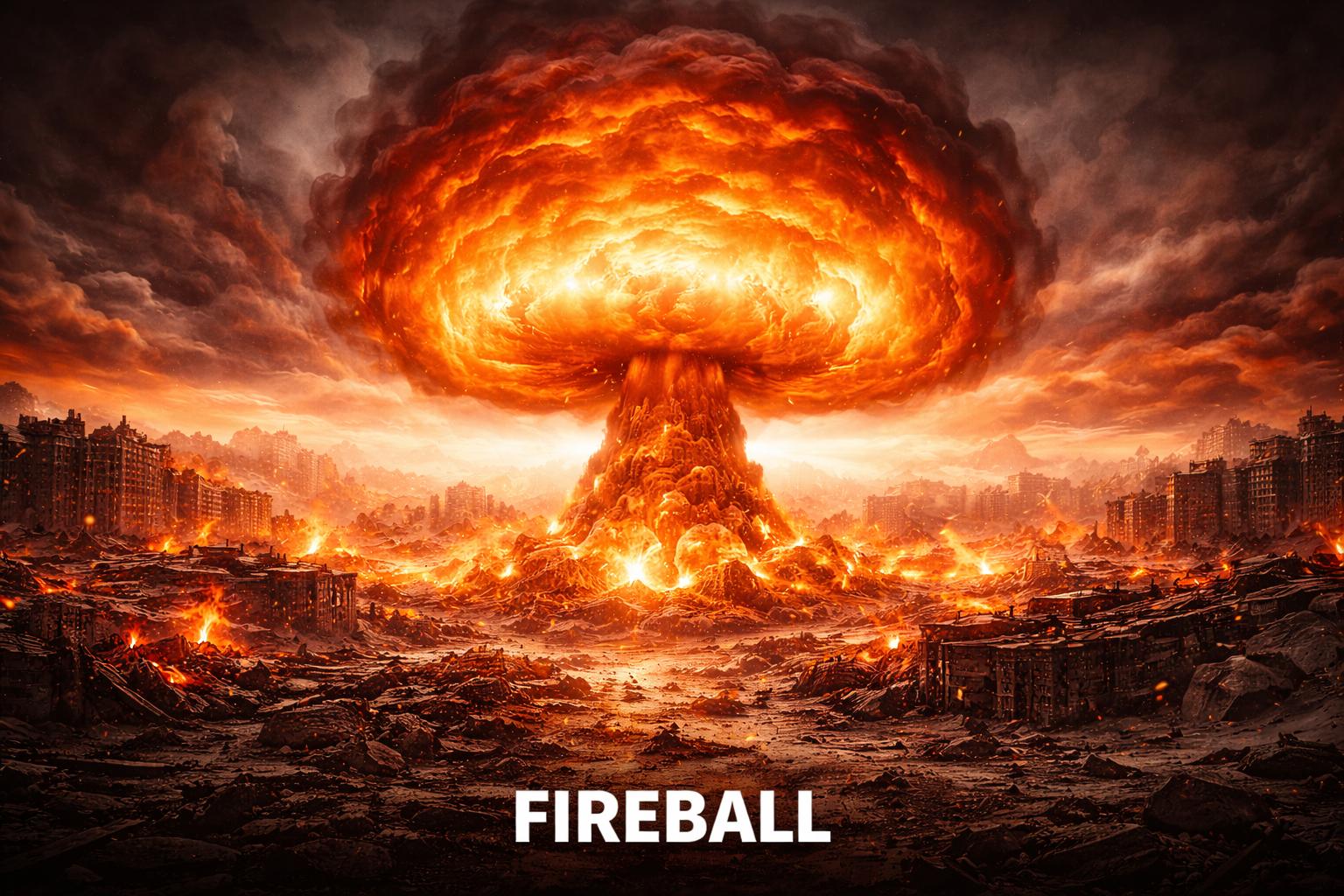
Fireball: The second layer forms due to the intense heat produced by the nuclear reaction. Temperatures within the fireball can reach several million degrees Celsius. Objects near ground zero are vaporized instantly, and the fireball rapidly rises to form the iconic mushroom cloud. This extreme heat also ignites fires over a large area.
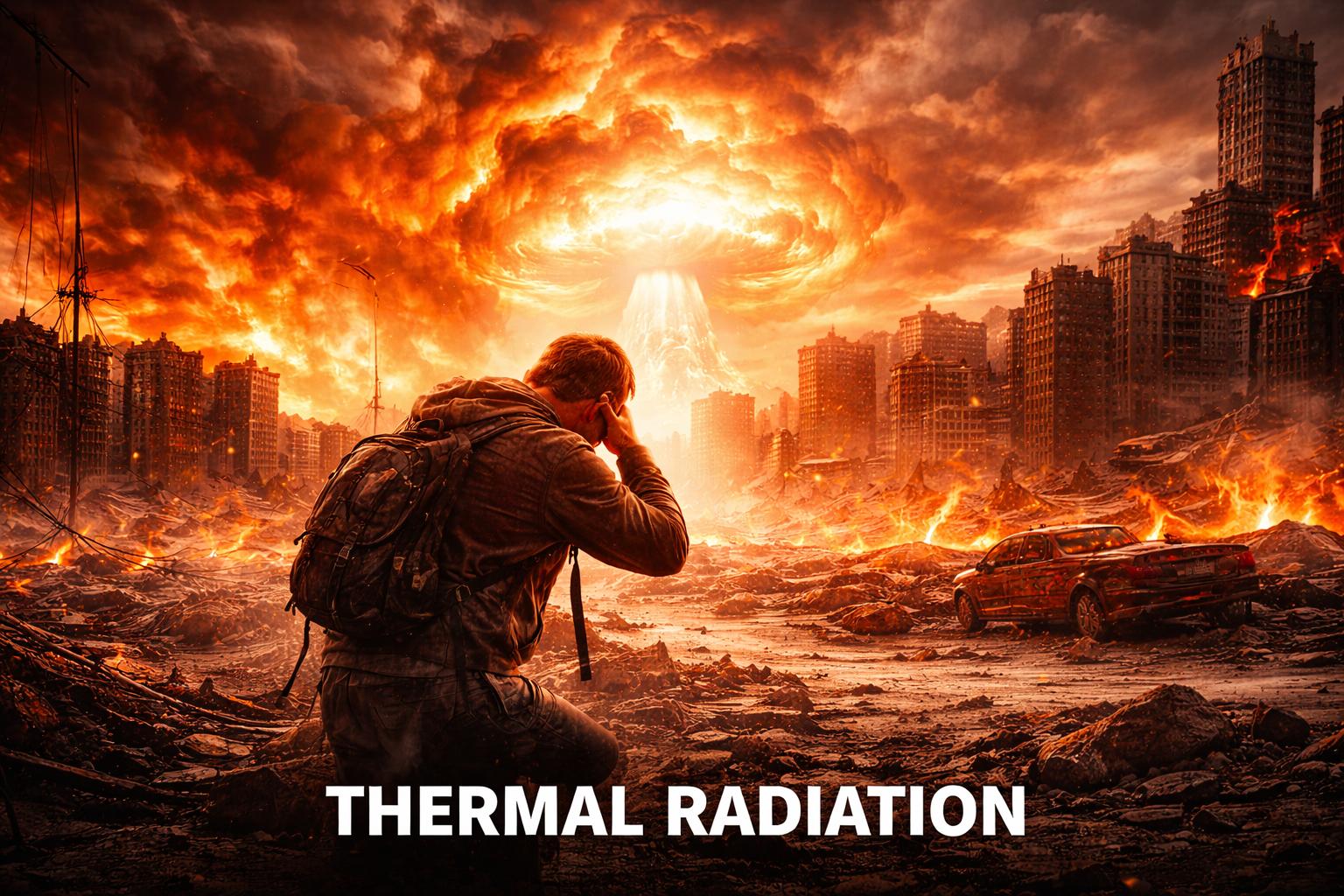
Thermal Radiation: A powerful heat wave spreads outward from the fireball, capable of causing severe burns on exposed skin and igniting flammable materials like wood, fabric, and paper. Thermal radiation can lead to first, second, or third-degree burns, and can also start numerous fires, merging into a devastating firestorm as oxygen is drawn in to fuel the flames.
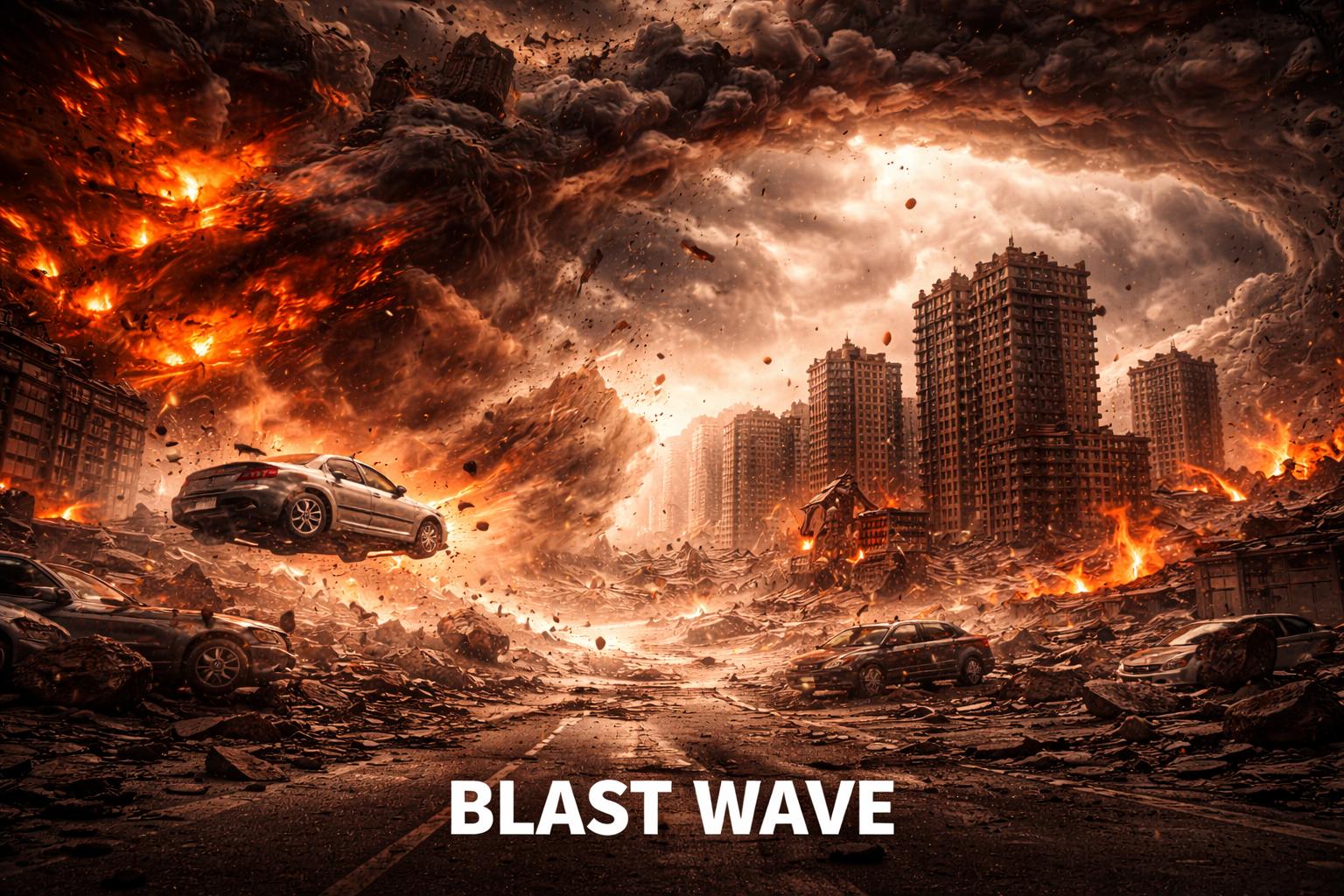
Blast Wave: The fourth layer is the shockwave created by the rapid expansion of hot gases. The blast wave moves faster than the speed of sound, creating massive pressure changes in the surrounding air. It can collapse buildings, shatter windows, and propel vehicles through the air. The shockwave also creates strong winds and flying debris, which can result in serious injuries or death.
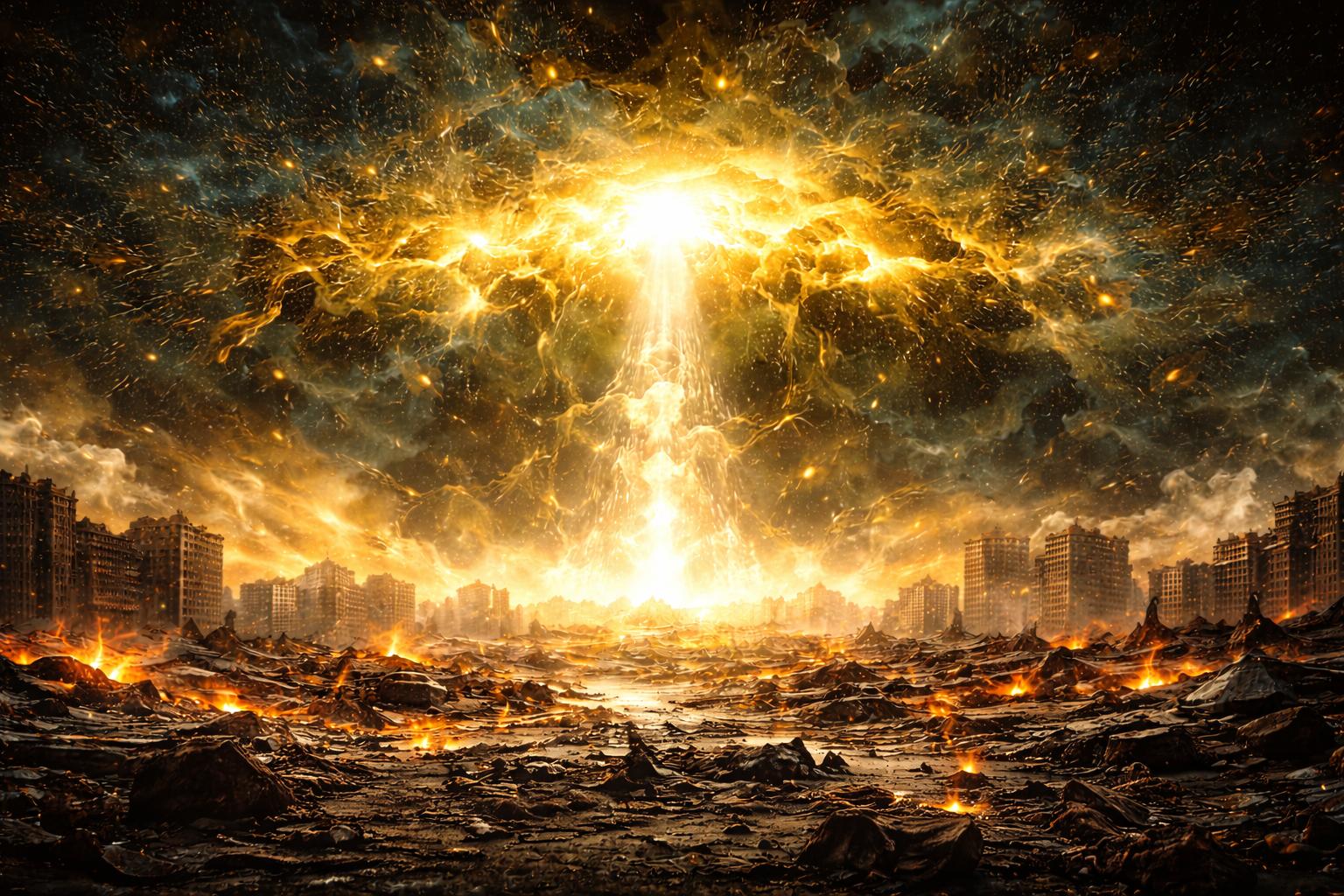
Prompt Nuclear Radiation: The fifth layer consists of immediate radiation emitted within the first minute after the explosion. This includes gamma rays, neutrons, and X-rays, all of which can penetrate the human body and damage cellular DNA. Exposure can cause nausea, organ damage, and long-term health effects such as cancer, depending on the dose.
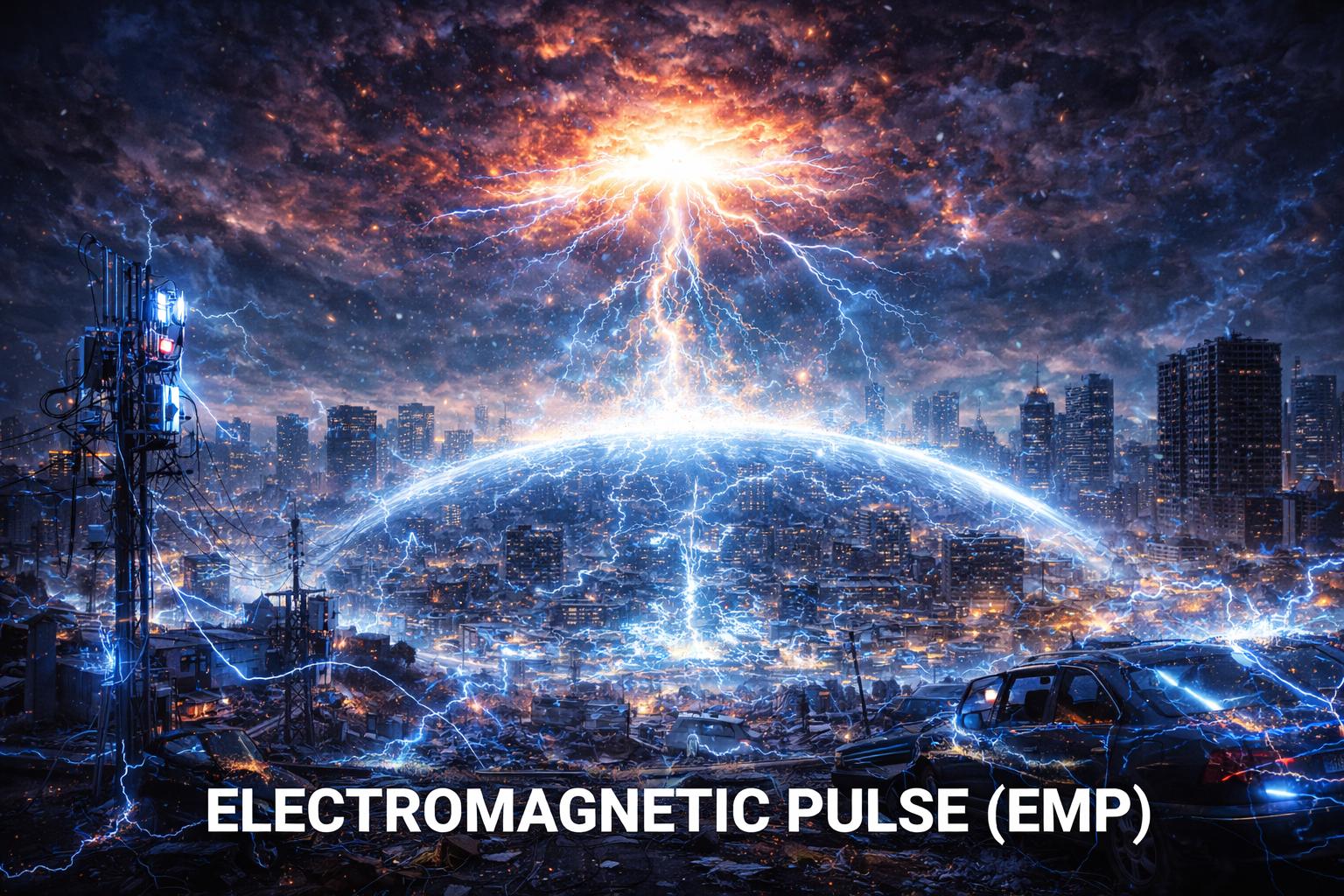
Electromagnetic Pulse (EMP): The sixth layer is an electromagnetic pulse generated by the nuclear explosion. This pulse can disrupt or permanently damage electronic devices, power grids, and communication systems over vast distances. Given our dependence on technology, this layer poses a significant risk to modern infrastructure, affecting transportation, communication, and energy supply systems.
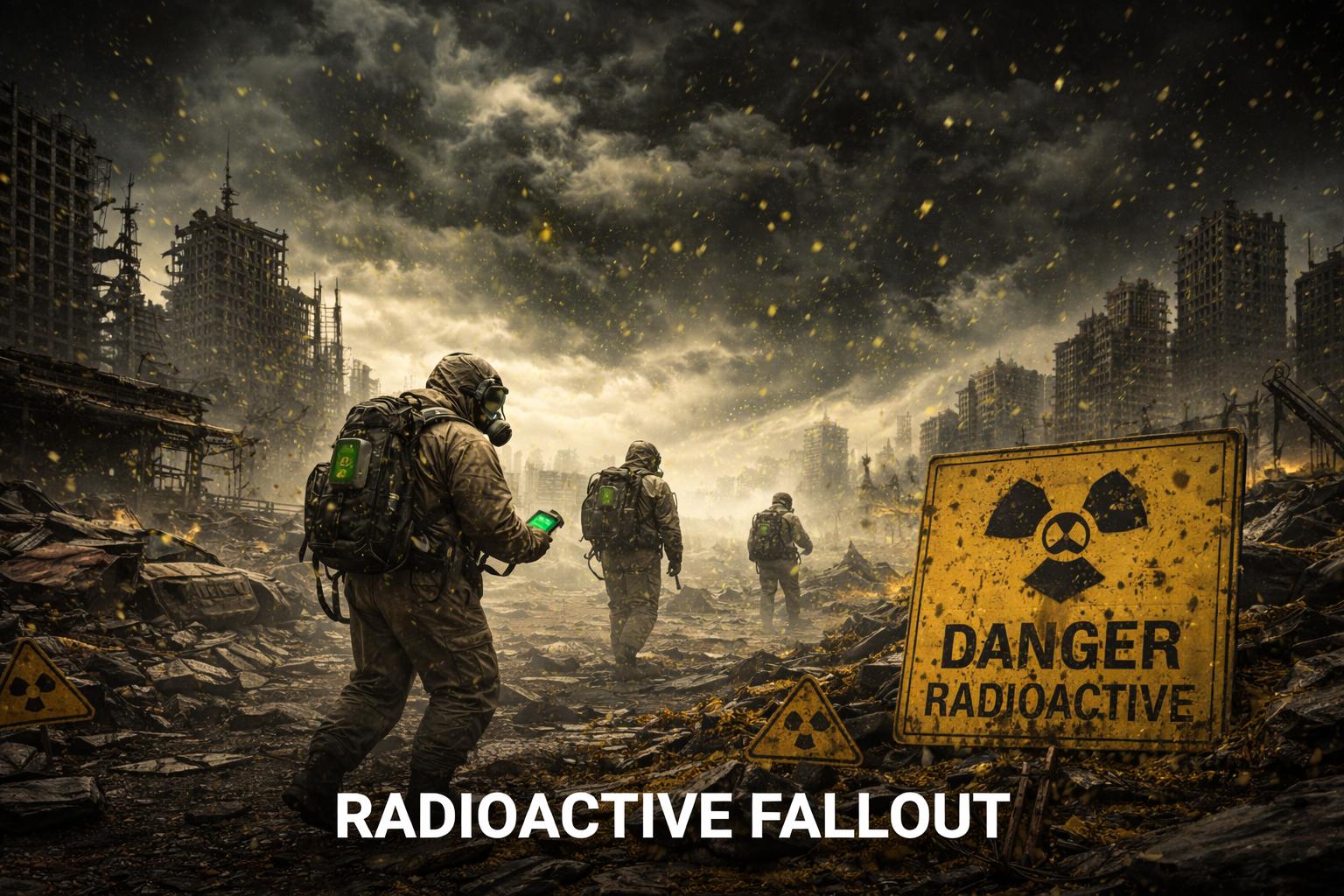
Radioactive Fallout: The seventh and final layer consists of radioactive particles that are lifted into the atmosphere by the explosion's force. These particles eventually fall back to Earth, contaminating water sources, soil, and vegetation. Radioactive fallout poses a long-term health risk, entering the food chain and potentially increasing the likelihood of cancer, genetic mutations, and environmental damage for years to come.
In conclusion, a nuclear explosion is a multi-layered disaster that affects both immediate and long-term environmental and human health. The seven layers—intense light, fireball, thermal radiation, blast wave, nuclear radiation, electromagnetic pulse, and radioactive fallout—each contribute to a catastrophic chain of events. Understanding these layers highlights the critical importance of nuclear disarmament and the need to prevent such destructive events from ever occurring again.