Japan earthquake alert: Risk of massive 8.0 quake rises after 7.7 tremor triggers tsunami warning
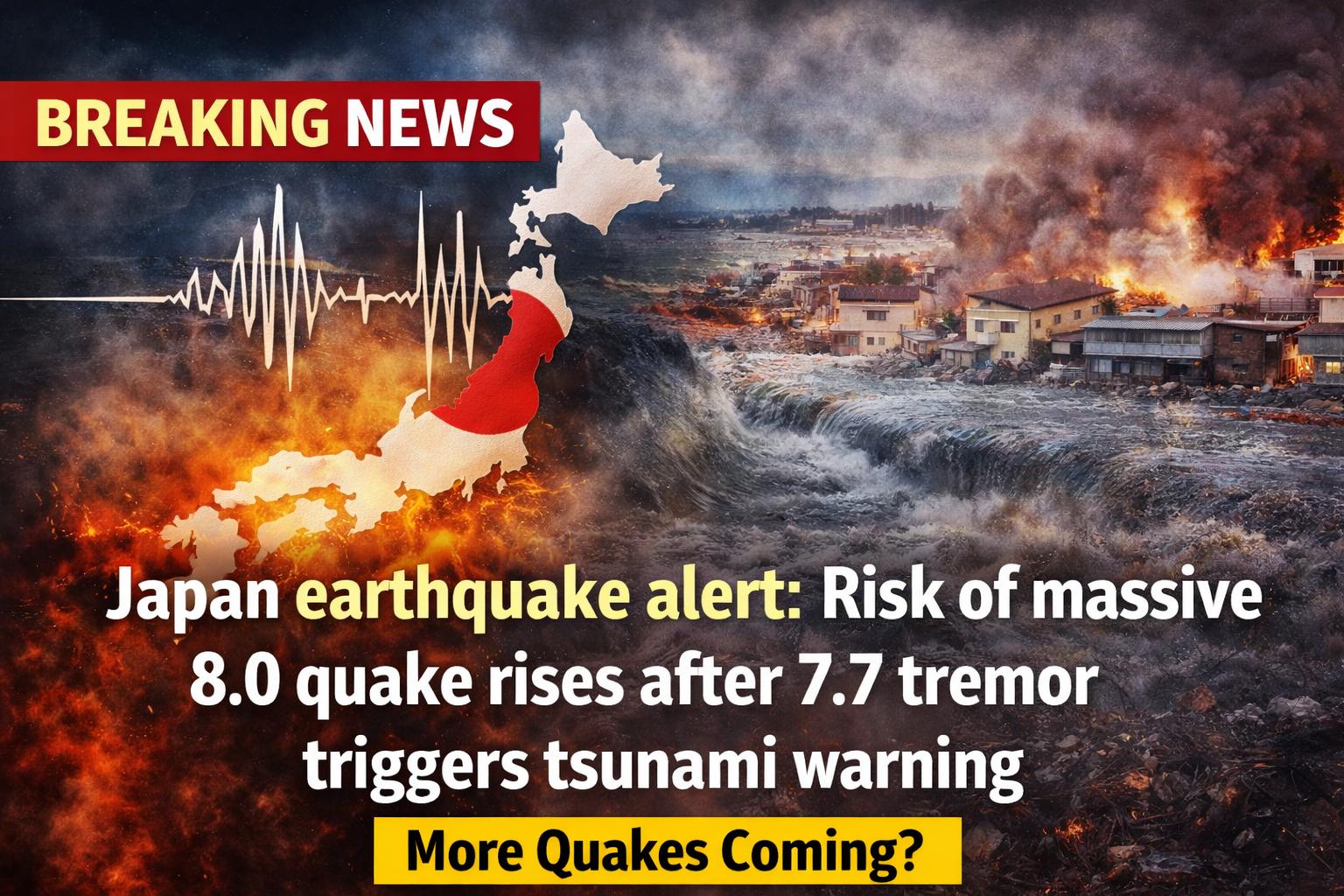
A powerful Japan earthquake measuring 7.7 magnitude has triggered fresh fears of a much larger seismic event, with authorities warning that the risk of a stronger quake—possibly above magnitude 8.0—has significantly increased. The tremor struck off the north-east coast near Iwate Prefecture, prompting tsunami alerts and mass evacuations along coastal regions. The warning has heightened anxiety across the country, especially given Japan’s history of devastating earthquakes and tsunamis.
7.7 magnitude quake triggers tsunami warning in Japan
The undersea quake occurred at a depth of around 10 kilometers, shaking large parts of northern Japan. Authorities quickly issued a tsunami warning, urging residents in coastal and riverside areas to move to higher ground immediately. Thousands of people were evacuated across Iwate, Honshu, and parts of Hokkaido. While the largest recorded tsunami wave reached about 80 centimeters, officials warned that stronger waves could follow if additional quakes occur. The tremors were also felt in Tokyo, highlighting the wide impact of the seismic activity.
Authorities warn of stronger earthquake risk in coming days
Japan’s Meteorological Agency has issued a critical warning, stating that the likelihood of a stronger earthquake in Japan is now “relatively higher than during normal times.” Officials cautioned that aftershocks or even a larger quake could occur within the next week. Experts noted that seismic activity of this scale often leads to additional tremors, some of which may exceed the original event in intensity. This has raised concerns about a possible 8.0 magnitude earthquake, which could have severe consequences.
Evacuations and emergency response across affected regions
Local authorities acted swiftly following the quake, using public alert systems and loudspeakers to warn residents. In Hokkaido, tsunami alerts remained in place for several hours, with emergency teams closely monitoring the situation. Residents described the experience as tense but controlled. Many reported that they immediately moved to safer locations upon hearing alerts. Offices and public institutions allowed early departures to ensure safety. Transport services were also affected, with disruptions reported in bullet train operations. Around 100 homes experienced power outages, although no major damage or casualties were initially reported.
Why Japan remains vulnerable to major earthquakes
Japan’s geographical location along the Ring of Fire makes it one of the most earthquake-prone countries in the world. The region experiences approximately 1,500 earthquakes each year, accounting for nearly 10 percent of the world’s major seismic activity. The current situation has revived memories of the devastating 2011 earthquake and tsunami, which killed more than 18,000 people and triggered a nuclear disaster at Fukushima. That event remains one of the most catastrophic natural disasters in modern history. Since then, Japan has strengthened its disaster response systems, including early warning technologies and evacuation protocols.
Tsunami warnings downgraded but caution remains
Following the initial warning, authorities later downgraded the tsunami alert and eventually lifted it. However, officials have emphasized that the danger has not completely passed. The Japan Meteorological Agency urged residents to remain vigilant, warning that tsunami waves can arrive repeatedly after an earthquake. People were advised not to return to coastal areas until it is completely safe. Government officials, including the Prime Minister, also urged citizens to stay alert and prioritize safety.
Global concern as Japan monitors seismic activity
The latest Japan earthquake news has drawn global attention, as any major seismic event in the region can have wide-ranging impacts. Disruptions to infrastructure, energy supply, and transportation networks could affect global markets. Additionally, concerns about nuclear safety remain a key issue, given Japan’s past experiences. Authorities are closely monitoring nuclear facilities to ensure there are no risks.
What happens next: Critical week ahead
The next few days are considered crucial as scientists monitor aftershocks and seismic patterns. The possibility of a stronger quake means that emergency services remain on high alert. Preparedness measures, including evacuation readiness and public awareness, will play a key role in minimizing risks. Authorities are continuing to issue updates and advisories to keep residents informed.
A nation on alert after major earthquake warning
The recent Japan earthquake and tsunami warning has once again highlighted the country’s vulnerability to natural disasters. While immediate damage appears limited, the increased risk of a stronger quake has placed the nation on high alert. As Japan navigates this uncertain period, its advanced disaster preparedness systems will be critical in ensuring public safety. The coming week will determine whether the situation stabilizes or escalates further, making vigilance essential for millions of residents.