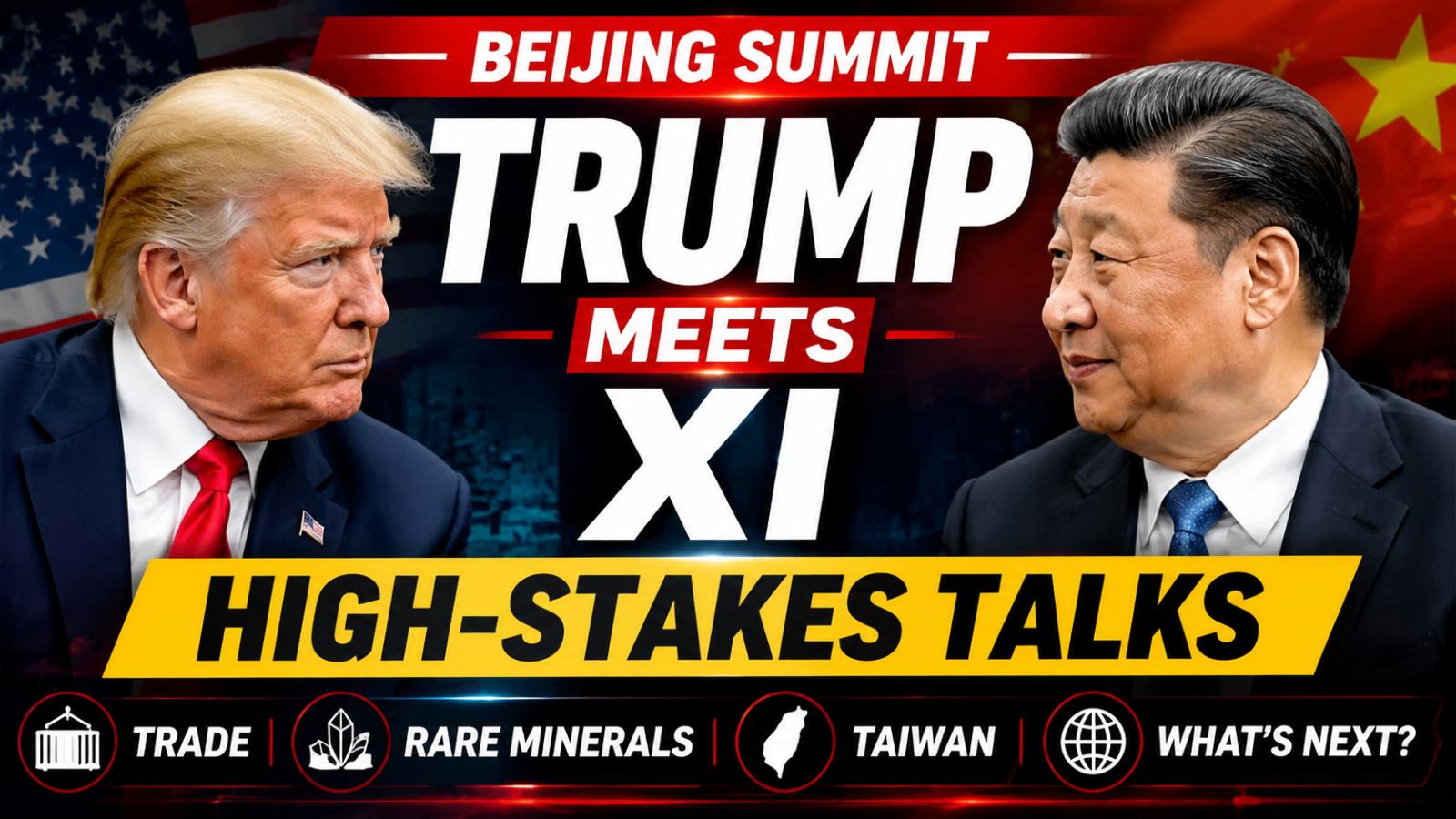
On May 14, 2026, a historic meeting unfolded in Beijing between U.S. President Donald Trump and Chinese President Xi Jinping. Hosted at the Great Hall of the People, the summit aimed to strengthen the ties between the two largest economies in the world. The opening moments were marked by a brief but firm handshake that lasted a solid 40 seconds, setting a serious but cordial tone for the discussions ahead.
High-Level Delegation and Symbolic Gestures
The U.S. delegation, led by Trump, included top officials like Secretary of State Marco Rubio, Secretary of Defense Pete Hegseth, and prominent business figures such as Elon Musk. The formal event kicked off with a 21-gun salute, followed by a music performance and marching soldiers, symbolizing the diplomatic significance of the meeting. This symbolic display set the stage for critical talks between the two leaders.
Shared Interests and Optimism
Xi warmly welcomed President Trump and highlighted the mutual opportunities available to both nations. He emphasized that the common interests of the U.S. and China far outweigh their differences, offering a message of collaboration despite the challenges both countries face globally. Trump echoed this sentiment, expressing hope that the U.S.-China relationship would enter a new phase of cooperation and growth, calling the meeting an honor.
Addressing Trade and Economic Tensions
A central topic of discussion was the ongoing trade tensions between the two nations. President Trump pushed for a resolution to the trade imbalance, with particular focus on access to China’s critical rare earth minerals. These minerals are vital for advanced technology and defense applications, making them a key area of interest for the U.S. leadership. The summit also addressed issues surrounding the expansion of U.S. farm exports to China, alongside Boeing's proposed sale of planes to the Chinese government.
China’s Strategic Interests in the U.S. Market
From China’s perspective, the meeting offered a chance to ease restrictions on its companies operating in the U.S. President Xi stressed the importance of reducing barriers, particularly in the fields of artificial intelligence and electric vehicles. The Chinese electric vehicle giant, BYD, stood out as a key player in these talks, with potential future trade deals in mind.
Taiwan and Regional Security Concerns
A highly sensitive issue during the talks was the status of Taiwan, which China considers part of its territory. Xi expressed concerns over the U.S. military's involvement with Taiwan, particularly regarding arms sales and defense support. The Chinese president urged the U.S. to be cautious in its dealings with Taiwan, a point that was met with strong responses from Trump, signaling the ongoing challenges in balancing defense interests in the region.
Strengthening U.S.-China Cooperation
Despite these contentious issues, both leaders expressed a shared desire for more robust cooperation moving forward. The summit's success was rooted in both countries’ recognition of the need to engage in complex and often difficult negotiations. Trump hinted that he would bring up the case of Jimmy Lai, a prominent pro-democracy figure in Hong Kong, in future discussions, signaling that human rights could remain on the agenda.
Looking Ahead: What’s Next for U.S.-China Relations?
As the summit concluded, the leaders agreed that this meeting was just the beginning of deeper conversations. While the issues discussed were undoubtedly challenging, the atmosphere of the summit suggested that there was room for progress. The global community will be watching closely to see how the two nations navigate these complex discussions in the coming months, and whether the outcomes of this meeting will lay the foundation for a more balanced and cooperative U.S.-China relationship in the future.
By the end of the day, the summit had shown that while differences between the U.S. and China persist, the desire for improved relations and cooperation remains strong. The question now is whether both countries can build on this momentum to shape a new global economic order.