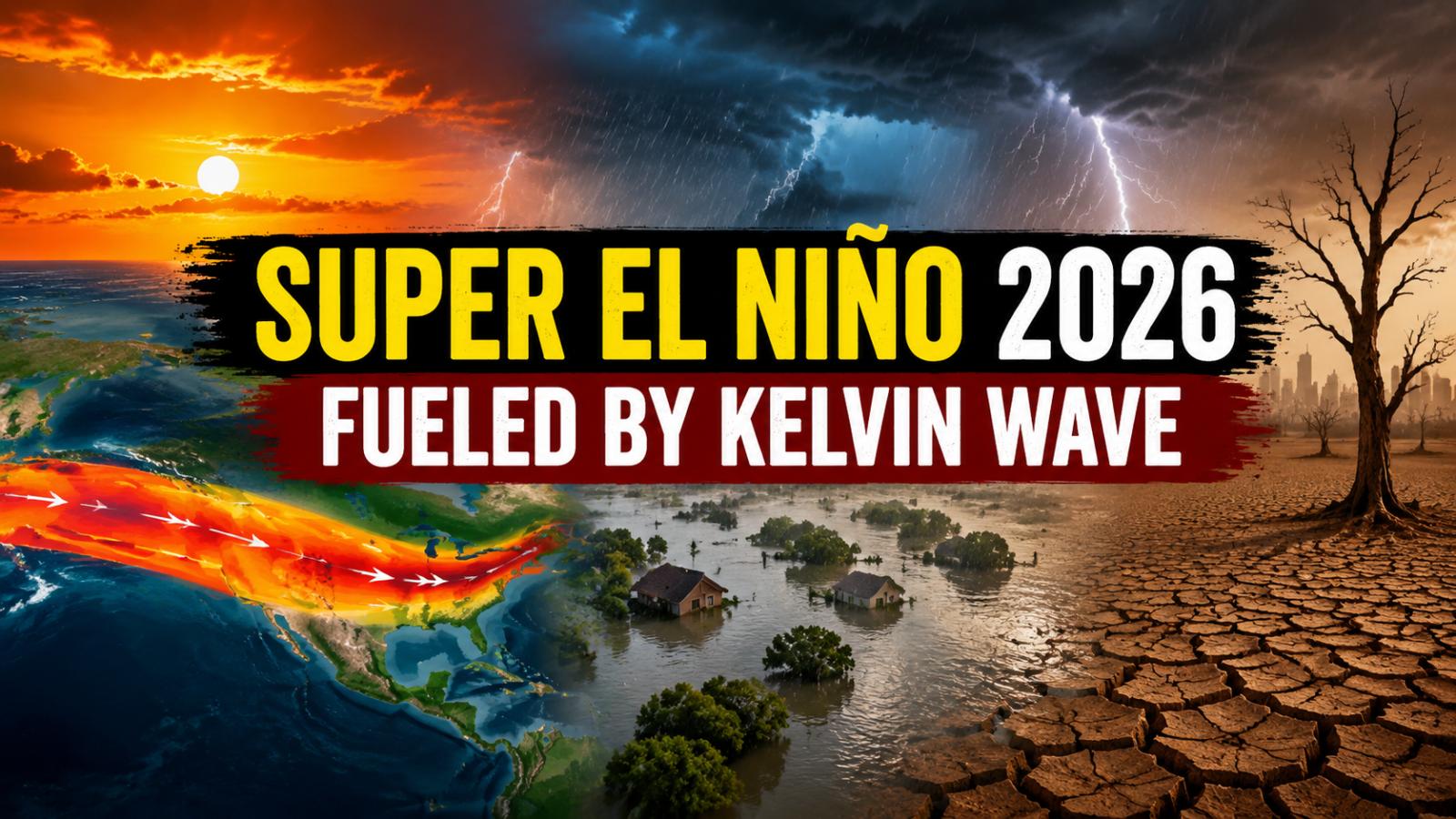
Scientists are warning that 2026 may bring one of the strongest El Niño events in over a century. Known as the Super El Niño, this phenomenon is driven by an unusually powerful Kelvin Wave traveling across the Pacific Ocean. This massive surge of warm water, sometimes more than 13°F above average, is disrupting normal ocean currents and could trigger major shifts in weather worldwide.
Understanding Kelvin Waves and Ocean Heating
Kelvin Waves are large masses of warm water pushed eastward by strong westerly winds. Unlike normal ocean currents, these waves prevent cooler water from rising to the surface, trapping heat in the upper ocean layers. The resulting ocean temperature anomalies influence atmospheric patterns, causing extreme rainfall in some areas and severe droughts in others. Past Super El Niños, like those in 1997 and 1877, led to significant agricultural losses and economic strain.
Coastal vs Equatorial Kelvin Waves
There are two types of Kelvin Waves: Coastal and Equatorial. While coastal waves travel along shorelines, Equatorial Kelvin Waves move along the equator, guided by the Coriolis effect. The strength and temperature of these waves directly determine the severity of the El Niño event. Experts note that 2026’s wave is unusually warm and extensive, raising concerns about extreme weather worldwide.
Expected Global Impacts
By mid-2026, the Super El Niño is projected to affect global climate patterns. Regions already vulnerable to heat and water shortages may face droughts, while areas prone to heavy rainfall could experience floods. Agricultural output, energy demands, and water management systems may all be strained as temperatures rise and precipitation becomes uneven.
Impact on India’s Monsoon and Heatwaves
In India, meteorologists predict below-normal monsoon rainfall, with overall precipitation expected at roughly 92% of the long-term average. Northern, central, and eastern India may face intense heat, while some coastal states, including Tamil Nadu and Andhra Pradesh, could experience localized heavy rainfall. Weakening monsoon winds and prolonged dry spells may threaten crops and water supplies, making early preparation crucial.
Preparation and Climate Resilience
Governments and communities worldwide are being urged to prepare for extreme weather events, from heatwaves to floods. This Super El Niño underscores the urgent need for climate resilience strategies, including water conservation, crop planning, and disaster response readiness. The interaction between oceanic warming and atmospheric disruption highlights how interconnected global weather systems have become.