Europe omega block heatwave drives deadly temperature surge
Europe is currently experiencing a severe heatwave driven by a trapped atmospheric system known as an omega block. This Europe omega block heatwave is preventing normal weather movement, locking hot air over large parts of the continent for days. As a result, temperatures are rising sharply, affecting daily life, health systems, and infrastructure across multiple countries. What is driving this extreme heat The main reason behind the heat buildup is a stalled jet stream pattern. In this pattern, high pressure sits over Europe in a shape that blocks cooler air from entering. Instead of changing weather systems, the same hot air remains in place and continues to intensify under strong summer sunlight. This creates repeated days of extreme heat rather than short-term spikes. Nights also remain warm, giving the human body little time to recover from daytime heat exposure. Countries facing the strongest impact The heatwave is affecting a wide region including France, Germany, Italy, Spain, Switzerland, the United Kingdom, Poland, Czechia, Hungary, and parts of the Balkans. Several areas in Central and Eastern Europe have recorded temperatures above 40°C, with some locations reaching historic highs. The heat is spreading gradually eastward as the trapped system shifts across the continent. Why some regions are more exposed Southern Europe is directly exposed to hot air moving from North Africa and the Mediterranean. Countries such as Spain, Italy, and France experience intense surface heating due to prolonged sunlight and dry conditions. In Central and Eastern Europe, countries like Germany, Poland, Czechia, and Hungary face heat accumulation over landlocked regions, where hot air remains trapped for longer periods. Impact on health and daily life Health systems are under growing pressure as heat-related illnesses increase. Conditions such as dehydration, heatstroke, and cardiovascular stress are rising, particularly among older adults, outdoor workers, and people without cooling access. Reports from multiple regions indicate excess deaths above normal levels during the heatwave period, highlighting the seriousness of prolonged exposure to extreme temperatures. Transport systems are also affected. Railway lines expand under heat, causing delays, while road surfaces soften and become unstable. Energy demand increases as cooling systems are used more widely, putting pressure on national grids. Agriculture is also suffering due to dry soil conditions, reduced crop yields, and falling river levels. In some regions, water availability is becoming a growing concern for both farming and urban supply. Public response and risk outlook Authorities across Europe are advising people to stay hydrated, avoid outdoor activity during peak heat hours, and check on vulnerable individuals. Hospitals remain alert as heat-related admissions continue to rise. Experts warn that the full impact of this heatwave may take time to appear, as excess mortality data is still being compiled. The situation highlights how extreme weather patterns are becoming more persistent and widespread, with the omega block heatwave showing how atmospheric conditions can directly affect health, infrastructure, and daily life across Europe.
Europe omega block heatwave drives deadly temperature surge
Europe is currently experiencing a severe heatwave driven by a trapped atmospheric system known as an omega block. This Europe omega block heatwave is preventing normal weather movement, locking hot air over large parts of the continent for days. As a result, temperatures are rising sharply, affecting daily life, health systems, and infrastructure across multiple countries. What is driving this extreme heat The main reason behind the heat buildup is a stalled jet stream pattern. In this pattern, high pressure sits over Europe in a shape that blocks cooler air from entering. Instead of changing weather systems, the same hot air remains in place and continues to intensify under strong summer sunlight. This creates repeated days of extreme heat rather than short-term spikes. Nights also remain warm, giving the human body little time to recover from daytime heat exposure. Countries facing the strongest impact The heatwave is affecting a wide region including France, Germany, Italy, Spain, Switzerland, the United Kingdom, Poland, Czechia, Hungary, and parts of the Balkans. Several areas in Central and Eastern Europe have recorded temperatures above 40°C, with some locations reaching historic highs. The heat is spreading gradually eastward as the trapped system shifts across the continent. Why some regions are more exposed Southern Europe is directly exposed to hot air moving from North Africa and the Mediterranean. Countries such as Spain, Italy, and France experience intense surface heating due to prolonged sunlight and dry conditions. In Central and Eastern Europe, countries like Germany, Poland, Czechia, and Hungary face heat accumulation over landlocked regions, where hot air remains trapped for longer periods. Impact on health and daily life Health systems are under growing pressure as heat-related illnesses increase. Conditions such as dehydration, heatstroke, and cardiovascular stress are rising, particularly among older adults, outdoor workers, and people without cooling access. Reports from multiple regions indicate excess deaths above normal levels during the heatwave period, highlighting the seriousness of prolonged exposure to extreme temperatures. Transport systems are also affected. Railway lines expand under heat, causing delays, while road surfaces soften and become unstable. Energy demand increases as cooling systems are used more widely, putting pressure on national grids. Agriculture is also suffering due to dry soil conditions, reduced crop yields, and falling river levels. In some regions, water availability is becoming a growing concern for both farming and urban supply. Public response and risk outlook Authorities across Europe are advising people to stay hydrated, avoid outdoor activity during peak heat hours, and check on vulnerable individuals. Hospitals remain alert as heat-related admissions continue to rise. Experts warn that the full impact of this heatwave may take time to appear, as excess mortality data is still being compiled. The situation highlights how extreme weather patterns are becoming more persistent and widespread, with the omega block heatwave showing how atmospheric conditions can directly affect health, infrastructure, and daily life across Europe.
Europe heatwave intensifies as blocking system traps hot air
A strong and slow-moving atmospheric pattern is keeping large parts of Europe locked under unusually hot and dry conditions. The system is preventing cooler Atlantic air from entering the region, allowing heat to build up day after day. As a result, temperatures are climbing far above seasonal averages across Western and Central Europe, with multiple countries reporting prolonged heat stress rather than short heat spikes.
Europe heatwave intensifies as blocking system traps hot air
A strong and slow-moving atmospheric pattern is keeping large parts of Europe locked under unusually hot and dry conditions. The system is preventing cooler Atlantic air from entering the region, allowing heat to build up day after day. As a result, temperatures are climbing far above seasonal averages across Western and Central Europe, with multiple countries reporting prolonged heat stress rather than short heat spikes.
France heatwave shuts landmarks as tourism faces disruption
France is experiencing an intense heat surge that has pushed temperatures across several regions to dangerous levels, placing large parts of the country under the highest weather alert category. Authorities have warned that the current conditions are among the most severe in recent years, with urban areas like Paris feeling the strongest impact due to dense infrastructure and limited night-time cooling. Paris tourism slows as conditions become unsafe Tourist activity in Paris has taken a noticeable hit as extreme heat makes outdoor movement difficult during peak hours. Visitors are shortening itineraries, avoiding long walking routes, and shifting to indoor attractions wherever possible. Public spaces remain crowded, but activity is largely concentrated in shaded areas and air-conditioned venues as people try to avoid prolonged exposure. Major landmarks adjust operations due to heat stress Several iconic sites have been forced to modify schedules in response to the heat conditions. The Eiffel Tower has adjusted operating hours, closing earlier than usual to reduce visitor risk during peak temperatures. The Louvre Museum has also shifted to reduced visiting hours, prioritizing safety for both staff and tourists. Other regional attractions have issued advisories urging travelers to delay or reschedule visits until conditions improve. Weather pattern driving the extreme temperatures Meteorologists attribute the heat surge to a stalled atmospheric pattern that is trapping warm air over Western Europe. This system is reinforced by hot air moving in from North Africa, intensifying the temperature spike across France. Combined with stagnant wind conditions, the heat is persisting longer than typical summer peaks, limiting overnight cooling and increasing strain on infrastructure. Climate trend raising frequency of extreme heat events Experts note that Europe is warming faster than many other regions globally, contributing to more frequent and intense heat episodes. France is increasingly experiencing prolonged summer heat events that disrupt transport, tourism, and daily routines. The current situation highlights how rising baseline temperatures are turning what were once rare extremes into recurring seasonal challenges.
France heatwave shuts landmarks as tourism faces disruption
France is experiencing an intense heat surge that has pushed temperatures across several regions to dangerous levels, placing large parts of the country under the highest weather alert category. Authorities have warned that the current conditions are among the most severe in recent years, with urban areas like Paris feeling the strongest impact due to dense infrastructure and limited night-time cooling. Paris tourism slows as conditions become unsafe Tourist activity in Paris has taken a noticeable hit as extreme heat makes outdoor movement difficult during peak hours. Visitors are shortening itineraries, avoiding long walking routes, and shifting to indoor attractions wherever possible. Public spaces remain crowded, but activity is largely concentrated in shaded areas and air-conditioned venues as people try to avoid prolonged exposure. Major landmarks adjust operations due to heat stress Several iconic sites have been forced to modify schedules in response to the heat conditions. The Eiffel Tower has adjusted operating hours, closing earlier than usual to reduce visitor risk during peak temperatures. The Louvre Museum has also shifted to reduced visiting hours, prioritizing safety for both staff and tourists. Other regional attractions have issued advisories urging travelers to delay or reschedule visits until conditions improve. Weather pattern driving the extreme temperatures Meteorologists attribute the heat surge to a stalled atmospheric pattern that is trapping warm air over Western Europe. This system is reinforced by hot air moving in from North Africa, intensifying the temperature spike across France. Combined with stagnant wind conditions, the heat is persisting longer than typical summer peaks, limiting overnight cooling and increasing strain on infrastructure. Climate trend raising frequency of extreme heat events Experts note that Europe is warming faster than many other regions globally, contributing to more frequent and intense heat episodes. France is increasingly experiencing prolonged summer heat events that disrupt transport, tourism, and daily routines. The current situation highlights how rising baseline temperatures are turning what were once rare extremes into recurring seasonal challenges.



Guangdong floods force evacuation of 37,600 residents
Continuous and intense rainfall across China’s Guangdong province has led to widespread flooding concerns, pushing authorities to move more than 37,600 residents from vulnerable zones. Low-lying districts and river-adjacent communities have been hit hardest as water levels rose rapidly after days of persistent downpours. Emergency management teams report that flood control mechanisms have been activated across multiple counties, with local authorities shifting into heightened aler
Guangdong floods force evacuation of 37,600 residents
Continuous and intense rainfall across China’s Guangdong province has led to widespread flooding concerns, pushing authorities to move more than 37,600 residents from vulnerable zones. Low-lying districts and river-adjacent communities have been hit hardest as water levels rose rapidly after days of persistent downpours. Emergency management teams report that flood control mechanisms have been activated across multiple counties, with local authorities shifting into heightened aler
South Shore Line Storm Damage Suspends South Bend-Michigan City Service
South Shore Line Storm Damage Suspends South Bend-Michigan City Service South Shore Line storm damage continued to affect riders on Friday, June 12, 2026, after severe weather damaged rail infrastructure in northwest Indiana. The commuter rail agency said in an official service update that trains would resume Friday between Michigan City, Indiana, and Millennium Station in downtown Chicago, including Monon service. However, service remained suspended between South Bend and
South Shore Line Storm Damage Suspends South Bend-Michigan City Service
South Shore Line Storm Damage Suspends South Bend-Michigan City Service South Shore Line storm damage continued to affect riders on Friday, June 12, 2026, after severe weather damaged rail infrastructure in northwest Indiana. The commuter rail agency said in an official service update that trains would resume Friday between Michigan City, Indiana, and Millennium Station in downtown Chicago, including Monon service. However, service remained suspended between South Bend and
Delhi rain alert: IMD warns of thunderstorms and strong winds
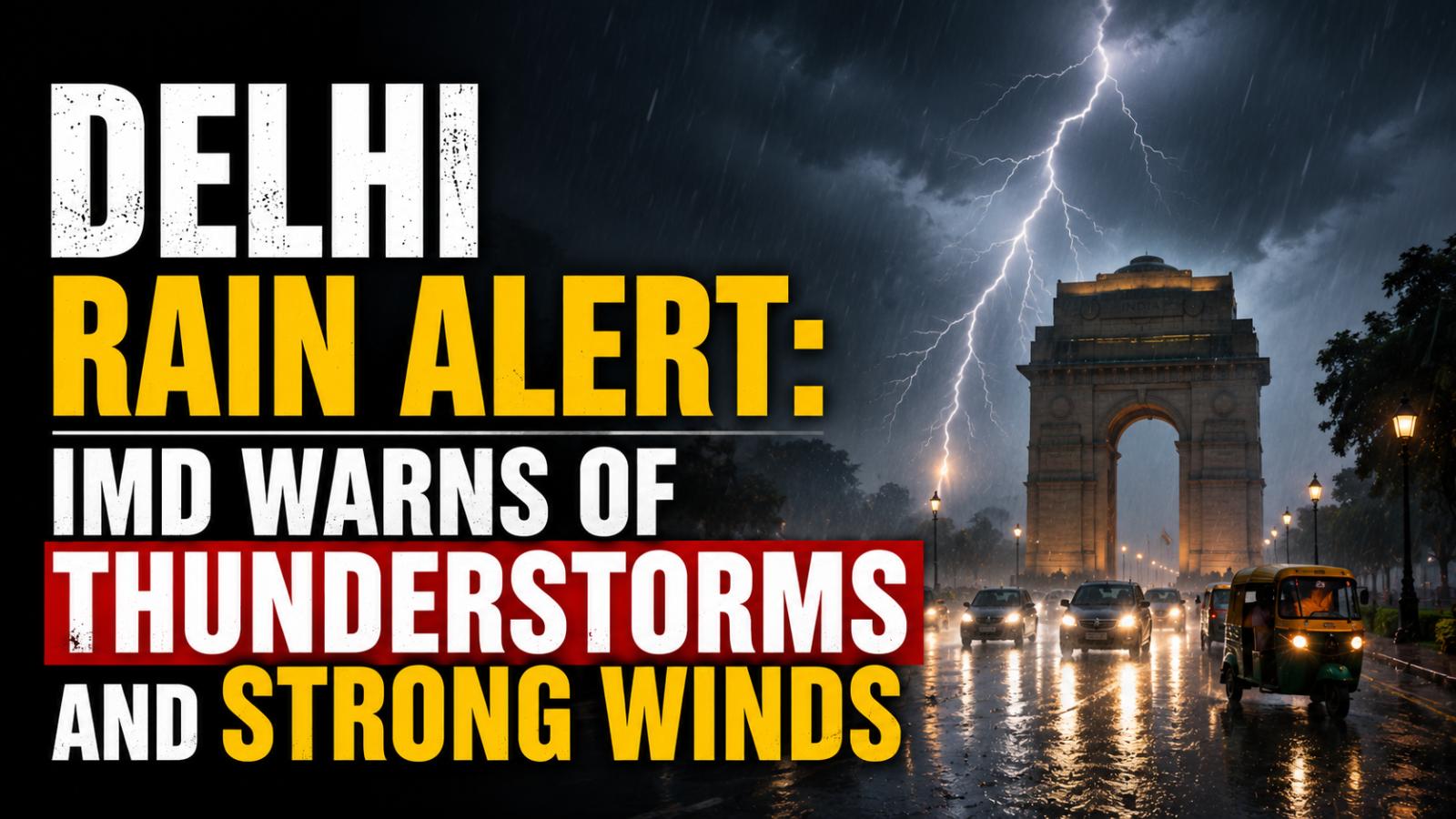
Delhi remained under a severe weather warning on June 12, 2026, after heavy rain lashed several parts of the national capital late Wednesday night. The India Meteorological Department warned that Delhi could witness thunderstorms, lightning, light to moderate rain and strong gusty winds as unstable weather conditions continued across northwest India. The weather department said strong thunderstorms may bring wind speeds of 70 to 90 kmph in
Delhi rain alert: IMD warns of thunderstorms and strong winds
Delhi remained under a severe weather warning on June 12, 2026, after heavy rain lashed several parts of the national capital late Wednesday night. The India Meteorological Department warned that Delhi could witness thunderstorms, lightning, light to moderate rain and strong gusty winds as unstable weather conditions continued across northwest India. The weather department said strong thunderstorms may bring wind speeds of 70 to 90 kmph in
Chicago Suburbs Face EF-2 Tornado Risk as Severe Storms Return
Chicago suburbs tornado risk is rising as forecasters warn of another round of severe storms across northern Illinois on Thursday, June 11, 2026. The National Weather Service in Chicago said the tornado threat had increased, with two possible waves of storms expected during the day. The most concerning period is expected between 4 PM and 8 PM CDT, especially along and north of I-88. Chicago Suburbs Tornado Risk Highest North and West of the City
Chicago Suburbs Face EF-2 Tornado Risk as Severe Storms Return
Chicago suburbs tornado risk is rising as forecasters warn of another round of severe storms across northern Illinois on Thursday, June 11, 2026. The National Weather Service in Chicago said the tornado threat had increased, with two possible waves of storms expected during the day. The most concerning period is expected between 4 PM and 8 PM CDT, especially along and north of I-88. Chicago Suburbs Tornado Risk Highest North and West of the City
Chicago Storms May Bring Commute Rain and 90-Degree Heat
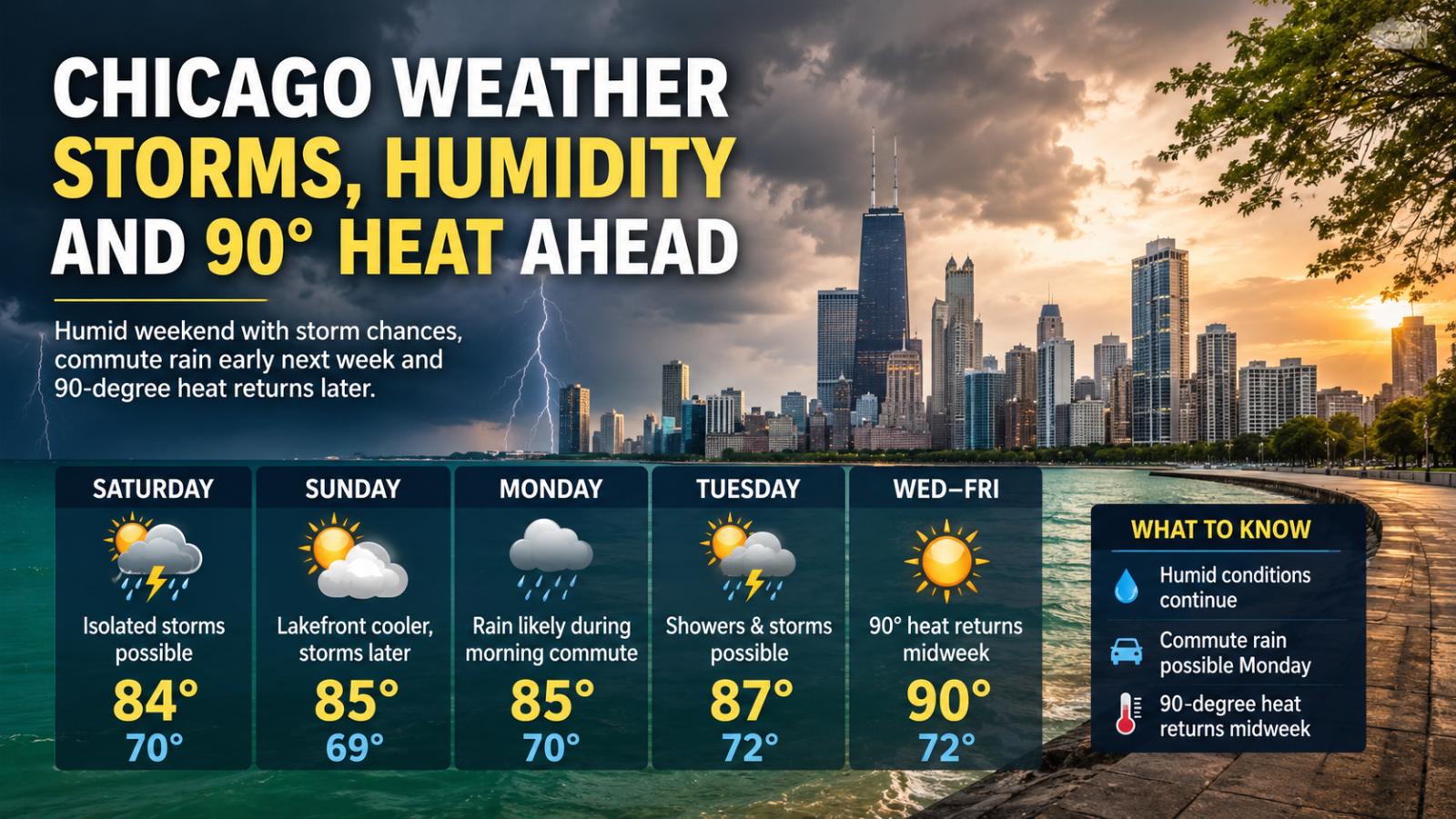
Chicago weekend storms remain possible as humid air stays over the region, bringing mid-80s temperatures, lakefront cooling and a stronger rain chance before 90-degree heat returns later in the week. The source forecast did not provide confirmed calendar dates, so weekday references are preserved without adding unverified dates. Thunderstorms moved through the Chicago area overnight, but by about 7 AM Central time, most of the activity had shifted south and was leaving the
Chicago Storms May Bring Commute Rain and 90-Degree Heat
Chicago weekend storms remain possible as humid air stays over the region, bringing mid-80s temperatures, lakefront cooling and a stronger rain chance before 90-degree heat returns later in the week. The source forecast did not provide confirmed calendar dates, so weekday references are preserved without adding unverified dates. Thunderstorms moved through the Chicago area overnight, but by about 7 AM Central time, most of the activity had shifted south and was leaving the
Monsoon Advances Over Andhra As Rain Alerts Continue
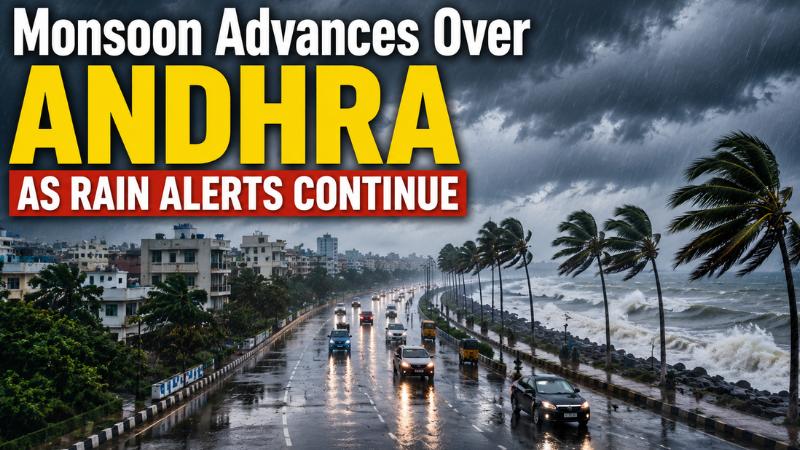
The Southwest Monsoon has moved further into Andhra Pradesh, bringing rain alerts, thunderstorms and heat wave warnings across different parts of the state. Monsoon Moves Further Into Andhra Pradesh The Southwest Monsoon has advanced into more parts of Andhra Pradesh, bringing changing weather conditions across the state. Several areas in Coastal Andhra Pradesh and Rayalaseema are likely to witness scattered to fairly widespread rainfall
Monsoon Advances Over Andhra As Rain Alerts Continue
The Southwest Monsoon has moved further into Andhra Pradesh, bringing rain alerts, thunderstorms and heat wave warnings across different parts of the state. Monsoon Moves Further Into Andhra Pradesh The Southwest Monsoon has advanced into more parts of Andhra Pradesh, bringing changing weather conditions across the state. Several areas in Coastal Andhra Pradesh and Rayalaseema are likely to witness scattered to fairly widespread rainfall
Goa Weather Alert: IMD Issues Yellow Alert For June 2-3 As Monsoon Nears Kerala
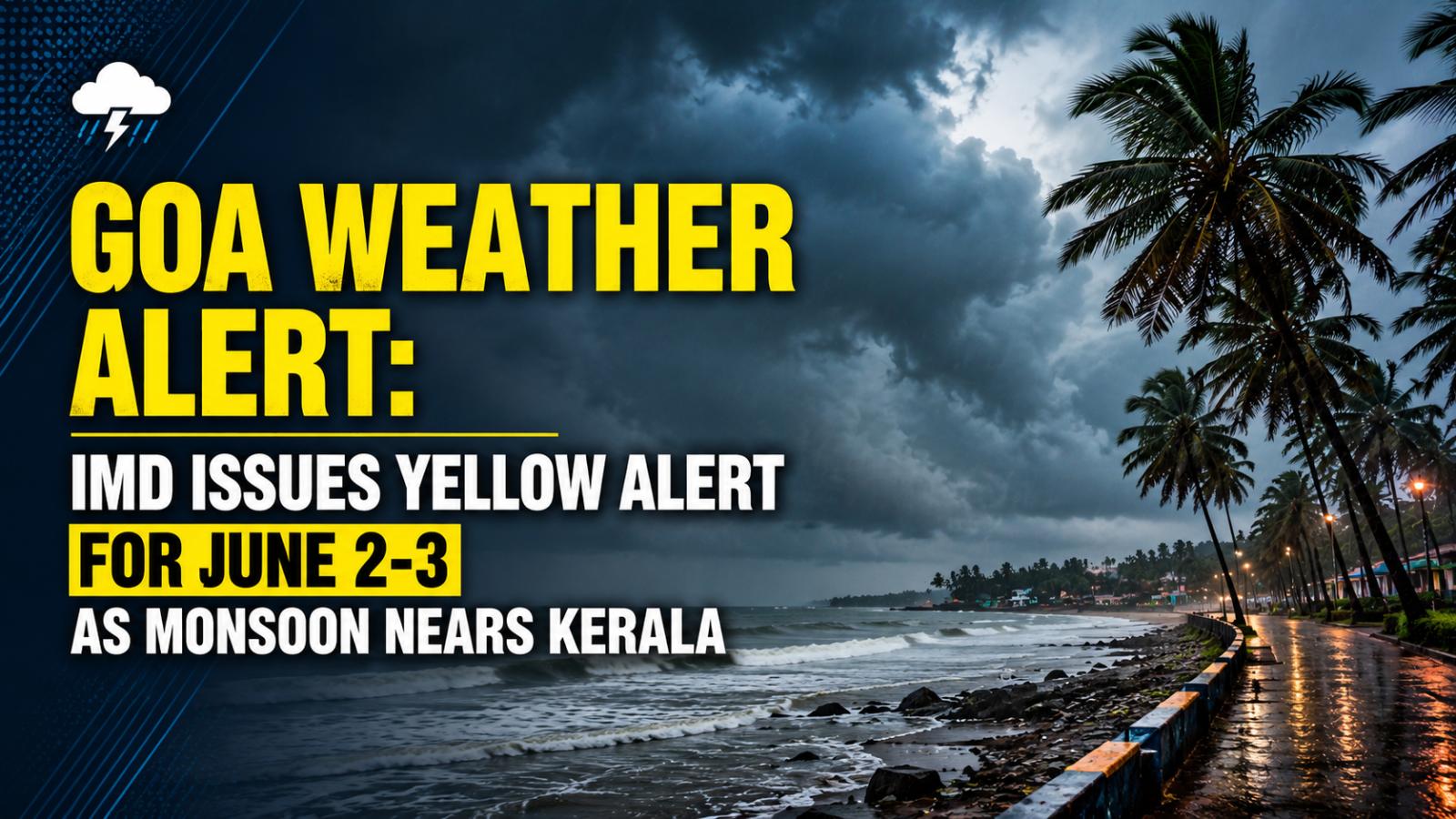
Goa is set for unstable weather on June 2 and 3 as IMD issued a yellow alert, warning of thunderstorms, lightning and gusty winds while monsoon conditions strengthen near Kerala. Goa Under Yellow Alert For June 2-3 The India Meteorological Department, Panaji, has issued a yellow alert for Goa on June 2 and June 3. The warning comes as conditions are becoming favourable for the further advance of
Goa Weather Alert: IMD Issues Yellow Alert For June 2-3 As Monsoon Nears Kerala
Goa is set for unstable weather on June 2 and 3 as IMD issued a yellow alert, warning of thunderstorms, lightning and gusty winds while monsoon conditions strengthen near Kerala. Goa Under Yellow Alert For June 2-3 The India Meteorological Department, Panaji, has issued a yellow alert for Goa on June 2 and June 3. The warning comes as conditions are becoming favourable for the further advance of
Rajasthan Sandstorm: Visibility Drops In Churu And Bikaner After Heavy Dust Storm
May 30, 2026: Churu-Bikaner Dust Storm Update A severe sandstorm swept across parts of Rajasthan, especially Churu and Bikaner, reducing visibility and disrupting normal movement. The dust storm was followed by rain in some areas, bringing sudden weather changes and safety concerns for residents and commuters. Heavy Sandstorm Hits Rajasthan A powerful sandstorm swept through parts of Rajasthan, cr
Rajasthan Sandstorm: Visibility Drops In Churu And Bikaner After Heavy Dust Storm
May 30, 2026: Churu-Bikaner Dust Storm Update A severe sandstorm swept across parts of Rajasthan, especially Churu and Bikaner, reducing visibility and disrupting normal movement. The dust storm was followed by rain in some areas, bringing sudden weather changes and safety concerns for residents and commuters. Heavy Sandstorm Hits Rajasthan A powerful sandstorm swept through parts of Rajasthan, cr
Florida braces for early-season tropical storm in june
Florida storm alert: early-season tropical cyclone approaching Meteorologists are monitoring a potential early-season tropical cyclone expected to impact Florida in early June. NOAA’s Global Forecast System (GFS) model shows a developing low-pressure system in the Gulf of Mexico that could bring heavy rainfall, strong winds, and flooding risks along the Gulf Coast. Forecasts sugge
Florida braces for early-season tropical storm in june
Florida storm alert: early-season tropical cyclone approaching Meteorologists are monitoring a potential early-season tropical cyclone expected to impact Florida in early June. NOAA’s Global Forecast System (GFS) model shows a developing low-pressure system in the Gulf of Mexico that could bring heavy rainfall, strong winds, and flooding risks along the Gulf Coast. Forecasts sugge
Chicago Memorial Day Weekend Forecast: Beach Hazards First, Warmer Finish by Monday
Chicago’s Memorial Day weekend forecast calls for a cool, unsettled start before warmer and brighter weather returns by Monday, May 25, 2026. The biggest early concern is not just rain, but dangerous swimming conditions along Lake Michigan beaches. The National Weather Service said a Beach Hazards Statement remains in effect through Saturday afternoon, May 23, 2026, for Lake County, Northern Cook County and Central Cook County. Waves of 3 to 6 feet are expected, with dangerous cur
Chicago Memorial Day Weekend Forecast: Beach Hazards First, Warmer Finish by Monday
Chicago’s Memorial Day weekend forecast calls for a cool, unsettled start before warmer and brighter weather returns by Monday, May 25, 2026. The biggest early concern is not just rain, but dangerous swimming conditions along Lake Michigan beaches. The National Weather Service said a Beach Hazards Statement remains in effect through Saturday afternoon, May 23, 2026, for Lake County, Northern Cook County and Central Cook County. Waves of 3 to 6 feet are expected, with dangerous cur
Super El Nino 2026: Floods, Droughts & Heatwaves Ahead
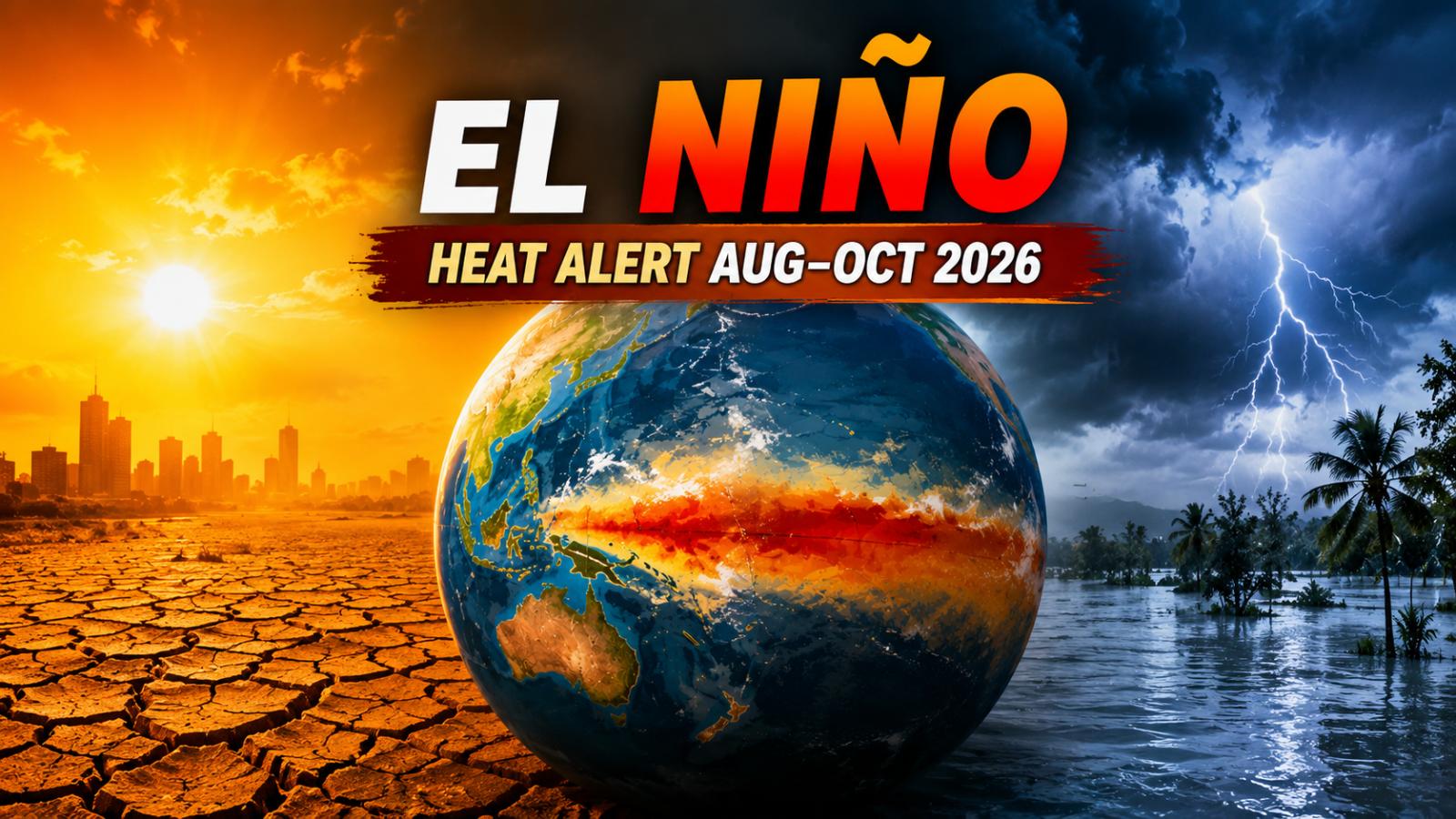
Scientists are warning that 2026 may bring one of the strongest El Niño events in over a century. Known as the Super El Niño, this phenomenon is driven by an unusually powerful Kelvin Wave traveling across the Pacific Ocean. This massive surge of warm water, sometimes more than 13°F above average, is disrupting normal ocean currents and could trigger major shifts in weather worldwide. Understanding Kelvin Waves and Ocean Heating
Super El Nino 2026: Floods, Droughts & Heatwaves Ahead
Scientists are warning that 2026 may bring one of the strongest El Niño events in over a century. Known as the Super El Niño, this phenomenon is driven by an unusually powerful Kelvin Wave traveling across the Pacific Ocean. This massive surge of warm water, sometimes more than 13°F above average, is disrupting normal ocean currents and could trigger major shifts in weather worldwide. Understanding Kelvin Waves and Ocean Heating
Uttar Pradesh Heatwave Red Alert Today: 10 Districts Face Severe Heat Conditions
A heatwave red alert has been issued for parts of Uttar Pradesh today, May 22, 2026, as severe to very severe heat conditions continue to affect several districts. The warning is especially important for residents of Banda, Chitrakoot, Kaushambi, Prayagraj, Fatehpur, Pratapgarh, Mirzapur, Varanasi, Bhadohi and Jaunpur. These districts are expected to face dangerous daytime heat, dry winds and very uncomfortable weather conditions through the afternoon. In many areas, the heat is not
Uttar Pradesh Heatwave Red Alert Today: 10 Districts Face Severe Heat Conditions
A heatwave red alert has been issued for parts of Uttar Pradesh today, May 22, 2026, as severe to very severe heat conditions continue to affect several districts. The warning is especially important for residents of Banda, Chitrakoot, Kaushambi, Prayagraj, Fatehpur, Pratapgarh, Mirzapur, Varanasi, Bhadohi and Jaunpur. These districts are expected to face dangerous daytime heat, dry winds and very uncomfortable weather conditions through the afternoon. In many areas, the heat is not
Chicago Storms May Bring 60 MPH Winds, Hail and Heavy Rain
Chicago storms could bring damaging winds, heavy rain and hail on Tuesday, May 12, 2026, as forecasters warned of a stronger thunderstorm threat across the metro area. Meteorologists said some storms may produce wind gusts up to 60 mph, creating the risk of downed branches, isolated power outages and difficult travel during the afternoon and evening commute. What Areas Could Be Affected? The severe weather risk covers parts of northeastern Illi
Chicago Storms May Bring 60 MPH Winds, Hail and Heavy Rain
Chicago storms could bring damaging winds, heavy rain and hail on Tuesday, May 12, 2026, as forecasters warned of a stronger thunderstorm threat across the metro area. Meteorologists said some storms may produce wind gusts up to 60 mph, creating the risk of downed branches, isolated power outages and difficult travel during the afternoon and evening commute. What Areas Could Be Affected? The severe weather risk covers parts of northeastern Illi
Weekly Weather Forecast: Heat Peaks Tuesday Before Midweek Rain — What to Expect for Mother’s Day
Weekly Weather Forecast: Warm Start, Midweek Rain Ahead The weather forecast this week brings a sharp warm-up Tuesday before midweek rain and cooler temperatures move in. Officials say the pattern shift could impact travel and outdoor plans. Tuesday Heat Spike Before Storm Shift After a mild Monday with highs near 74°F, Tuesday turn
Weekly Weather Forecast: Heat Peaks Tuesday Before Midweek Rain — What to Expect for Mother’s Day
Weekly Weather Forecast: Warm Start, Midweek Rain Ahead The weather forecast this week brings a sharp warm-up Tuesday before midweek rain and cooler temperatures move in. Officials say the pattern shift could impact travel and outdoor plans. Tuesday Heat Spike Before Storm Shift After a mild Monday with highs near 74°F, Tuesday turn
CSU forecasts below-average 2026 Atlantic hurricane season outlook
SOUTH PADRE ISLAND, Texas — Thursday, April 10, 2026 — Researchers at Colorado State University (CSU) released their first major outlook for the 2026 Atlantic hurricane season during the National Tropical Weather Conference held on South Padre Island, offering a cautiously optimistic forecast for the months ahead. According to CSU’s Department of Atmospheric Science, the upcoming season is expected to be slightly below average. The forecast projects 13 named storms, including six hurricanes and two major hurricanes classified as Category 3 or higher. By comparison, a typical Atlantic season produces approximately 14 named storms, seven hurricanes, and three major hurricanes. Forecasters attribute the subdued outlook largely to evolving global climate patterns. Current weak La Niña conditions are expected to transition into El Niño in the coming months, a shift that typically increases vertical wind shear across the tropical Atlantic. This atmospheric change can disrupt storm formation and limit the intensity of developing systems. In their analysis, CSU researchers emphasized that El Niño is likely to be the dominant influence during the peak of the season. Increased wind shear associated with this pattern generally reduces the likelihood of strong hurricanes forming and making landfall. As a result, the probability of major hurricane impacts along the continental United States coastline and across the Caribbean is expected to be lower than average. The report also highlights a reduced risk for the Gulf Coast region. CSU estimates a 20% chance of a hurricane making landfall between the Florida Panhandle and Brownsville, Texas, compared to the historical average of 27%. While this suggests a quieter season, researchers caution that even a below-average year can still produce significant and damaging storms. Phil Klotzbach, a senior research scientist at CSU and lead author of the forecast, noted that the projected 2026 season resembles patterns observed in past years such as 2006, 2009, 2015, and 2023. In those seasons, Texas experienced limited tropical activity, with no named storms in 2006 and 2009, and only minor systems recorded in 2015 and 2023. Despite the relatively lower forecast numbers, experts stress that preparedness remains critical, as hurricane activity can be unpredictable and even a single storm can have widespread impacts across coastal communities.
CSU forecasts below-average 2026 Atlantic hurricane season outlook
SOUTH PADRE ISLAND, Texas — Thursday, April 10, 2026 — Researchers at Colorado State University (CSU) released their first major outlook for the 2026 Atlantic hurricane season during the National Tropical Weather Conference held on South Padre Island, offering a cautiously optimistic forecast for the months ahead. According to CSU’s Department of Atmospheric Science, the upcoming season is expected to be slightly below average. The forecast projects 13 named storms, including six hurricanes and two major hurricanes classified as Category 3 or higher. By comparison, a typical Atlantic season produces approximately 14 named storms, seven hurricanes, and three major hurricanes. Forecasters attribute the subdued outlook largely to evolving global climate patterns. Current weak La Niña conditions are expected to transition into El Niño in the coming months, a shift that typically increases vertical wind shear across the tropical Atlantic. This atmospheric change can disrupt storm formation and limit the intensity of developing systems. In their analysis, CSU researchers emphasized that El Niño is likely to be the dominant influence during the peak of the season. Increased wind shear associated with this pattern generally reduces the likelihood of strong hurricanes forming and making landfall. As a result, the probability of major hurricane impacts along the continental United States coastline and across the Caribbean is expected to be lower than average. The report also highlights a reduced risk for the Gulf Coast region. CSU estimates a 20% chance of a hurricane making landfall between the Florida Panhandle and Brownsville, Texas, compared to the historical average of 27%. While this suggests a quieter season, researchers caution that even a below-average year can still produce significant and damaging storms. Phil Klotzbach, a senior research scientist at CSU and lead author of the forecast, noted that the projected 2026 season resembles patterns observed in past years such as 2006, 2009, 2015, and 2023. In those seasons, Texas experienced limited tropical activity, with no named storms in 2006 and 2009, and only minor systems recorded in 2015 and 2023. Despite the relatively lower forecast numbers, experts stress that preparedness remains critical, as hurricane activity can be unpredictable and even a single storm can have widespread impacts across coastal communities.
Flood watch issued for South Florida as heavy rain threatens urban flooding
A flood watch remains in effect across parts of South Florida, including Miami-Dade, Broward, and Palm Beach counties, as forecasters warn of prolonged rainfall and potential flooding risks. According to the National Weather Service, the alert was updated on Tuesday, April 7, with hazardous weather conditions expected to impact coastal and metropolitan areas throughout the day. Forecasters predict widespread rainfall totals between 1 and 3 inches, with localized areas potentially re
Flood watch issued for South Florida as heavy rain threatens urban flooding
A flood watch remains in effect across parts of South Florida, including Miami-Dade, Broward, and Palm Beach counties, as forecasters warn of prolonged rainfall and potential flooding risks. According to the National Weather Service, the alert was updated on Tuesday, April 7, with hazardous weather conditions expected to impact coastal and metropolitan areas throughout the day. Forecasters predict widespread rainfall totals between 1 and 3 inches, with localized areas potentially re
Delhi NCR Weather Update: IMD Forecasts Rain & Thunderstorms on April 7–8
The India Meteorological Department (IMD) has forecast a change in weather conditions across Delhi NCR on April 7 and 8. Residents can expect strong winds, cloudy skies, and chances of rain along with isolated thunderstorms during these two days. On April 6, the weather remained normal with tempe
Delhi NCR Weather Update: IMD Forecasts Rain & Thunderstorms on April 7–8
The India Meteorological Department (IMD) has forecast a change in weather conditions across Delhi NCR on April 7 and 8. Residents can expect strong winds, cloudy skies, and chances of rain along with isolated thunderstorms during these two days. On April 6, the weather remained normal with tempe