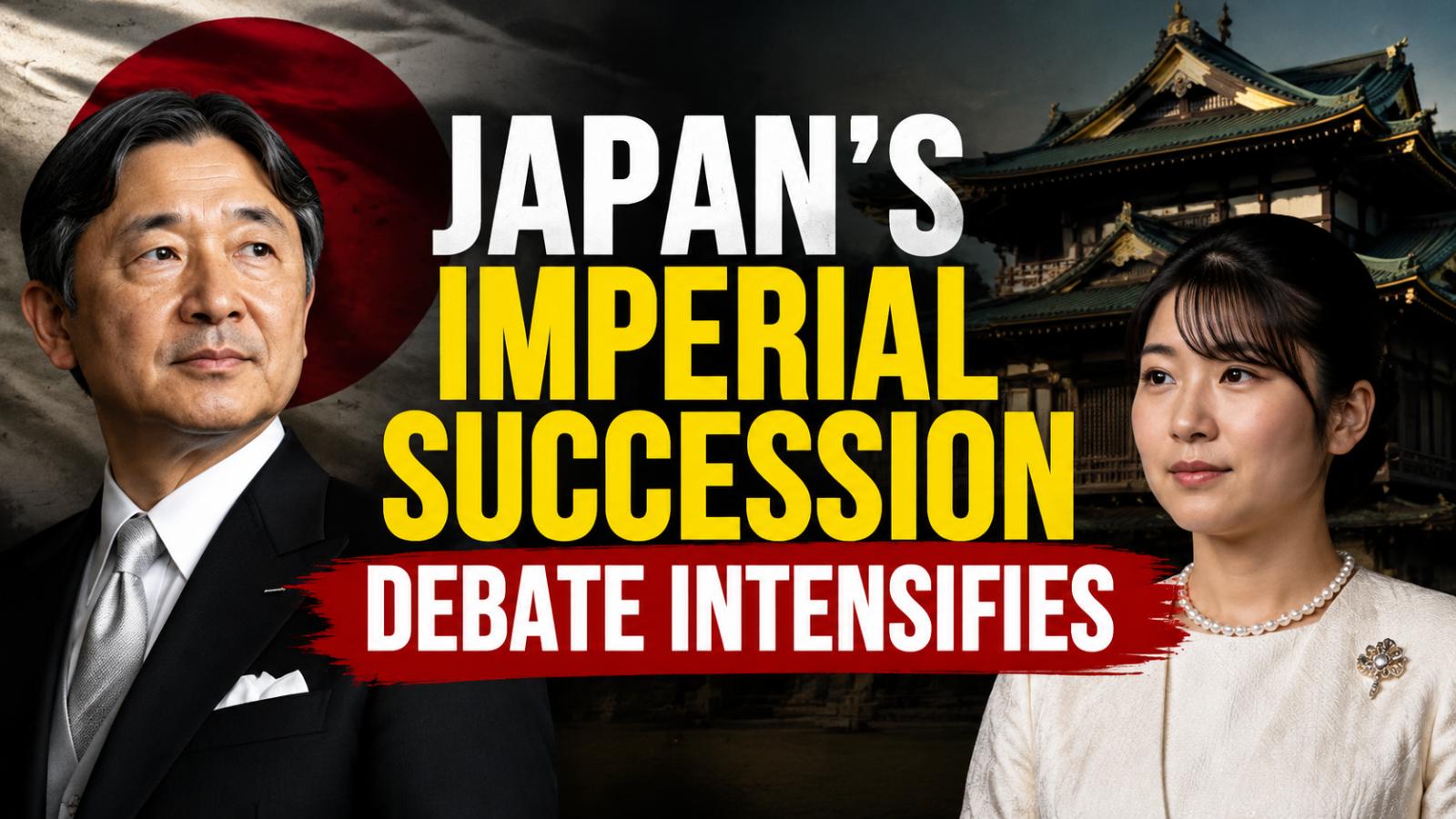
Japan’s imperial system is facing growing strain as the number of eligible heirs continues to decline, raising long-term questions about continuity at the country’s oldest monarchy. The current structure limits succession to male members of the imperial bloodline, leaving the royal household with a narrow pool of successors.
With only a small number of eligible male heirs remaining, concerns are rising inside political and academic circles about whether the system can remain stable without adjustments. The issue is no longer theoretical; it is becoming a practical challenge tied to the future functioning of the imperial institution.
Princess Aiko debate highlights structural limitations
Emperor Naruhito and Empress Masako have one child, Princess Aiko, who remains popular among the public. However, current succession rules prevent her from inheriting the throne, keeping the line restricted to male descendants only.
This restriction has intensified discussion about whether the system reflects modern social expectations. Critics argue that excluding female succession narrows the legitimacy of the monarchy, while supporters of the current rule maintain that it preserves historical continuity and tradition.
The result is a growing gap between public sentiment and institutional rules, especially as the number of potential successors becomes increasingly limited.
Policy options under review, including adoption from former branches
One proposal gaining attention involves allowing adoption of male heirs from former imperial branches that were removed from the royal structure after World War II. These individuals now live as private citizens but carry historical lineage ties that could technically restore continuity under existing male-preference rules.
Supporters view this approach as a compromise that avoids constitutional disruption while addressing the shortage of heirs. However, critics question whether reintroducing distant branches would solve the deeper structural issue of dependency on a male-only system.
Political divide slows reform momentum
The succession debate has created clear divisions among policymakers. Conservative factions argue that changing the rule would weaken traditional foundations of the imperial institution. Reform-minded voices, however, warn that without adaptation, the system may face instability in the coming decades.
Public opinion surveys consistently show stronger support for allowing a female monarch, with Princess Aiko often cited as a widely accepted potential future ruler. Despite this, legislative progress remains slow due to political sensitivity and institutional caution.
Long-term uncertainty surrounds imperial continuity
The imperial household remains one of Japan’s most symbolic institutions, but its future structure is increasingly uncertain. While no immediate crisis is unfolding, the combination of limited heirs, strict succession rules, and political disagreement has created a long-term structural challenge.
For now, Japan continues to balance tradition with practicality, but pressure is steadily building for a clearer direction on how the imperial line will be sustained in the decades ahead.