The attacks by Pakistan, which included multiple drones and missile strikes, marked a sharp spike in hostilities across the Line of Control (LoC). India responded swiftly under Operation Sindoor, delivering coordinated counterstrikes that reportedly destroyed several Pakistani military posts. Sources confirm that the Indian Army employed anti-tank guided missiles and advanced air defence systems to neutralise threats and dismantle Pakistani launch positions.
Indian armed forces had been on high alert since the previous evening, when drone and missile threats emerged across northern India. Massive blackouts were enforced across cities in Jammu and Kashmir, Punjab, and Rajasthan as part of civilian protection protocols. Indian defence sources indicated that the enemy’s aerial attempts were foiled due to swift air defence responses and real-time surveillance. The damage inflicted on Pakistani positions along the LoC has been described as significant, though exact figures remain classified.
According to a statement by the Indian Army, the Pakistani military initiated widespread ceasefire violations using drones and munitions along India’s western border during the night of May 8–9. The attacks targeted a range of strategic sites but were effectively countered by Indian forces. “The Indian Army remains committed to safeguarding the sovereignty and territorial integrity of the nation. All nefarious designs will be responded to with force,” the Army declared on social media.
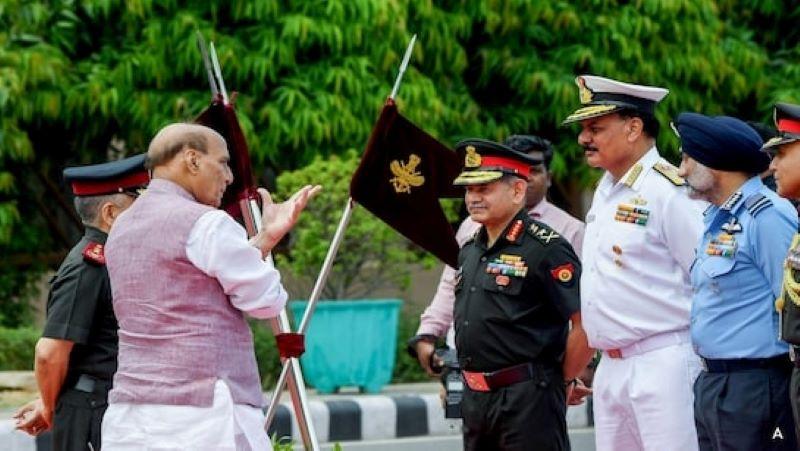
Rajnath Singh's meeting with top defence officials followed this overnight assault. Held at South Block, the high-level security review involved comprehensive updates from all three military branches. The goal was to reassess India’s defensive posture along the LoC and International Border while evaluating the next phase of retaliation if needed.
The trigger for this series of violent exchanges was India’s Operation Sindoor, launched in response to the April 22 terror attack in Pahalgam, Jammu and Kashmir, which killed 26 civilians. India held Pakistan-based terror outfits responsible for the attack and executed precision missile strikes on nine locations across Pakistan and Pakistan-occupied Kashmir (PoK) on Wednesday. In a tightly coordinated 25-minute operation, 24 Indian missiles hit terrorist launchpads, killing at least 70 terrorists and wounding another 60, according to intelligence sources.
The operation was designed to cripple key Pakistani terror infrastructure while avoiding early detection. In retaliation, Pakistan launched indiscriminate drone and missile attacks the following night, targeting Indian military installations and border towns. These retaliatory moves from Islamabad, which included artillery shelling and cross-border firing, resulted in the deaths of at least 16 Indian civilians, including women and children, in Jammu and Kashmir.
As Pakistan continued its barrage with what defence officials termed “arbitrary and indiscriminate” firepower, India ramped up its aerial surveillance and defensive coordination. Sources revealed that multiple Pakistani posts along the LoC were neutralised using anti-tank guided missiles during India’s retaliatory campaign. Visuals shared by the Army show enemy infrastructure being destroyed, reinforcing the success of the counterstrike operation.
Rajnath Singh, in his post-meeting remarks, reaffirmed India’s preparedness to meet any threat. He stated, “India has always acted with restraint, but any attempt to exploit that restraint will face decisive consequences. There are no limits to our commitment when it comes to safeguarding sovereignty.” The Indian military has continued to remain on high alert across all fronts. Air Force and Navy units are also engaged in ongoing monitoring, with naval assets in the Arabian Sea reportedly conducting supportive operations to block any potential maritime aggression from Pakistan.
Diplomatic engagement remains minimal at this stage, and both sides appear entrenched in a high-stakes military standoff. While global powers like the United States have urged restraint, they have made it clear they will not intervene directly. Meanwhile, India’s focus remains on neutralising threats and maintaining strategic superiority along all vulnerable sectors. The situation continues to evolve rapidly with an unpredictable trajectory. However, one thing is certain India has drawn a clear red line, and the message has been sent with firepower. The nation’s political and military leadership appears united and resolute, prepared for whatever comes next.