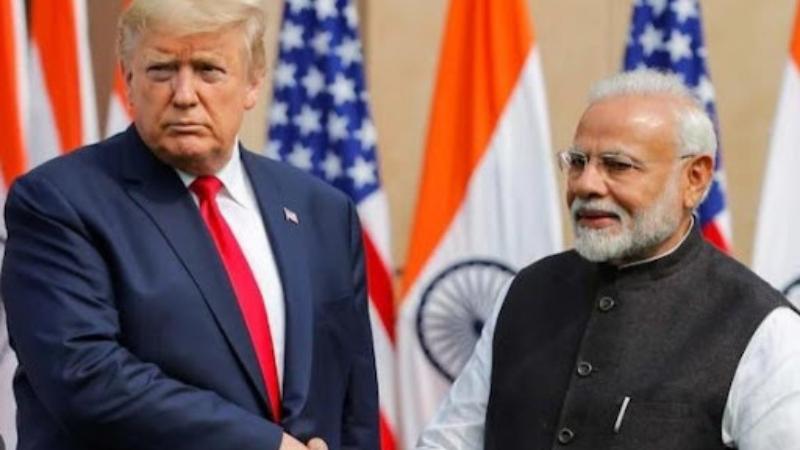
Former United States National Security Adviser John Bolton has revealed that the once close personal relationship between US President Donald Trump and Indian Prime Minister Narendra Modi has collapsed, largely due to tensions surrounding tariffs and trade disputes. In a recent interview, Bolton reflected on how Trump’s friendship with Modi had given the impression of stability in India-US ties, but the imposition of nearly 50 percent tariffs on Indian goods led to a deep rupture in the relationship.
According to Bolton, Trump valued international relations primarily through the lens of his personal ties with foreign leaders. During his presidency, Trump often highlighted his good rapport with Modi, a relationship that had been showcased at public events and widely discussed in diplomatic circles. However, Bolton pointed out that this personal bond failed to prevent the fallout once Trump’s administration adopted stricter trade measures against India. The escalation of tariffs left India frustrated, especially as New Delhi argued that the United States had turned a blind eye toward China, which was importing even larger volumes of Russian oil without facing the same level of scrutiny.
The former adviser noted that Trump’s trade representative, Peter Navarro, had gone as far as describing the Russia-Ukraine conflict as “Modi’s war” while criticizing India’s energy policies. The repeated targeting of New Delhi over its purchase of Russian oil during the conflict added to the deterioration of relations. For India, the tariffs were labeled unfair, and officials in New Delhi expressed frustration at what they viewed as an uneven application of US policy.
Bolton stressed that Trump’s approach to foreign policy demonstrated a transactional pattern where personal admiration for leaders could not safeguard countries from sudden shifts in Washington’s stance. He observed that Trump often equated his personal relationships with the state of bilateral ties, citing his example of Vladimir Putin, where Trump argued that if relations between them were good, then the US and Russia must also enjoy good relations. Bolton dismissed this notion as simplistic and misleading, underscoring the volatility of Trump’s style of diplomacy.
Bolton’s broader message was directed not only at India but also at world leaders such as the United Kingdom’s Prime Minister Keir Starmer. He cautioned that while a close relationship with Trump could create short-term goodwill, it offered no protection from the unpredictability of his America First agenda. He argued that leaders should not mistake personal friendliness for a stable diplomatic foundation.
“It’s a lesson to everybody,” Bolton remarked, adding that strong personal ties might appear to create warmth in relations but ultimately fail to shield nations from abrupt and potentially damaging policy decisions. He reiterated that world leaders should prepare for sudden shifts that could emerge if Trump’s priorities change.
The remarks add to the ongoing debate about Trump’s legacy in handling international affairs. His America First policy consistently emphasized immediate national interests over long-standing diplomatic partnerships. Critics argue this undermined global alliances and created friction with key allies, while supporters claimed it recalibrated relationships to better serve US interests.
India, caught in the middle of these competing perspectives, saw its ties with Washington deteriorate during this period, despite initial optimism fueled by the public camaraderie between Modi and Trump. The tariff disputes, coupled with disagreements over oil imports and geopolitical alignments, revealed the fragility of a relationship based too heavily on personal rapport rather than institutional trust.
Bolton’s comments highlight an important cautionary tale for nations engaging with leaders who prioritize personal relationships in diplomacy. While such ties may generate symbolic goodwill and even practical advantages in the short run, they cannot be relied upon to withstand the weight of shifting policies or strategic disagreements. The collapse of what once appeared to be a strong Trump-Modi connection serves as an example of how quickly circumstances can change when transactional politics override structured alliances.
As India and the United States continue to recalibrate their relationship, Bolton’s remarks underscore the importance of building ties rooted in shared strategic goals rather than personal friendships alone. With global politics increasingly shaped by unpredictable leaders and rapidly changing alliances, the story of Trump and Modi’s bond stands as a reminder that diplomacy requires depth, balance, and foresight beyond personal admiration.