- globetrotter
- 06 Apr 2026
- #Internet & Technology #Apple #iphone #vission-pro #Imac #
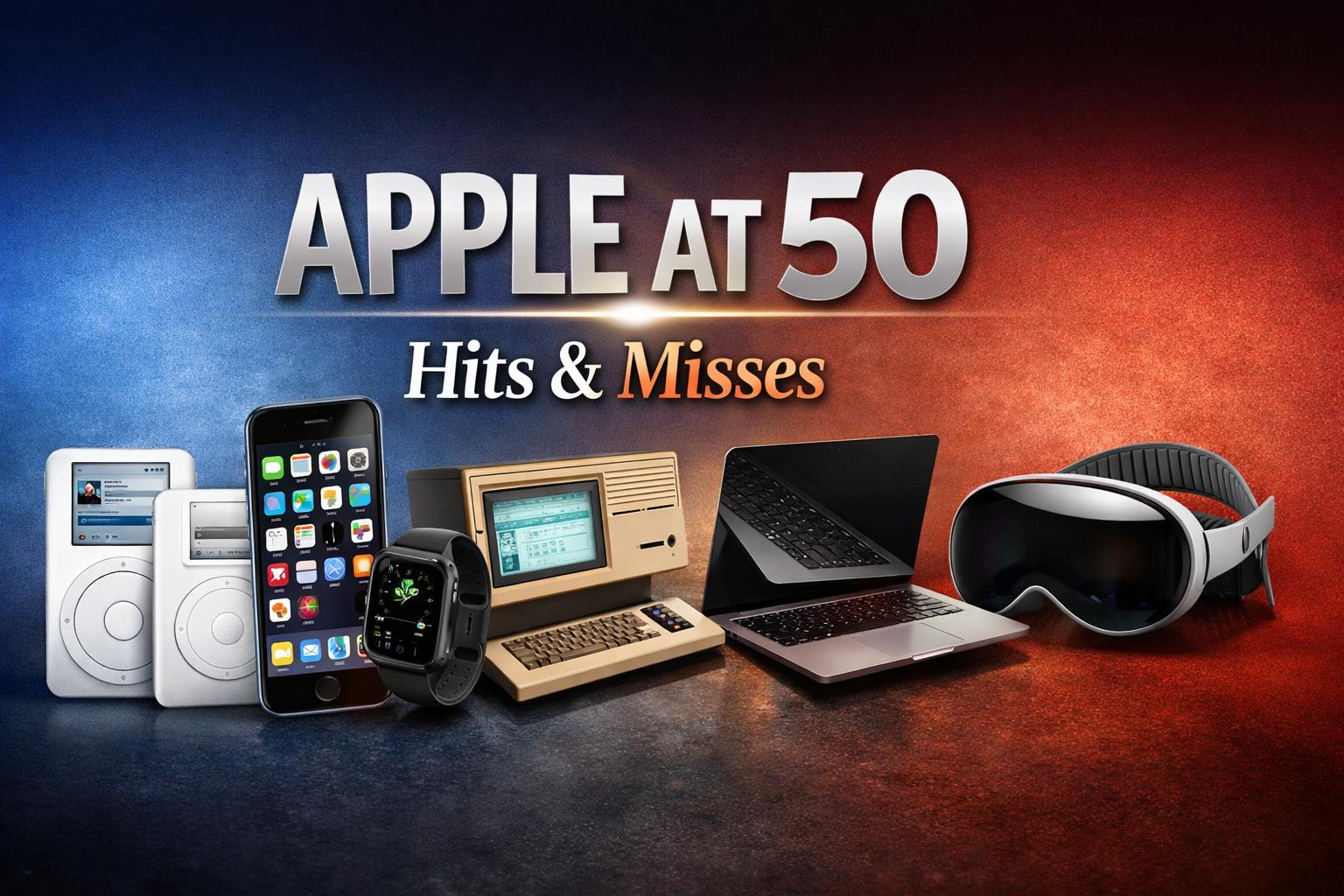
Apple has reached its 50-year milestone, marking a legacy defined by transformative innovation and occasional high-profile missteps. Founded by Steve Jobs and Steve Wozniak, the company has played a central role in shaping how consumers interact with technology, with nearly one in three people globally now owning an Apple device.
Among its most influential successes, the iPod stands out for revolutionizing digital music consumption. Though not the first MP3 player, it simplified music management and helped legitimize digital downloads through iTunes. That momentum laid the groundwork for the iPhone, introduced in 2007, which redefined smartphones by combining communication, media, and internet capabilities into a single device. Strong branding and intuitive design helped it dominate the global market and lock users into Apple’s ecosystem.
The Apple Watch further expanded the company’s influence, becoming the world’s top-selling smartwatch and advancing wearable health technology with features like ECG monitoring and fall detection. Its success underscores Apple’s ability to refine and scale new product categories.
However, not all innovations succeeded. The butterfly keyboard, introduced in 2015, drew criticism for reliability issues and was eventually discontinued. Earlier, the Lisa computer failed commercially due to its high price despite pioneering graphical interfaces. More recently, the Vision Pro headset has struggled with adoption, hindered by high costs and limited content.
While CEO Tim Cook has maintained Apple’s profitability and global reach, some analysts note a shift toward incremental improvements rather than groundbreaking innovation. Even so, Apple’s track record continues to influence the direction of consumer technology worldwide.
Technology, Apple, Innovation, Smartphones, Wearables, ConsumerTech, iPhone, SteveJobs, TimCook, VisionPro