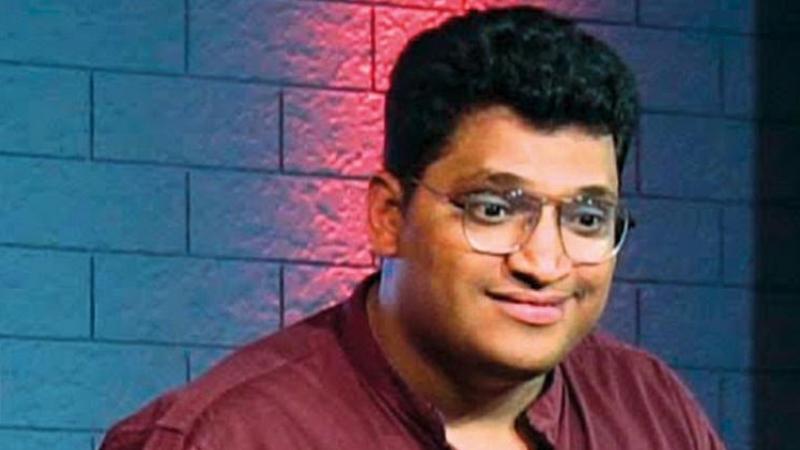
Comedian Gaurav Gupta, known for his observational humor and witty punchlines, recently found himself at the center of attention during his ongoing US-Canada tour after an unscripted yet humorous exchange with a Pakistani audience member went viral. The encounter occurred during his show in the United States on Sunday as part of his international comedy tour that kicked off on May 30, beginning in Atlanta and moving to Chicago. While on stage performing his set, Gaurav engaged in light-hearted crowd interaction when a man from the audience revealed he was from Pakistan. What followed was a mix of spontaneous humor, nationalistic banter, and a dash of political commentary that left the audience divided yet buzzing on social media.
As soon as the Pakistani audience member introduced himself, some members of the crowd started shouting “Sindoor,” a reference to "Operation Sindoor" recently carried out by Indian defense forces in response to increased tensions between the two countries. Gaurav immediately stepped in to control the atmosphere, reminding the crowd not to misbehave. In typical comedian style, he turned the tension into humor, addressing the Pakistani guest directly with a teasing line, "Brother, you have a lot of guts coming to the show. He thought artistes were banned, but audience members are still allowed." The crowd burst into laughter as he added another playful jab, "Chalo tum Hanuman Chalisa padho ab," turning the situation into a moment of comedy that both acknowledged the existing political sentiment and diffused any potential discomfort.
Continuing his banter, Gaurav asked the fan if he understood his jokes. Then came a tongue-in-cheek reference to the Kashmir issue as he said, “Toh tumhe samajh nahi aata, nahi milega tumhe? Itne saalon se keh rahe hain nahi milega, nahi milega, phir aa jaate ho tum.” The joke, while sharply phrased, was delivered in a tone that mixed satire with sarcasm, drawing laughter from many in the audience while also attracting criticism from others online who felt it leaned too far into sensitive political territory.
Fan reactions were mixed. Some praised Gaurav’s courage and clever delivery, particularly the “nahi milega” punchline, calling it a brilliant piece of satirical writing. Others appreciated the moment where he invoked “Hanuman Chalisa” as a cultural quip. However, not everyone found the exchange in good taste. A few users commented online that they were disappointed by what they described as backhanded comedy. They felt the comedian missed an opportunity to handle the situation with more warmth and inclusivity, especially in an international setting meant to bring the diaspora together through shared laughter.
Nevertheless, Gaurav Gupta’s shows have continued to draw packed audiences across North America. The Indian diaspora, known for its enthusiastic support for homegrown entertainers, has shown up in large numbers to attend his performances. His brand of humor, often drawing from real-life scenarios, family anecdotes, and professional experiences as a dentist, continues to resonate with audiences abroad.
The viral incident also comes amid heightened Indo-Pak tensions, particularly following the tragic April 22 terror attack in Pahalgam which led to the death of 26 civilians. In response, India has implemented various cultural sanctions, including banning social media handles of several Pakistani artistes. This geopolitical backdrop makes every public exchange involving cross-border nationals a subject of scrutiny, and Gaurav’s joke-tinted interaction naturally became a talking point in the digital space.
While comedy is often a space to reflect and even confront societal and political realities through satire, such moments also spotlight the fine line performers must walk between humor and sensitivity. For Gaurav Gupta, the moment served as both a reminder of his influence and a testament to the complexity of performing in a world where laughter often walks hand in hand with deeply held beliefs and national sentiments.
As his US-Canada tour continues, the comedian remains a top draw for South Asian audiences abroad, combining relatable humor with the occasional sharp jibe that keeps his fans laughing—and sometimes debating—long after the curtains close.