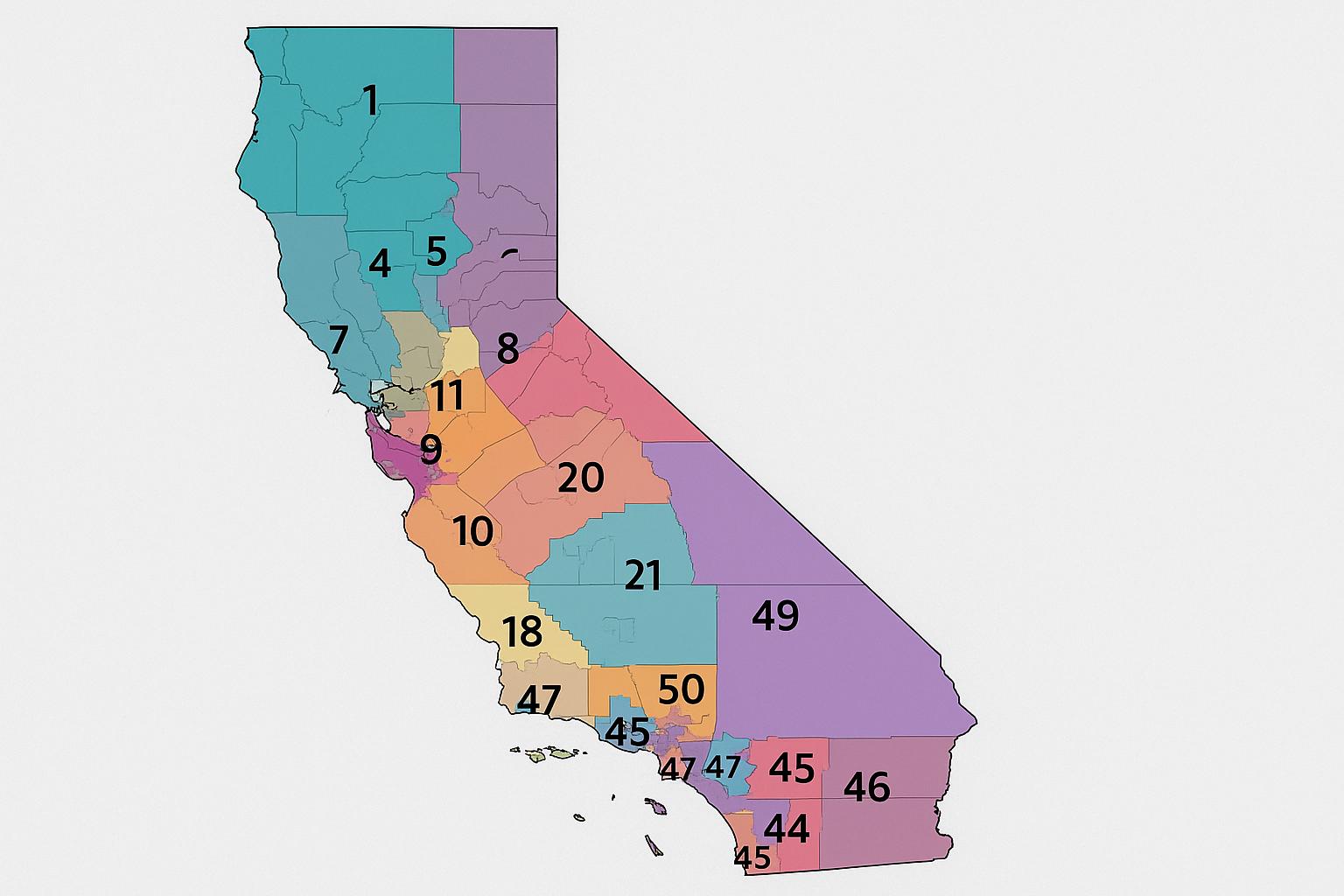
If approved, Proposition 50 would introduce new district boundaries based on updated demographic and population data. Advocates of the measure argue that current district lines no longer reflect California’s shifting population patterns, with some regions growing rapidly and others losing residents. Areas such as the Central Valley, the Inland Empire, and portions of Southern California have seen significant population increases, while several northern and coastal regions have remained relatively stable. These imbalances, proponents say, justify a fresh approach to congressional mapping that ensures fair representation for all Californians.
The initiative has drawn widespread attention because of its potential national impact. With 52 congressional seats, California has the largest delegation in the U.S. House of Representatives. Even a small shift in how these districts are drawn could alter the overall balance of power in Congress. Proponents see Proposition 50 as a way to restore political balance at a time when partisan redistricting across the country has tilted representation toward one side of the political spectrum.
However, critics of the measure have raised concerns about its timing and intent. They argue that the proposal could undermine California’s independent redistricting process, which has long been praised for being transparent and citizen-driven. Skeptics caution that Prop. 50 might open the door for political interests to influence how district lines are drawn, moving away from the principles of neutrality and fairness that currently guide the process.
Supporters counter that the measure is necessary to protect California’s representation in Congress from being weakened by redistricting changes elsewhere. They claim that while some states have used redistricting to favor one party, California’s new map would instead ensure that its population is accurately and fairly represented. The measure is framed as a defensive response to what many consider an imbalance created by political gerrymandering in other parts of the country.
If passed, the redistricting process would focus on updating boundaries using population data and community input to ensure each district reflects an equal number of residents. The redrawn lines would impact millions of Californians, possibly placing them in new congressional districts with different political and demographic compositions. Residents in rapidly growing counties such as Riverside, Fresno, and Sacramento could see their representation change most noticeably, while major metropolitan areas like Los Angeles and San Francisco may experience only slight adjustments.
Voters can use interactive tools provided by election authorities to view how their current district might change under the proposed plan. By entering their home address, city, and ZIP code, they can see whether their district would shift geographically or fall under a new representative’s jurisdiction if Proposition 50 becomes law.
Political analysts note that the measure’s passage could have far-reaching implications beyond California. Redistricting has become a central factor in determining the composition of Congress, often influencing which party holds the majority. Proposition 50’s approval could signal a broader trend toward state-led initiatives that seek to counterbalance partisan redistricting nationwide.
Community groups and policy organizations have been urging voters to educate themselves about the measure’s consequences. Many emphasize that the initiative is not just about political power but also about ensuring that representation reflects population realities. The goal, they say, is to make sure each Californian’s vote carries equal weight, regardless of where they live.
Opponents maintain that redrawing boundaries in response to political developments elsewhere sets a concerning precedent. They warn that the proposal could lead to frequent changes in district maps, undermining the stability and predictability of elections. Some have called for maintaining the existing independent redistricting process and addressing representation concerns through federal reforms instead of state-level changes.
Despite the debate, Proposition 50 has energized voters across the state. Supporters are optimistic that the measure will correct disparities in representation, while critics remain wary of potential long-term consequences. Both sides agree that the outcome of the vote could shape California’s political influence for years to come.
The redistricting effort also raises broader questions about how states should respond to shifting demographics and national political trends. California’s population diversity makes its redistricting process particularly complex, as communities vary greatly in size, composition, and economic background. The challenge lies in creating districts that reflect these realities while maintaining equal representation and avoiding overt partisanship.
In the weeks leading up to the election, Californians are encouraged to learn about Proposition 50 and its potential impact on their communities. The measure’s supporters view it as a safeguard for fair representation, while opponents see it as a politically motivated redrawing of lines.
When voters cast their ballots in November, they will not only be deciding how their districts are shaped but also sending a message about the principles that should guide redistricting in a democracy. Proposition 50 represents more than a technical adjustment to district boundaries—it symbolizes an ongoing national struggle over how political power is distributed, who draws the lines, and how every vote is valued.