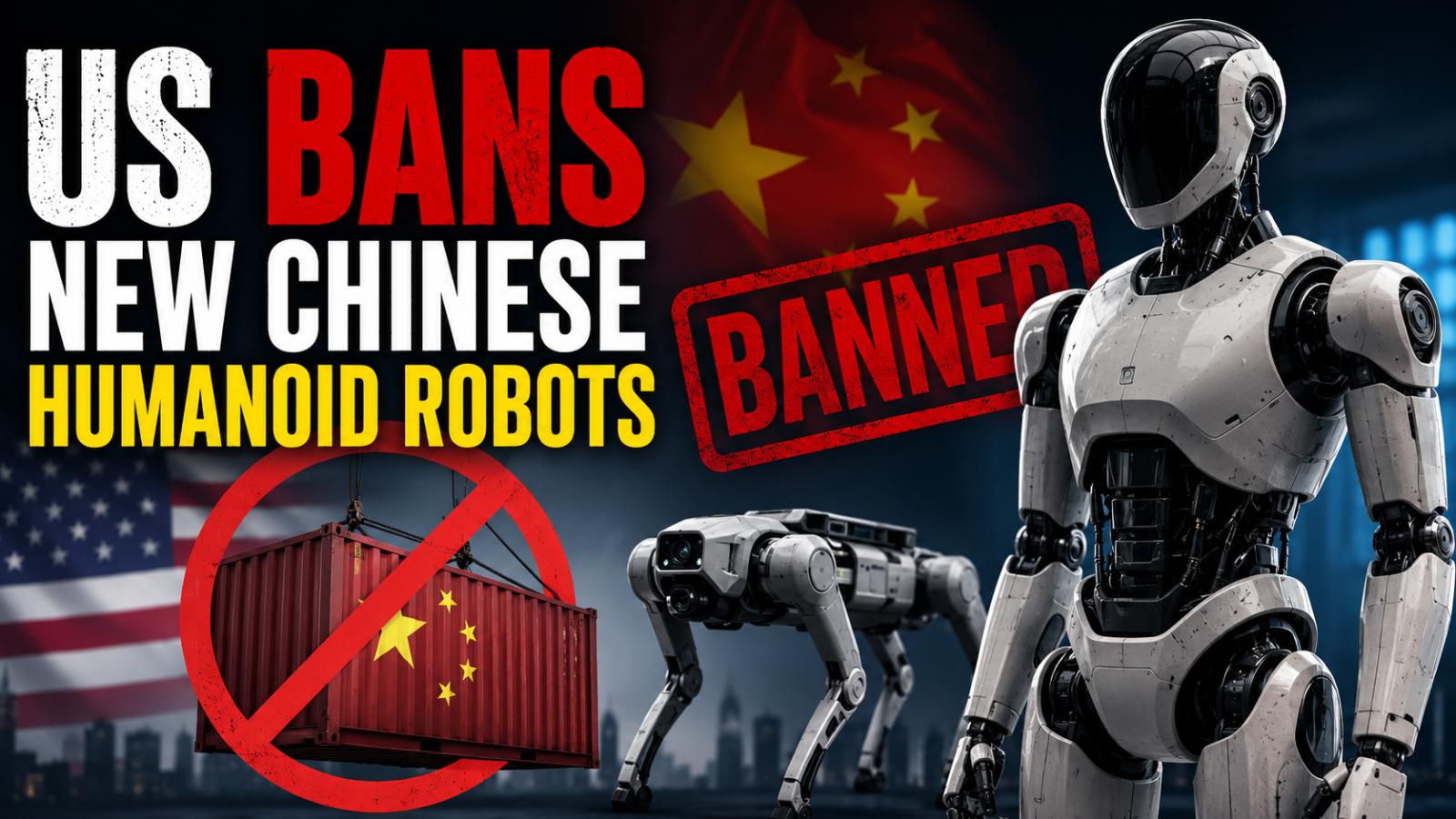
The United States has introduced sweeping restrictions on new Chinese-made humanoid robots and quadruped robots, commonly known as robot dogs, citing national security and cybersecurity concerns. The decision, announced by the Federal Communications Commission (FCC), immediately blocks the approval of new Chinese robotics models for sale in the United States. The move marks another major step in Washington's broader strategy to reduce dependence on technology considered vulnerable to foreign influence.
Importantly, the restriction applies only to new products that have not yet received US authorization. Chinese robots already approved for the American market remain eligible for sale, meaning existing commercial deployments are unaffected for now.
Unitree Robots Face Growing Challenges
Among the companies most affected is Unitree Robotics, one of China's leading humanoid robot manufacturers. The timing is significant because the company recently expanded into Europe, where it officially launched commercial operations earlier this month. While Europe now represents an important growth opportunity, the United States—previously viewed as a promising market—has become far more difficult to enter.
The latest decision also follows an earlier action by the US government. In June, the Pentagon designated Unitree as a Chinese military company under Section 1260H, preventing it from participating in US defense contracts. The company has previously collaborated with American technology partners on advanced robotics projects, highlighting the increasingly complex relationship between the two countries in high-tech industries.
According to the FCC, internet-connected humanoid robots, robot dogs, and related equipment could create supply chain vulnerabilities and cybersecurity risks if compromised by foreign actors. The commission stated that such devices may expose sensitive data or critical infrastructure to potential security threats. The action follows recommendations from an interagency national security review coordinated by the White House, which warned about privacy and cybersecurity concerns involving connected robotic systems.
Cybersecurity Risks Reshape the Robotics Market
The decision carries significant implications because China currently dominates the global humanoid robotics industry. Industry estimates indicate that around 15,000 humanoid robots were shipped worldwide in 2025, with Chinese companies Unitree and AgiBot accounting for the majority of those deliveries. Their competitive pricing has helped universities, research institutions, and commercial organizations adopt advanced robotics at a lower cost than many Western alternatives.
Chinese officials criticized the latest restrictions, describing them as protectionist measures that could disrupt fair international competition. However, US policymakers argue the decision is part of a broader effort to strengthen national security and protect critical technology infrastructure.
The new restrictions also reflect a wider policy trend. Over recent years, the United States has tightened regulations on Chinese telecommunications equipment, semiconductor technology, and now advanced robotics. Officials believe internet-connected hardware could become a potential pathway for surveillance, cyberattacks, or disruption if not adequately secured.
For the robotics industry, the result is an increasingly divided global market. Chinese manufacturers continue to hold advantages in production scale and affordability across many international markets, while American robotics companies gain additional room to expand within a more protected domestic environment. Whether this policy ultimately accelerates innovation in US robotics or deepens technological separation between the world's two largest economies remains to be seen.
The FCC announced the restrictions following a national security review, while the Pentagon's earlier designation of Unitree remains part of the broader US strategy to address perceived security risks involving advanced Chinese technology.