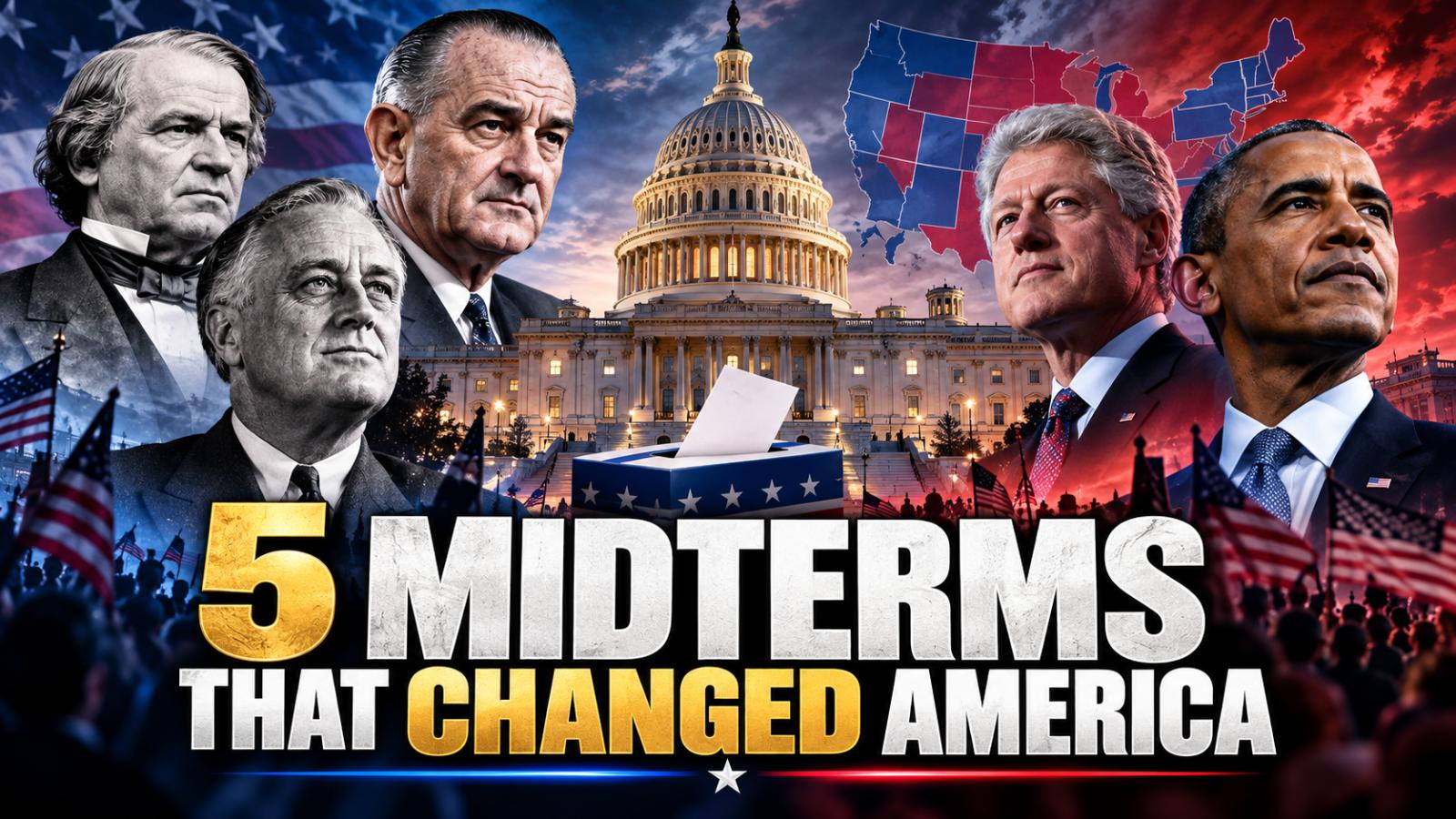
The US midterms impact can extend far beyond one election cycle. From 1866 and Reconstruction to the political waves of 1934, 1966, 1994 and 2010, midterm voters repeatedly changed control of Congress, strengthened or weakened presidents and redirected American politics.
Why US midterm elections can change the course of American politics
US midterm elections take place halfway through a president’s four-year term, but their importance reaches well beyond the White House. Every House seat is contested, along with roughly one-third of the Senate, while governors and state lawmakers are also elected across the country. A shift in Congress can determine whether a president advances legislation, faces political gridlock or spends the next two years negotiating with an opposition majority.
Several midterms have gone further, producing political changes that lasted for decades. Five elections in particular show how voters can reshape the balance of power and influence the direction of the United States.
1866: Reconstruction moves into Congress
The 1866 elections took place during a bitter fight between President Andrew Johnson and congressional Republicans over Reconstruction after the Civil War. Republicans emerged with enough strength in Congress to override presidential vetoes and take greater control of Reconstruction policy. U.S. Senate historical records note that the election gave Radical Republicans sufficient power to override Johnson on major legislation.
Congress later enacted Reconstruction measures over Johnson’s objections, while the era produced constitutional changes that transformed citizenship and voting rights. The election demonstrated how a midterm could dramatically weaken a sitting president while empowering Congress.
1934: FDR strengthens the New Deal
The 1934 midterms broke a familiar political pattern. Instead of losing congressional strength, President Franklin D. Roosevelt’s Democrats expanded their already large majorities during the Great Depression. Official House history describes the result as a strong endorsement of Roosevelt’s New Deal.
The stronger majority helped create momentum for the next phase of reforms, including Social Security and major labor protections. Rather than serving as a rebuke to the president, the election strengthened Roosevelt’s mandate and expanded the federal government’s role in economic and social policy.
1966: Conservative politics gain momentum
Two years after Lyndon B. Johnson’s landslide presidential victory, Democrats suffered major House losses in the 1966 midterms. Republicans gained 47 House seats, reducing the overwhelming Democratic advantage created in 1964.
The election came amid growing tensions over Vietnam, domestic unrest and Johnson’s Great Society agenda. Republicans also made gains in state politics, while Ronald Reagan’s election as California governor helped elevate a future national conservative leader. The result did not immediately hand Congress to Republicans, but it signaled that the political climate was changing.
1994: Gingrich leads a Republican revolution
The 1994 elections produced one of the most dramatic congressional shifts of the modern era. Republicans captured both chambers of Congress, taking the House majority for the first time in 40 years. House historical records show Republicans entered the new Congress with 230 seats.
Newt Gingrich and Republican candidates campaigned around the Contract with America, which promoted tax, spending, welfare and government reforms. The victory changed Washington’s balance of power and intensified partisan confrontation between Congress and President Bill Clinton.
2010: Tea Party wave reshapes the House
The 2010 midterms delivered another major political reversal during Barack Obama’s presidency. Republicans gained 63 House seats and captured the chamber, while also gaining Senate seats. The election unfolded amid dissatisfaction over the economy, federal spending and the Affordable Care Act.
The Tea Party became an important force within Republican politics, pushing themes of limited government, lower spending and opposition to Washington’s political establishment. Its influence continued after the election and helped reshape the GOP coalition during the years leading to Donald Trump’s rise.
These elections show why the US midterms impact cannot be judged only by who wins Congress for the next two years. Midterms can weaken presidents, strengthen ideological movements, launch future national leaders and create political shifts that influence American government for generations.