Senate challenges executive war authority
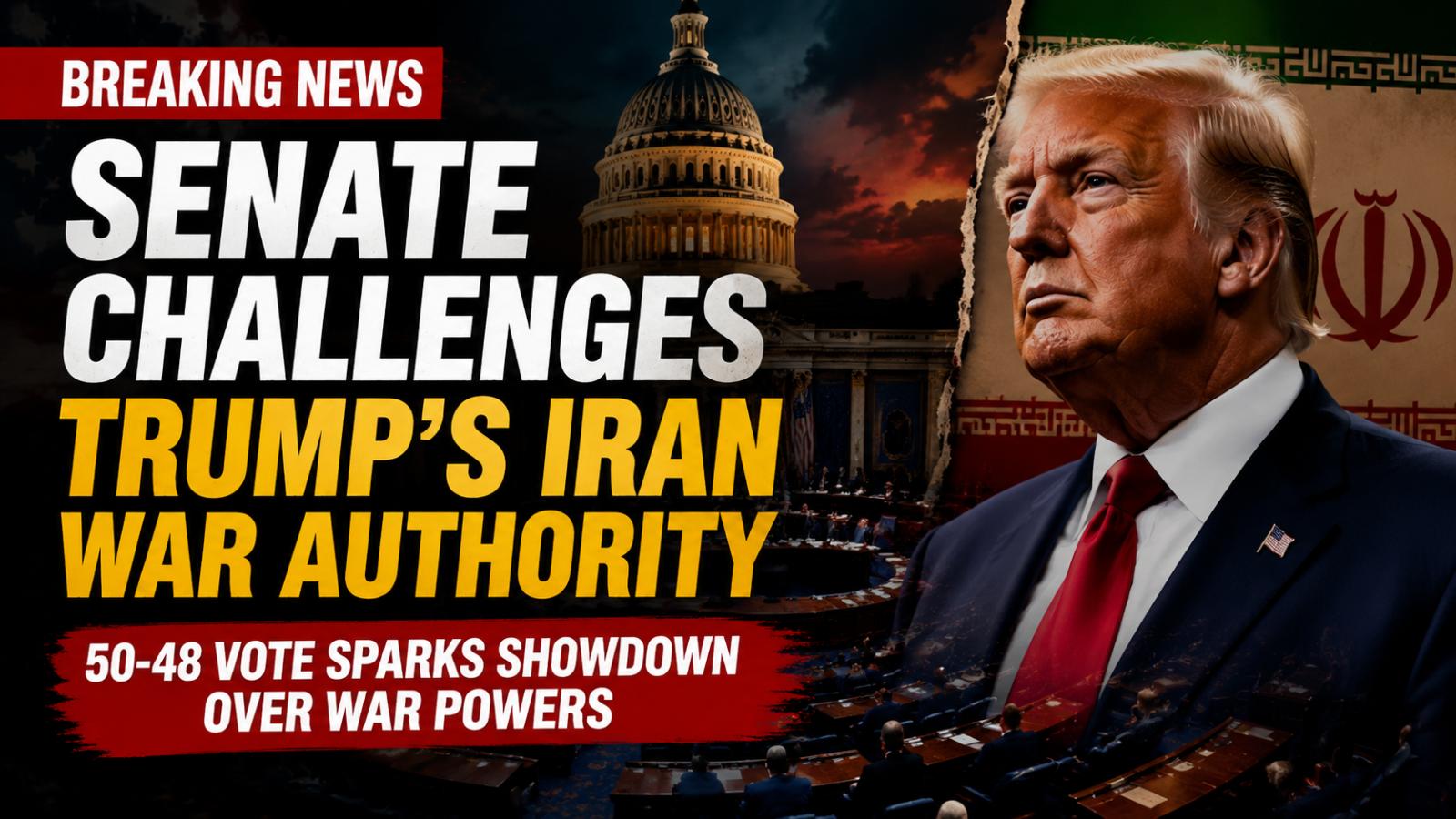
The US Senate has approved a resolution opposing continued military involvement tied to Iran, signaling widening friction between Congress and the executive branch over war powers. The measure passed narrowly at 50–48 and had already cleared the House, reflecting rare bipartisan concern over the direction of US military engagement in the region. Although the resolution does not carry legal force, it represents a formal political statement that questions the scope of presidential authority in ongoing hostilities.
Legal debate over War Powers Act
At the center of the dispute is the interpretation of the War Powers Act and whether the administration exceeded its authority in initiating or sustaining military operations without explicit congressional approval. Lawmakers supporting the resolution argue that prolonged engagement without authorization undermines constitutional checks and balances. The White House, however, maintains that its actions remain within legal boundaries and that attempts to restrict executive flexibility could weaken national security decision-making during active negotiations.
Diplomatic pressure and Iran negotiations
The vote comes as diplomatic efforts continue to shape a broader framework involving Iran’s nuclear program, sanctions relief, and regional stability concerns, including the Strait of Hormuz. Officials have described the ongoing process as time-sensitive, with attempts to convert preliminary understandings into a more structured agreement. Supporters of the administration argue that congressional intervention at this stage could disrupt negotiations and reduce leverage in talks.
Political divide and economic concerns
The measure also exposes internal divisions within Congress, including limited cross-party support that broke traditional alignment on foreign policy issues. Critics of the conflict highlight concerns over rising energy costs, disrupted trade routes, and broader economic pressure linked to regional instability. With midterm elections approaching, foreign policy and inflation concerns are increasingly intersecting in domestic political debate, adding further weight to the resolution’s symbolic impact even without enforcement power.