US consumer confidence falls in May as inflation, high gas prices and a softer job outlook pressure household budgets, according to the Conference Board’s latest survey. The drop shows why many Americans are pulling back on spending even as stocks remain near record highs.
Why US Consumer Confidence Falls in May
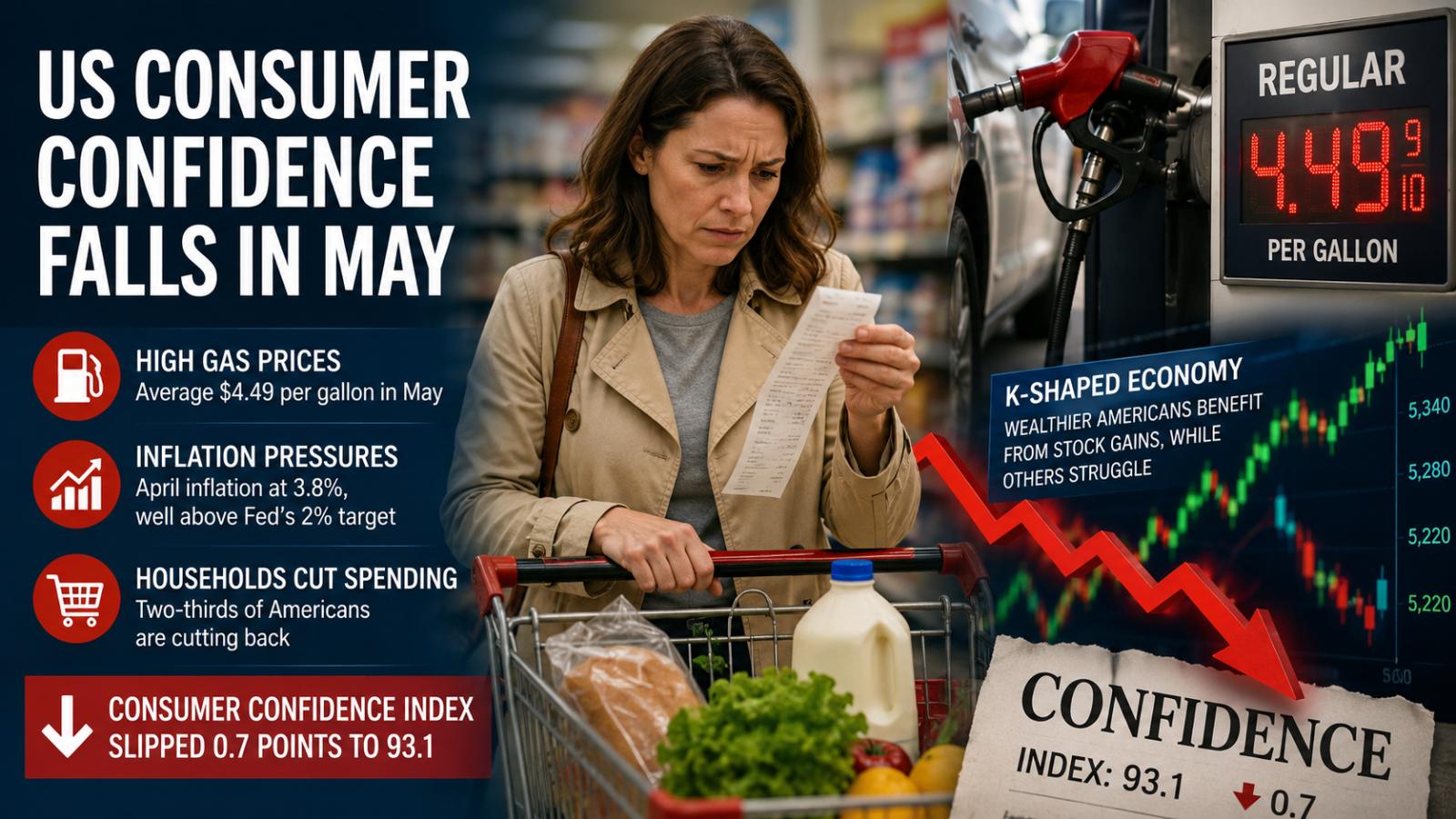
The Conference Board’s consumer confidence index slipped 0.7 points to 93.1 in May, marking the first decline after three months of gains. The index remains well below the pre-pandemic period, when it regularly reached 130.
Inflation and fuel costs were key pressures. Gas prices rose to a nationwide average of $4.49 a gallon from $2.98 before the war began at the end of February, and prices stayed at or above $4.50 for nearly all of May. Inflation reached 3.8% in April, the highest level in three years and above the Federal Reserve’s 2% target.
Americans Cut Spending as Prices Rise
Special questions in the May survey found that rising prices are changing household behavior. Two-thirds of respondents said they were cutting back, including reducing overall purchases and delaying bigger-ticket items.
Consumers also planned to spend less on clothes, shoes, hobby items, toys and games, showing how inflation is moving beyond essentials and affecting discretionary purchases.
Stocks Show a Split Economy
The weak confidence reading stands in contrast to strong stock prices. Economists describe the divide as a K-shaped economy: higher-income households benefit from rising markets and continue spending, while lower-income households face tighter budgets.
Confidence improved among households earning $100,000 or more, but fell for most other income groups.
Job Market Views Weaken
Views of the job market also softened. The share of respondents who said jobs were plentiful dropped to 25.5%, the lowest in three years, while 18.6% said jobs were hard to get, the smallest share since October.
The University of Michigan’s consumer sentiment index also fell to a record-low 44.8 in May, with many respondents saying rising prices hurt their finances. The data matters because weaker confidence can signal slower consumer spending, a key driver of the US economy.