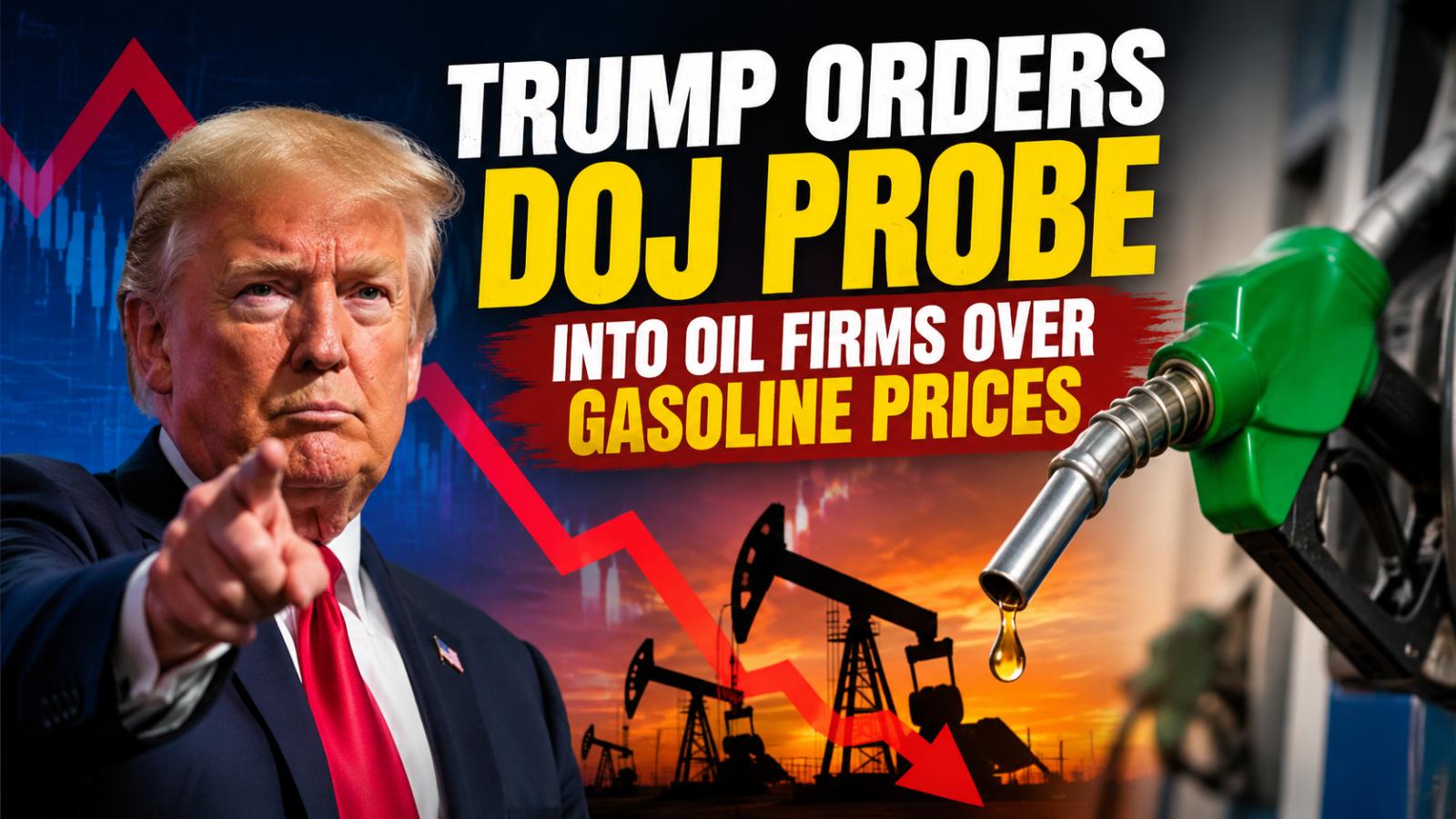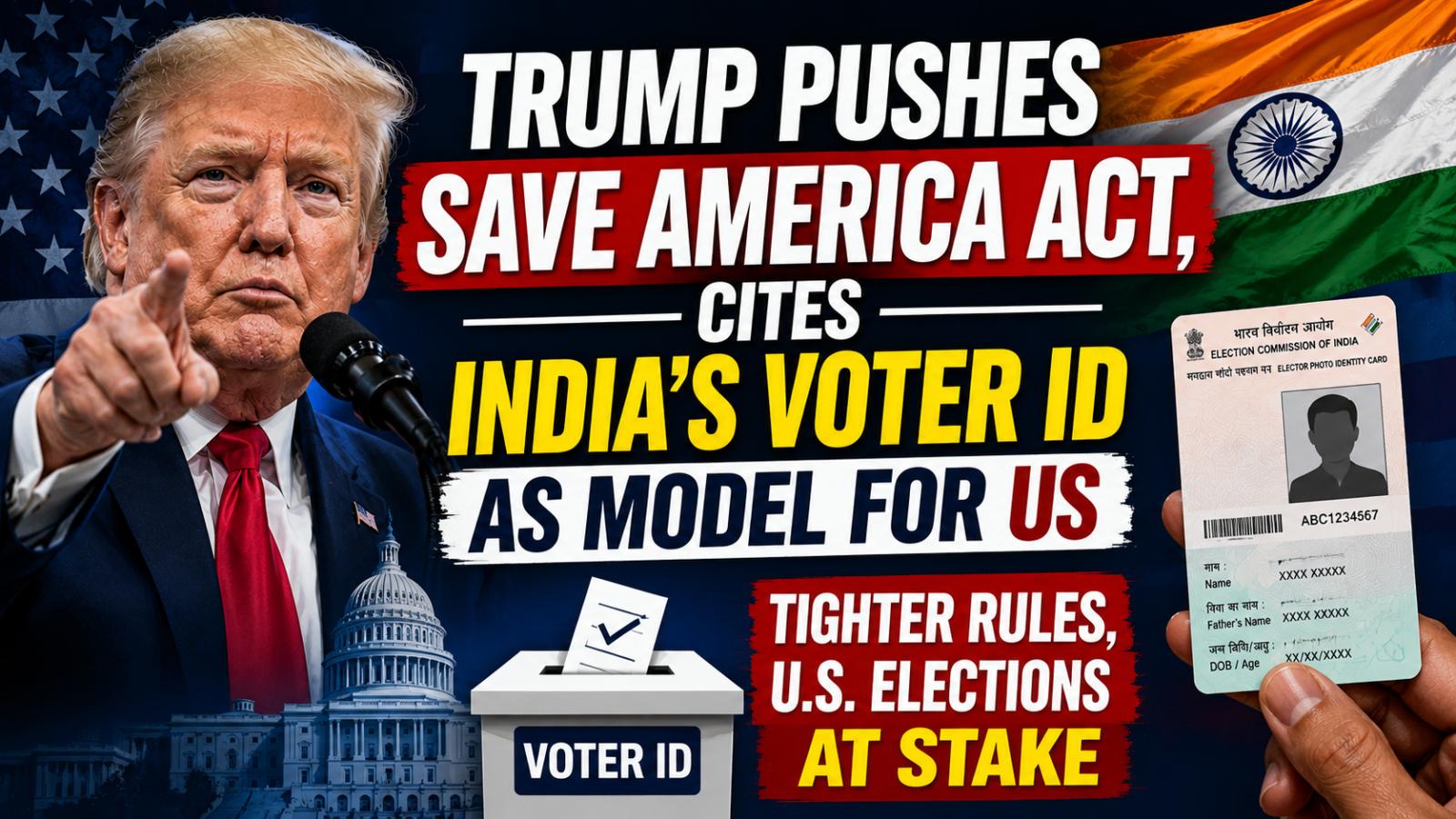
US President Donald Trump has renewed his push for the SAVE America Act, citing India’s voter ID system while arguing for stricter eligibility rules in American federal elections. His latest remarks put India’s massive election process at the center of a renewed debate over voter identification, citizenship checks and mail voting in the United States.
SAVE America Act targets voter eligibility
Trump used a Truth Social post to call on Congress to pass legislation aimed at changing voter registration requirements for federal elections. He pointed to India as an example of a country that operates large-scale elections while requiring voters to establish their identity.
Trump highlighted India’s 2024 general election, which involved hundreds of millions of voters, and argued that the United States should adopt stronger identification requirements.
The broader political argument centers on whether additional federal requirements would improve confidence in elections or create unnecessary barriers for eligible voters. Any final legislation would need to balance election security with access to voting.
India voter ID system enters US election debate
Trump also referred to comments attributed to India’s Chief Election Commissioner Gyanesh Kumar while drawing comparisons between the two democracies.
India uses Electoral Photo Identity Cards as a principal form of voter identification, although voters without an EPIC may use certain alternative identification documents approved by the Election Commission. That distinction is important: describing India’s system as requiring every voter to present one specific voter ID card would oversimplify the actual rules.
India’s enormous electorate has nevertheless made its election administration a frequent international reference point. The Election Commission uses extensive voter rolls, identification procedures and polling infrastructure to conduct elections across the country.
Trump’s decision to highlight India therefore gives the American voter ID debate an international comparison at a time when election rules remain politically contentious.
Trump calls for proof of citizenship
The proposed changes would strengthen requirements surrounding citizenship verification for federal voter registration.
The administration argues that only American citizens should determine the outcome of federal elections and says stronger documentation requirements would help reinforce public confidence.
Critics of stricter documentary requirements have raised a different concern: eligible American citizens do not all possess the same documents, and obtaining them can impose additional costs or administrative hurdles.
That disagreement means the debate extends beyond whether non-citizens should vote in federal elections—which is already prohibited under federal law—to how citizenship eligibility should be verified.
Mail voting rules face renewed scrutiny
Trump has also continued his criticism of widespread mail voting while pointing to India's comparatively limited reliance on postal ballots.
The comparison is not exact because the two countries operate fundamentally different election systems. US elections are administered primarily by states and local jurisdictions, and voting procedures vary considerably across the country.
India, meanwhile, conducts national elections under a centralized constitutional election authority and uses different procedures for absentee and service voters.
Those structural differences make direct comparisons difficult, even if India provides a useful example for the administration’s argument about voter identification.
Congress faces another election law battle
Trump’s renewed campaign ensures that voter eligibility, proof of citizenship and identification requirements will remain major issues in Washington.
Supporters view stronger documentation rules as a straightforward election-integrity measure. Opponents are likely to focus on whether additional requirements could make registration harder for lawful voters who lack readily available citizenship documents.
By bringing India into the argument, Trump has added a striking comparison to that debate. But the real test for Congress will not be whether another democracy uses voter identification. It will be whether lawmakers can design rules that strengthen verification without unnecessarily restricting legitimate participation in US elections.