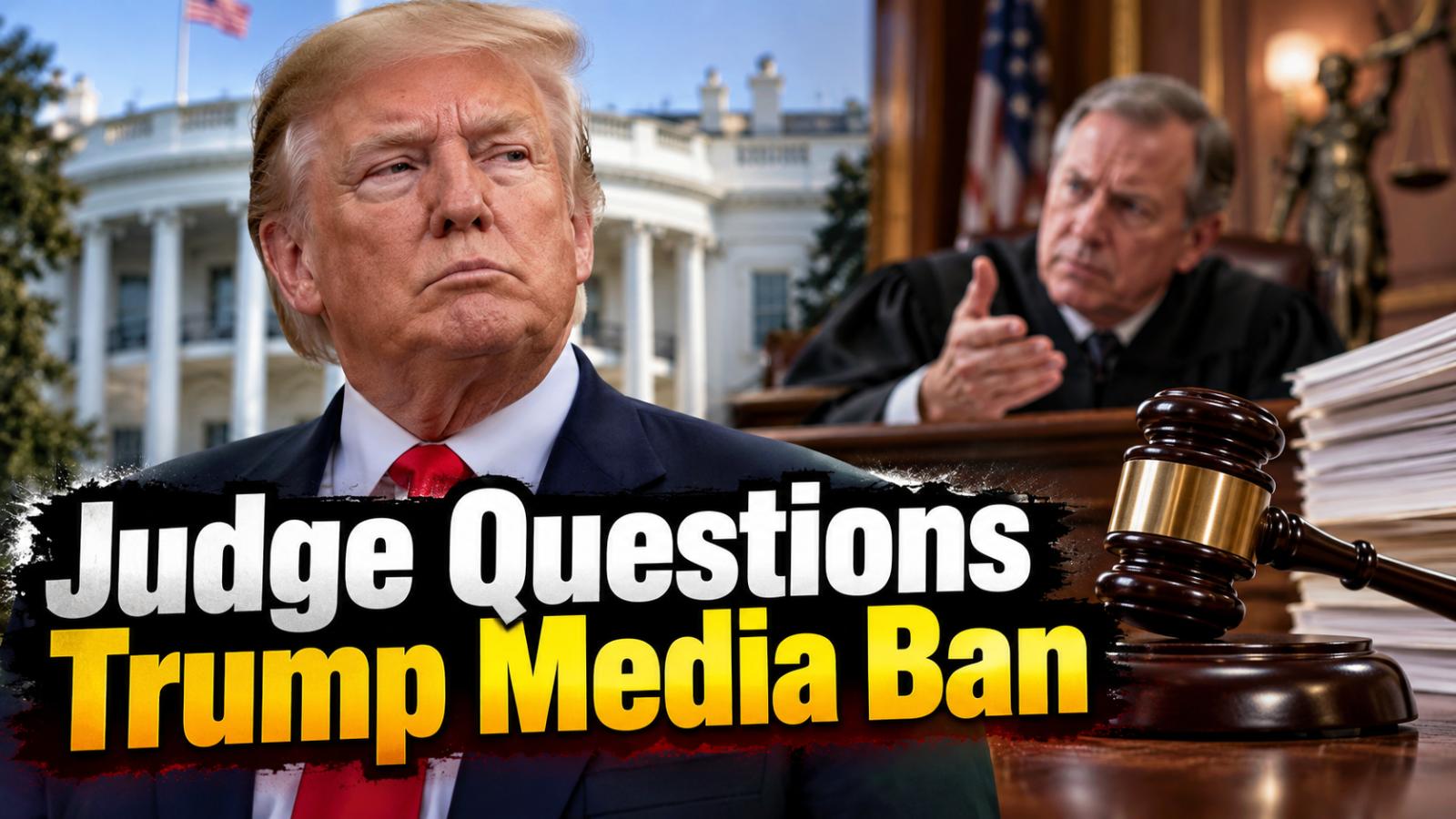
A federal judge has questioned whether President Donald Trump's decision to bar CNN, MS NOW and Politico from the White House followed established legal requirements, as the three news organizations seek emergency restoration of their credentials. U.S. District Judge Timothy Kelly heard arguments on September 23 but ended the hearing without immediately ruling on their request for a temporary restraining order.
The outlets filed their lawsuit on September 21, arguing that the Trump media ban violates First Amendment protections and Fifth Amendment due-process rights. The administration disputes those claims and maintains that access to the White House is a privilege rather than an unconditional right.
Press access raises legal questions
Kelly focused on previous decisions from the U.S. Court of Appeals for the D.C. Circuit governing White House press access. He cited Sherrill v. Knight and Karem v. Trump, which establish procedural protections when the government seeks to revoke journalists' access.
During the hearing, Kelly indicated that the procedures described in those cases did not appear to have been followed before the three outlets lost access. He said he was bound to apply existing appellate precedent even though government attorneys argued that the earlier decisions were wrongly decided.
Due process becomes central dispute
Attorneys representing CNN, MS NOW and Politico said the outlets received no meaningful advance notice or opportunity to contest the allegations before their credentials were withdrawn.
The Justice Department pointed to letters explaining the decision, but Kelly questioned their timing because the letters arrived after access had already been revoked and after the lawsuit had been filed. The White House later gave the organizations until September 25 to respond.
Security claim defended by administration
The administration has argued that national security concerns support its decision. Government filings accused the outlets of publishing sensitive information and material the White House considers inaccurate.
Justice Department attorney Michael Velchik argued that a president must be able to act quickly when security concerns arise. Lawyers for the media organizations disputed that justification and argued that the restrictions were imposed because of the administration's objections to their coverage. Those competing claims remain before the court.
Acosta case returns to focus
The dispute recalls the 2018 case involving CNN correspondent Jim Acosta. Kelly temporarily restored Acosta's White House credential after finding that the government had not provided adequate procedural protections before revoking it.
That earlier decision did not establish an unlimited right for journalists to enter the White House. Instead, it focused largely on whether officials followed fair procedures before withdrawing an existing credential.
Media rights case awaits ruling
The latest lawsuit could clarify how existing press-access protections apply when an administration removes entire news organizations rather than an individual correspondent.
The ban has already affected White House pool operations. CNN was removed from a scheduled pool assignment, and the other major television networks temporarily suspended their participation in the television pool in response.
Kelly said he would issue his decision on the temporary restraining order as soon as possible. That ruling will determine whether CNN, MS NOW and Politico regain White House access while the broader constitutional lawsuit continues.