Why is the Pentagon’s $25 billion war cost estimate questioned? Experts say it may be incomplete
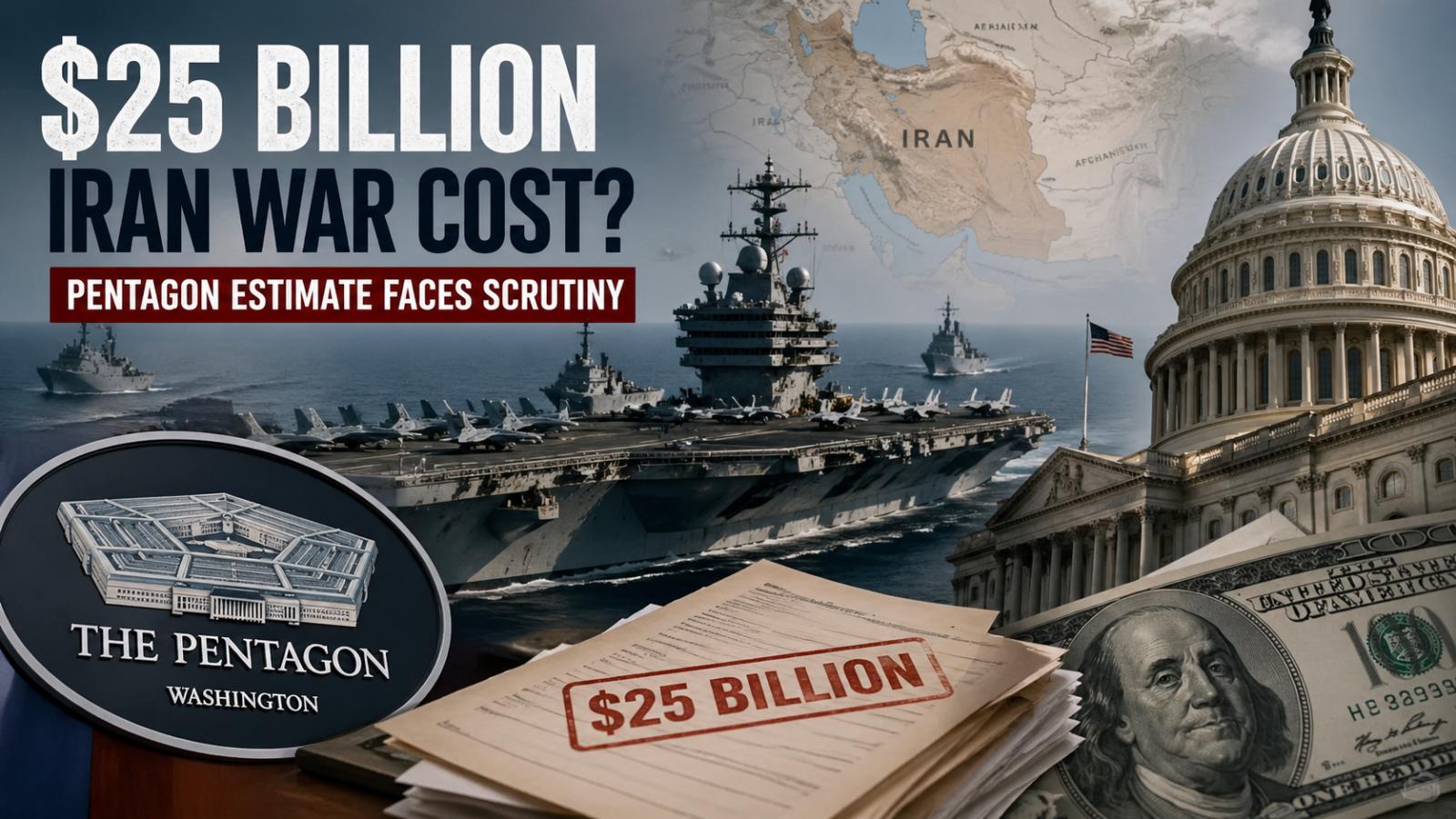
The United States Department of Defense has estimated that its ongoing military conflict with Iran has cost approximately $25 billion, but analysts and lawmakers are raising concerns that the figure may significantly understate the true financial burden. The estimate was presented during a congressional hearing on Tuesday, April 29, 2026, where Pentagon officials outlined current war-related expenditures without offering a detailed breakdown.
Congressional hearing reveals limited breakdown of war expenses
During the hearing, acting comptroller Jules Hurst stated that the figure includes munitions and operational costs incurred since the conflict began on Friday, February 28, 2026. However, the lack of transparency has drawn scrutiny from both Democratic and Republican lawmakers, who questioned whether critical components were excluded from the estimate.
A report by Bloomberg highlighted that the Pentagon’s accounting may omit several significant cost drivers. Based on available Pentagon data, analysts estimated that munitions alone could account for roughly $8 billion, while replacing damaged aircraft and equipment may add another $5 billion. Operational expenses tied to deploying aircraft carriers and 16 destroyers in the region were estimated at around $1 billion.
Analysts warn key cost components may be excluded
Experts argue that the Pentagon’s figure does not appear to include costs associated with repairing damaged US military facilities in West Asia, pre-war operational expenditures, or the ongoing expenses tied to a naval blockade in the region. Stimson Center senior fellow Kelly Grieco described the estimate as a “narrow accounting” that fails to capture the broader financial scope of the war.
Similarly, the Center for Strategic and International Studies suggested that munitions costs alone could eventually reach $25 billion, indicating that the Pentagon’s total estimate may be far from comprehensive.
Lawmakers question sustainability and transparency of war funding
Senator Richard Blumenthal added to the skepticism, noting that earlier briefings suggested daily war costs of up to $2 billion, which he characterized as a “low-ball figure.” His remarks reflect broader concerns within Congress about the sustainability of the conflict and its long-term financial implications.
US Defense Secretary Pete Hegseth, appearing before the House Armed Services Committee for the first time since the conflict began, faced extensive questioning during the nearly six-hour session. Lawmakers pressed him not only on current spending but also on the potential impact on US munitions stockpiles and readiness.
Ongoing investigations and uncertainty over future costs
Hegseth declined to provide projections on how long the conflict might continue or how much additional funding may be required. He also confirmed that an incident involving a strike on an elementary school in Minab, where more than 150 children were reportedly killed, remains under investigation.
With a second day of hearings scheduled for Wednesday, April 30, 2026, policymakers are expected to continue examining both the financial and strategic implications of the war. The debate underscores growing pressure on the Pentagon to provide a more transparent and comprehensive accounting of the true cost of the conflict.