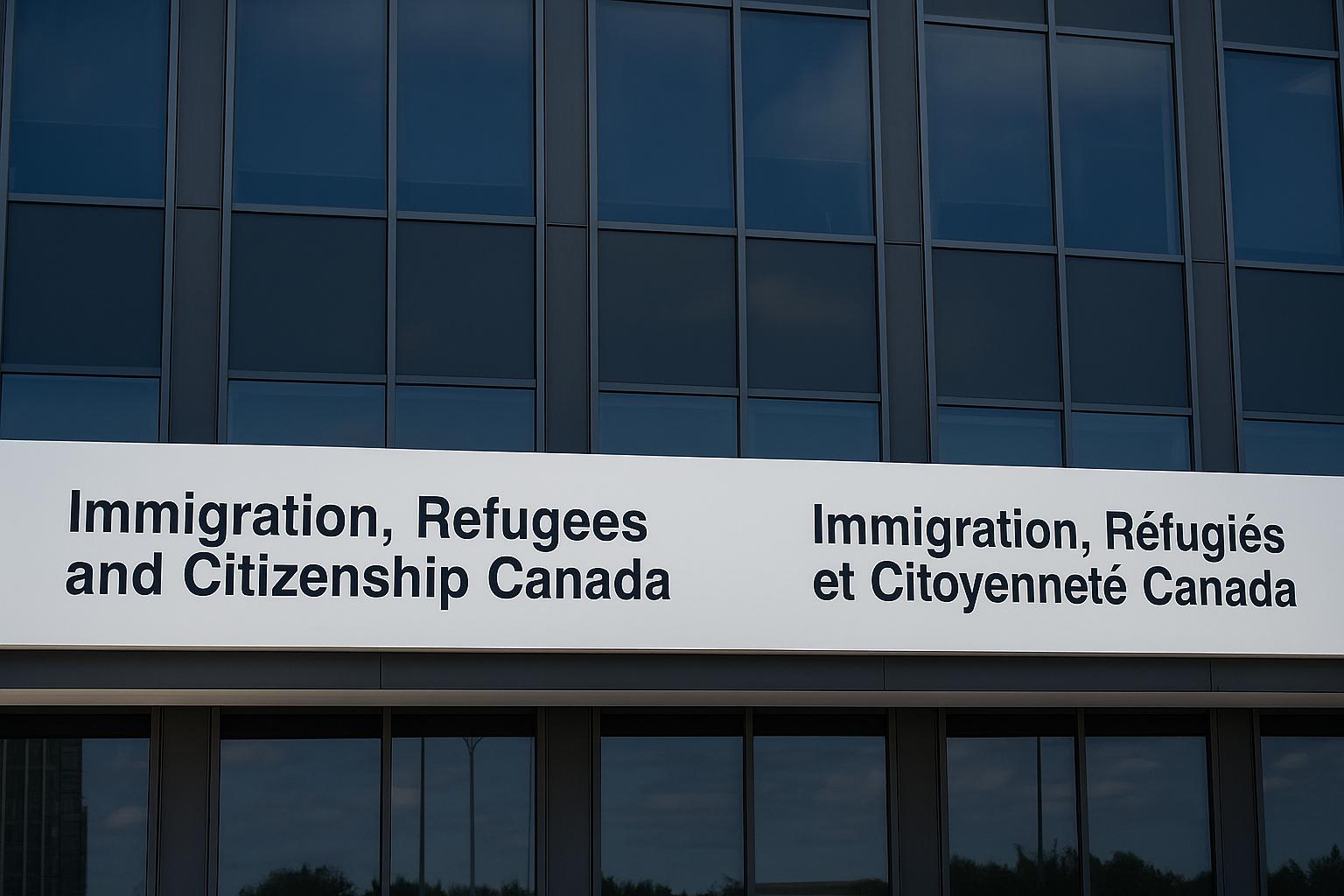
Immigration, Refugees and Citizenship Canada (IRCC) has announced a major update to its operational framework, outlining clear legal grounds for when temporary resident documents—such as visitor visas, study permits, work permits, and electronic travel authorizations (eTAs)—may be cancelled. The revised policy, which came into effect on November 4, 2025, aims to standardize how immigration officers handle document revocations and close long-standing gaps in the Immigration and Refugee Protection Regulations (IRPR).
The new framework replaces years of ambiguity with structured legal authority, allowing IRCC officers to cancel temporary documents when the holder no longer meets eligibility, admissibility, or compliance requirements. Previously, cancellations were largely discretionary and often lacked transparency, creating uncertainty for applicants and legal representatives. With this change, the government seeks to make the process more predictable, legally defensible, and fair.
Under the new rules, visitor visas can now be revoked under specific conditions detailed in sections 180.1 and 180.2 of the IRPR. These include administrative errors, the loss of eligibility, or newly established inadmissibility—such as criminal activity or violations of visa terms. A visa is also automatically void if the holder becomes a permanent resident, loses the passport associated with the visa, or passes away.
For electronic travel authorizations, similar provisions are now included in sections 12.07 and 12.08. Officers can cancel an eTA if the traveller becomes criminally inadmissible, no longer holds a valid passport, or if the authorization was issued in error. The goal, IRCC officials explain, is to ensure that only valid, eligible travellers retain authorization to enter or transit through Canada.
Study permits and work permits, which are critical to Canada’s education and labour systems, now include clearly defined cancellation clauses under sections 222.7–222.8 and 209.01–209.02. These updates specify that permits may be revoked if issued in error or if the holder ceases to meet the conditions under which the permit was granted. Automatic cancellations apply in cases of death or when a temporary resident transitions to permanent residency.
For example, if a student’s educational institution is later found to be non-compliant with IRCC’s designated learning institution (DLI) list, the study permit may be cancelled. Similarly, a foreign worker whose employer is found to be violating IRCC’s employer compliance program may lose their work authorization once the issue is confirmed.
IRCC officials emphasized that the purpose of these changes is not to increase cancellations, but to ensure that decisions are transparent, consistent, and based on clearly defined legal standards. The department also introduced a safeguard known as the waiver clause, ensuring that permits granted under temporary public policy exemptions—such as humanitarian or emergency waivers—cannot later be revoked on the same grounds that were initially waived.
The policy update is part of IRCC’s broader modernization effort, which focuses on strengthening system integrity and ensuring responsible management of temporary resident volumes. It aligns Canada’s regulatory approach with that of other advanced immigration systems, such as those in the United States and Australia, where revocation procedures are explicitly detailed in law.
By creating clear distinctions between discretionary and automatic cancellations, the IRCC aims to improve public trust and operational efficiency. Immigration lawyers and advocacy groups have long called for such clarity, noting that unpredictable cancellation decisions often left applicants in limbo, especially students and workers whose legal status hinged on valid documentation.
Officials also stated that these updates will help deter overstays and misuse of Canada’s temporary resident programs by linking compliance checks to centralized data systems. Enhanced information-sharing across government departments is expected to make it easier to identify ineligible or non-compliant document holders, ensuring that those who follow the rules are not unfairly disadvantaged.
The changes come amid rising temporary resident volumes in Canada, with record numbers of international students, foreign workers, and visitors entering the country in recent years. IRCC’s modernization strategy seeks to balance openness with accountability, ensuring that Canada’s immigration system remains fair, efficient, and secure.
For current and prospective temporary residents, the message is clear: maintaining lawful status is essential. Permit holders are urged to comply with all conditions of stay, ensure that their documents remain valid, and keep their information updated with IRCC. While the new rules may seem stricter, officials maintain that they ultimately reinforce fairness—protecting both compliant applicants and the integrity of Canada’s immigration system.
The updated IRCC guidelines are now fully in effect, marking a significant shift in how Canada manages temporary residency and visa compliance. The changes signal a move toward a more transparent, rules-based approach that seeks to uphold the country’s reputation for fairness while maintaining strong oversight of its immigration processes.