Across the United States, thousands of people gathered on Saturday for large-scale “No Kings” protests to express discontent with the direction of the country under President Donald Trump. Demonstrators filled public squares and streets in major cities, calling for renewed commitment to democracy and denouncing what they described as growing authoritarian behavior in government. Supporters of the president, however, dismissed the demonstrations as unpatriotic, labeling them as “hate rallies” against the nation. The events reflected deep political and social divisions, with both sides claiming to defend the core values of the country.
The protests took place amid a prolonged government shutdown that has disrupted essential services and left many workers without pay. Organizers of the “No Kings” movement say the crisis highlights the imbalance of power between the executive branch and other institutions of government. They argue that the current administration’s actions undermine constitutional checks and balances, threatening the democratic framework that has guided the nation for centuries. The movement, which began shortly after Trump’s return to office, has now entered its third wave of nationwide mobilization, each one larger and more vocal than the last.
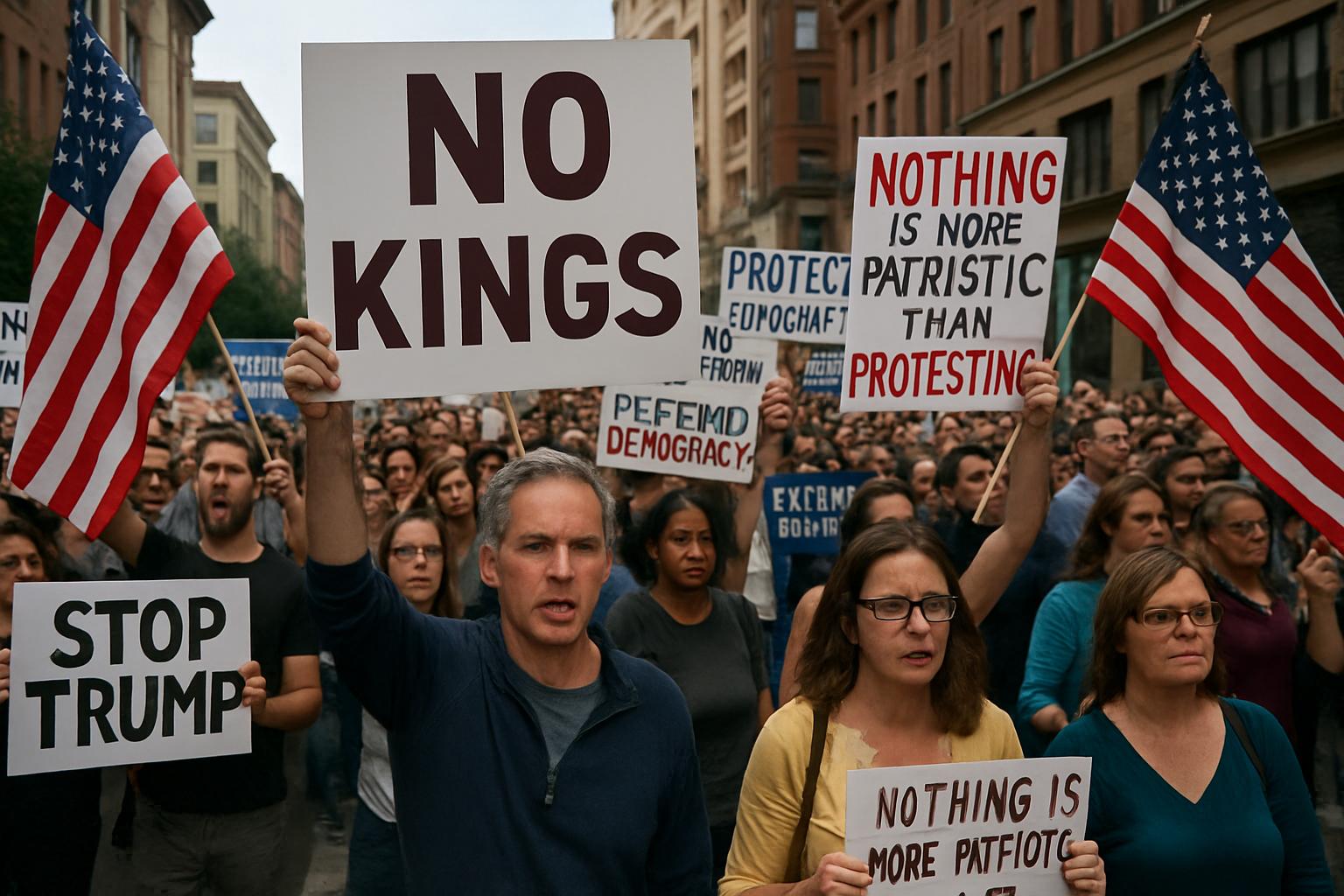
In the capital, as well as in towns and cities across the country, protesters carried signs and American flags, chanting slogans emphasizing freedom, justice, and accountability. Many expressed frustration at being labeled unpatriotic or even hostile toward the nation for their dissent. One protester in Maryland held a sign declaring, “Nothing is more patriotic than protesting,” capturing the broader sentiment that disagreement and protest are acts of civic engagement rather than disloyalty. Participants described the rallies as an assertion of citizens’ right to speak out against what they see as dangerous shifts in governance.
Protesters said their primary goal was to raise awareness about the risks of unchecked executive authority and to encourage citizens to remain active in protecting democratic norms. They voiced concern about the increasing use of executive power to bypass legislative and judicial oversight. Many drew parallels between current political events and earlier periods in history when democracy was tested by concentrated authority. Speakers at several rallies urged participants to remain nonviolent, emphasizing the importance of peaceful civic action as a cornerstone of American democracy.
In Washington, one marcher carried a large American flag and expressed frustration over the accusations directed at the protesters. He said being labeled a threat to the country was “pathetic,” adding that protesting is a legitimate way to express disagreement with government policies. He said that while he opposed the administration’s decisions, he did not doubt the patriotism of those in power but believed that ambition and partisanship were driving the current tensions. Similar sentiments were echoed by demonstrators across the country, who described the movement as an expression of hope for a more accountable and transparent government.
The demonstrations have also become a focal point in the debate over the meaning of patriotism. While supporters of the administration argue that such rallies undermine national unity, protesters insist that speaking out against perceived injustices is the highest form of civic responsibility. Many see the “No Kings” slogan as a symbolic rejection of concentrated power and a reminder of the country’s founding principle that leadership should remain accountable to the people.
The ongoing shutdown has added urgency to the movement, with protesters highlighting its economic and social impacts. Thousands of public sector employees remain furloughed, and critical services are disrupted, intensifying public frustration. Demonstrators argue that political gridlock is deepening inequality and eroding trust in institutions. They called on elected representatives to prioritize the welfare of citizens over partisan rivalry, warning that failure to do so could further weaken the nation’s democratic foundations.
The rallies were not without controversy. Supporters of the president condemned the gatherings as politically motivated attacks designed to discredit the administration. They claim the movement misrepresents the president’s leadership style and unfairly portrays his policies as undemocratic. However, protest organizers maintain that their efforts are nonpartisan and aimed at defending the integrity of American democracy, not targeting individuals. They describe their message as one of vigilance rather than defiance, emphasizing that leadership must remain accountable to the people’s will.
While demonstrations filled city centers and parks, the president spent the weekend away from Washington, addressing political supporters and donors at a private event. In a recent interview, he dismissed claims that he was acting like a monarch, saying he viewed himself as a strong leader rather than a ruler. His comments did little to quell protests, as demonstrators continued to gather near his residence and in public spaces across the country.
Analysts view the “No Kings” movement as part of a broader wave of civic activism reshaping American political discourse. They note that while the protests are focused on the current administration, they also reflect long-standing concerns about polarization, inequality, and the erosion of trust in institutions. Many see them as an indicator of public desire for stronger democratic accountability and renewed civic engagement.
As night fell on Saturday, rallies continued in cities from coast to coast. Protesters waved flags, sang patriotic songs, and called for unity rooted in democratic ideals rather than partisan loyalty. For many participants, the demonstrations were not just about one leader or one political moment—they were about reaffirming the promise of a government of, by, and for the people. The “No Kings” protests, they said, were a reminder that democracy requires vigilance and courage, even in times of deep division
The protests took place amid a prolonged government shutdown that has disrupted essential services and left many workers without pay. Organizers of the “No Kings” movement say the crisis highlights the imbalance of power between the executive branch and other institutions of government. They argue that the current administration’s actions undermine constitutional checks and balances, threatening the democratic framework that has guided the nation for centuries. The movement, which began shortly after Trump’s return to office, has now entered its third wave of nationwide mobilization, each one larger and more vocal than the last.
In the capital, as well as in towns and cities across the country, protesters carried signs and American flags, chanting slogans emphasizing freedom, justice, and accountability. Many expressed frustration at being labeled unpatriotic or even hostile toward the nation for their dissent. One protester in Maryland held a sign declaring, “Nothing is more patriotic than protesting,” capturing the broader sentiment that disagreement and protest are acts of civic engagement rather than disloyalty. Participants described the rallies as an assertion of citizens’ right to speak out against what they see as dangerous shifts in governance.
Protesters said their primary goal was to raise awareness about the risks of unchecked executive authority and to encourage citizens to remain active in protecting democratic norms. They voiced concern about the increasing use of executive power to bypass legislative and judicial oversight. Many drew parallels between current political events and earlier periods in history when democracy was tested by concentrated authority. Speakers at several rallies urged participants to remain nonviolent, emphasizing the importance of peaceful civic action as a cornerstone of American democracy.
In Washington, one marcher carried a large American flag and expressed frustration over the accusations directed at the protesters. He said being labeled a threat to the country was “pathetic,” adding that protesting is a legitimate way to express disagreement with government policies. He said that while he opposed the administration’s decisions, he did not doubt the patriotism of those in power but believed that ambition and partisanship were driving the current tensions. Similar sentiments were echoed by demonstrators across the country, who described the movement as an expression of hope for a more accountable and transparent government.
The demonstrations have also become a focal point in the debate over the meaning of patriotism. While supporters of the administration argue that such rallies undermine national unity, protesters insist that speaking out against perceived injustices is the highest form of civic responsibility. Many see the “No Kings” slogan as a symbolic rejection of concentrated power and a reminder of the country’s founding principle that leadership should remain accountable to the people.
The ongoing shutdown has added urgency to the movement, with protesters highlighting its economic and social impacts. Thousands of public sector employees remain furloughed, and critical services are disrupted, intensifying public frustration. Demonstrators argue that political gridlock is deepening inequality and eroding trust in institutions. They called on elected representatives to prioritize the welfare of citizens over partisan rivalry, warning that failure to do so could further weaken the nation’s democratic foundations.
The rallies were not without controversy. Supporters of the president condemned the gatherings as politically motivated attacks designed to discredit the administration. They claim the movement misrepresents the president’s leadership style and unfairly portrays his policies as undemocratic. However, protest organizers maintain that their efforts are nonpartisan and aimed at defending the integrity of American democracy, not targeting individuals. They describe their message as one of vigilance rather than defiance, emphasizing that leadership must remain accountable to the people’s will.
While demonstrations filled city centers and parks, the president spent the weekend away from Washington, addressing political supporters and donors at a private event. In a recent interview, he dismissed claims that he was acting like a monarch, saying he viewed himself as a strong leader rather than a ruler. His comments did little to quell protests, as demonstrators continued to gather near his residence and in public spaces across the country.
Analysts view the “No Kings” movement as part of a broader wave of civic activism reshaping American political discourse. They note that while the protests are focused on the current administration, they also reflect long-standing concerns about polarization, inequality, and the erosion of trust in institutions. Many see them as an indicator of public desire for stronger democratic accountability and renewed civic engagement.
As night fell on Saturday, rallies continued in cities from coast to coast. Protesters waved flags, sang patriotic songs, and called for unity rooted in democratic ideals rather than partisan loyalty. For many participants, the demonstrations were not just about one leader or one political moment—they were about reaffirming the promise of a government of, by, and for the people. The “No Kings” protests, they said, were a reminder that democracy requires vigilance and courage, even in times of deep division