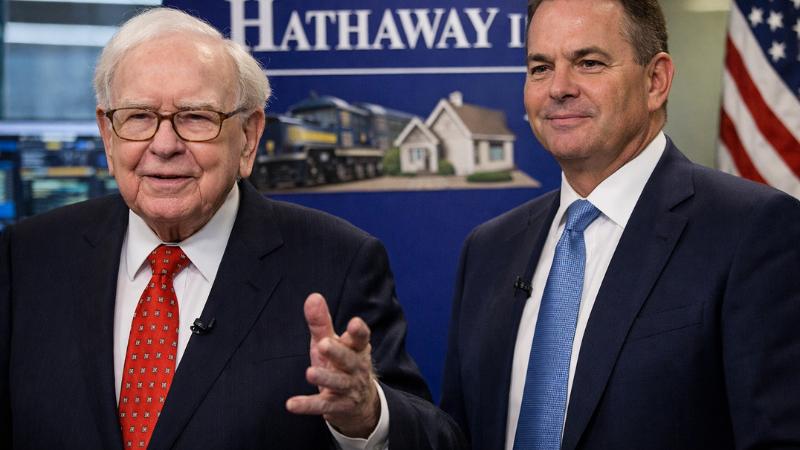
Warren Buffett formally stepped down as chief executive officer of Berkshire Hathaway on the final day of 2025, ending a 60-year tenure that reshaped American corporate history. The transition, long anticipated by investors and company insiders, marks the close of one of the most influential leadership runs in global business. At the age of 95, Buffett will remain chairman of the holding company he transformed from a struggling textile firm into a diversified conglomerate valued at more than $1 trillion.
In his final Thanksgiving letter to shareholders dated November 10, Buffett signaled the approaching change with characteristic understatement, noting that he was “going quiet” and would gradually step back from public-facing duties. While relinquishing the CEO role, he confirmed that he would continue serving as chairman and would maintain limited communication with shareholders through annual Thanksgiving messages. He also indicated that he would stop authoring Berkshire Hathaway’s widely followed annual reports and reduce his lengthy appearances at shareholder meetings, a tradition that had drawn tens of thousands to Omaha each year.
Buffett addressed speculation about his health by saying that, despite moving more slowly and facing difficulty reading, he continues to feel well and remains active at the office five days a week. Reflecting on his career, he spoke at length about his decades-long partnership with Charlie Munger, who died in 2023, and credited that collaboration with shaping Berkshire’s disciplined approach to long-term investing. He also revisited defining investment decisions, including Berkshire’s early and enduring stake in insurance giant GEICO.
In a broader reflection on leadership, Buffett urged executives to think beyond quarterly performance and focus on legacy. He encouraged decision-makers to live in a way that would earn respect in hindsight, emphasizing integrity, patience, and responsibility as enduring measures of success. Those themes have long defined Buffett’s public philosophy and were central to his reputation as the Oracle of Omaha.
Although stepping down as CEO, Buffett is not withdrawing from Berkshire Hathaway entirely. He remains the company’s largest shareholder, with holdings valued at approximately $149 billion at the end of 2025. In keeping with his long-stated plans, Buffett has begun converting a portion of his Class A shares into Class B shares for gradual distribution to four family foundations, with the intention of donating the vast majority of his wealth before his death.
Leadership of Berkshire Hathaway now passes to Greg Abel, who officially assumes the role of chief executive from January 1, 2026. Buffett publicly endorsed Abel, stating that he had exceeded expectations since being identified as a successor. Abel joined Berkshire in 2000 through the acquisition of MidAmerican Energy and later oversaw the company’s non-insurance businesses, earning a reputation for operational discipline and steady management.
As the transition takes place, Berkshire Hathaway enters a new era with a substantial cash reserve and a sprawling portfolio that spans insurance, railroads, energy, manufacturing, and consumer goods. Buffett cautioned that even periods of stability carry uncertainty, reminding shareholders that long-term resilience depends on prudence and adaptability.
Buffett’s journey began in Omaha, Nebraska, where he was born in 1930 during the Great Depression. The son of a congressman and stockbroker, he displayed an early fascination with business, purchasing his first stock at age 11 and filing a tax return at 13. By his teenage years, he was running small enterprises and earning significant income for the time.
After studying at the University of Nebraska and Columbia Business School under the guidance of value investing pioneer Benjamin Graham, Buffett launched Buffett Partnership Ltd in 1956. The partnership generated exceptional returns until it was dissolved in 1969, freeing Buffett to focus entirely on Berkshire Hathaway. His control of the company in the mid-1960s marked the beginning of a strategic shift away from textiles and toward insurance and high-quality operating businesses.
Over the decades, Berkshire acquired or invested in companies such as See’s Candies, BNSF Railway, and Coca-Cola, while also taking significant stakes in Apple and other major firms. Under Buffett’s leadership, Berkshire’s share price rose from $19 in 1965 to more than $755,000 by the end of 2025, outperforming the broader market in many years.
Despite becoming one of the wealthiest individuals in the world, Buffett maintained a notably frugal lifestyle, living in the same Omaha home he purchased in 1958 and drawing a modest salary. His commitment to philanthropy culminated in the Giving Pledge, through which he has donated billions to charitable causes.
With Buffett remaining as chairman, and seasoned executives such as Abel, Ajit Jain, Ted Weschler, and Todd Combs continuing in key roles, Berkshire Hathaway enters its post-Buffett CEO era with continuity at the top. The leadership transition closes a historic chapter while setting the stage for the company’s next phase under the principles that defined its rise.