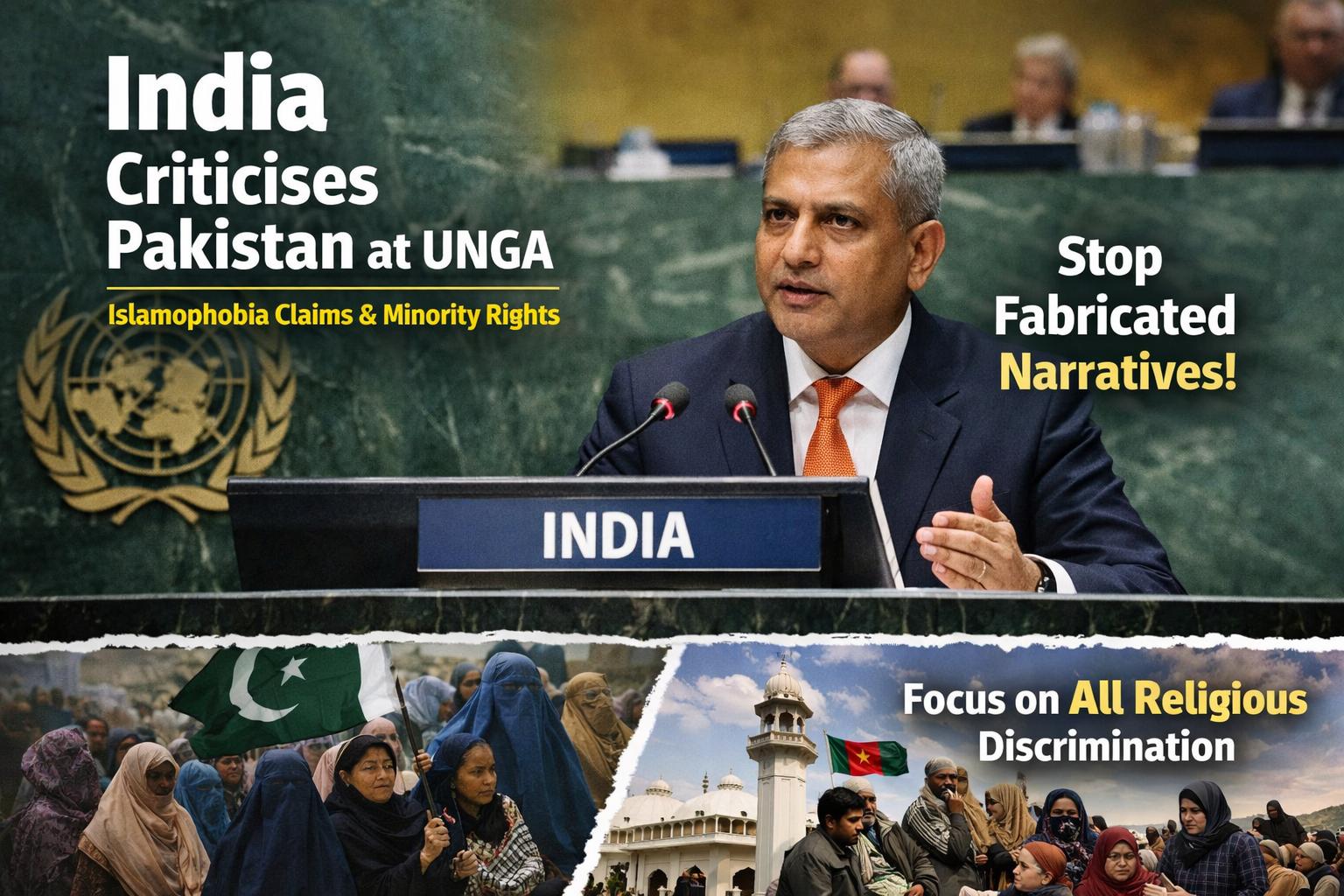
Addressing the gathering, Harish rejected what he described as persistent attempts by Pakistan to portray India in a negative light under the banner of Islamophobia. He stated that such claims were not only baseless but also part of a broader pattern of misinformation. Without naming Pakistan directly in every instance, he referred to India’s “western neighbour” as being known for creating what he called “imaginative tales” to mislead the international community and shift focus away from its own challenges.
India’s response also extended to the role of the Organisation of Islamic Cooperation, which Harish accused of being used as a platform to amplify what he termed false narratives against India. He said there had been repeated efforts to “weaponise” multilateral forums to push politically motivated claims, stressing that such actions undermine the credibility of international institutions and distract from genuine concerns related to religious discrimination.
Highlighting specific issues, Harish pointed to Pakistan’s own record on minority rights, raising concerns about the treatment of Ahmadiyya Muslims within the country. He also referred to the deportation of Afghan refugees and reports of military actions during the holy month of Ramzan, suggesting that these issues warranted equal, if not greater, international attention. According to India, raising selective concerns about Islamophobia while ignoring such matters reflects a lack of consistency and sincerity.
The Indian envoy emphasised that discussions on religious discrimination should not be limited to a single faith or region. Instead, he called for a more comprehensive and balanced approach that addresses all forms of intolerance and discrimination globally. By doing so, he argued, the United Nations can ensure that its efforts are inclusive and effective, rather than being influenced by political agendas.
India has consistently maintained that it values pluralism and diversity, and that its democratic framework provides space for people of all religions and communities. In this context, Harish reiterated that attempts to single out countries based on selective narratives are counterproductive and do not contribute to meaningful dialogue or solutions.
The exchange at the United Nations highlights ongoing tensions between India and Pakistan on international platforms, where both countries have frequently raised concerns about each other’s policies and actions. Such debates often reflect broader geopolitical rivalries, but they also underscore the challenges faced by global institutions in addressing sensitive issues like religious discrimination without becoming arenas for political confrontation.
As discussions on Islamophobia and religious intolerance continue at the global level, India’s intervention signals its push for a wider and more inclusive framework. By calling for a balanced perspective, India has sought to shift the focus from country-specific accusations to a more universal commitment to protecting religious freedoms and promoting mutual respect among nations.