Trump Calls Modi ‘Tough Negotiator’ at 2026 G7 Meeting
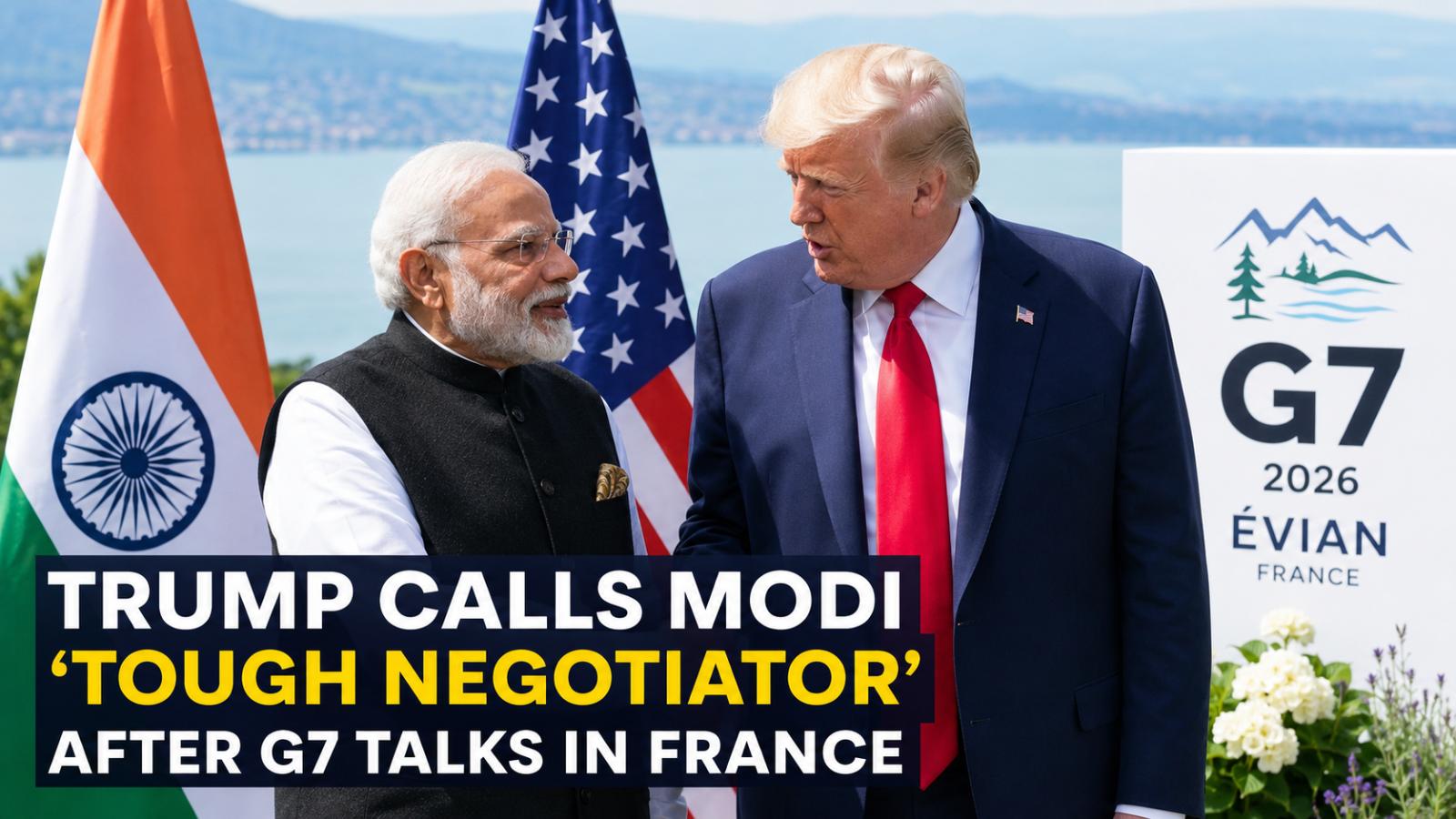
U.S. President Donald Trump called Indian Prime Minister Narendra Modi a “tough negotiator” following their meeting at the 2026 G7 summit in Évian-les-Bains, France. The Trump-Modi G7 meeting on Wednesday, June 17, 2026, focused on U.S.-India trade negotiations, bilateral relations and the safety of Indian seafarers operating near the Strait of Hormuz. Trump-Modi G7 Meeting Focuses on Trade Speaking to reporters after the bilateral discuss
Trump Calls Modi ‘Tough Negotiator’ at 2026 G7 Meeting
U.S. President Donald Trump called Indian Prime Minister Narendra Modi a “tough negotiator” following their meeting at the 2026 G7 summit in Évian-les-Bains, France. The Trump-Modi G7 meeting on Wednesday, June 17, 2026, focused on U.S.-India trade negotiations, bilateral relations and the safety of Indian seafarers operating near the Strait of Hormuz. Trump-Modi G7 Meeting Focuses on Trade Speaking to reporters after the bilateral discuss
Modi G7 Group Photo: Indian Leader Joins Trump, Macron in Evian
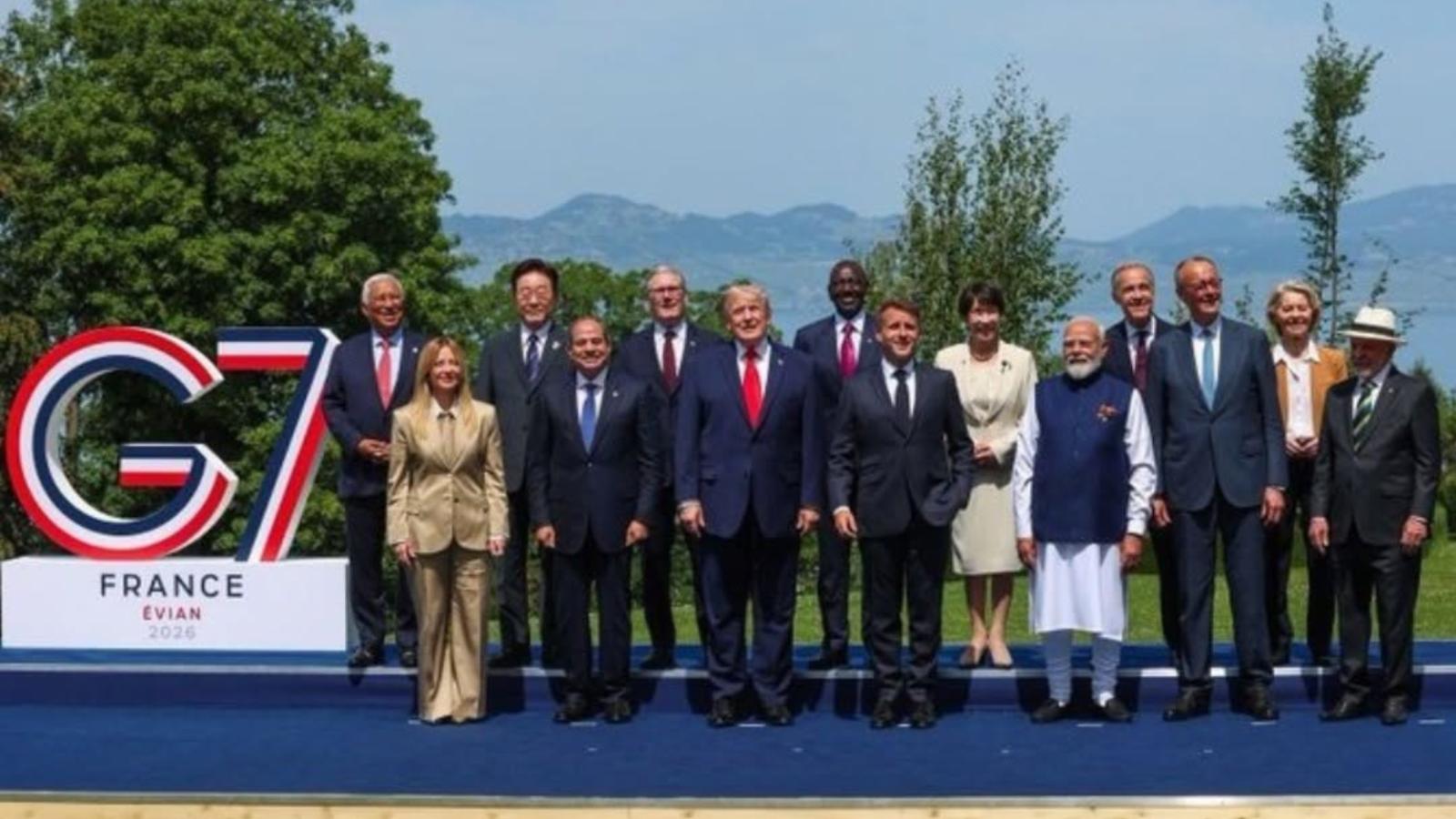
The Modi G7 group photo in Evian placed India’s prime minister beside U.S. President Donald Trump and French President Emmanuel Macron during the summit’s official leaders’ portrait. Narendra Modi’s front-row position on Tuesday, June 16, 2026, became one of the most visible moments of India’s participation in the G7 Summit in Évian-les-Bains, France. Why the Modi G7 Group Photo in Evian Drew Attention India is not a
Modi G7 Group Photo: Indian Leader Joins Trump, Macron in Evian
The Modi G7 group photo in Evian placed India’s prime minister beside U.S. President Donald Trump and French President Emmanuel Macron during the summit’s official leaders’ portrait. Narendra Modi’s front-row position on Tuesday, June 16, 2026, became one of the most visible moments of India’s participation in the G7 Summit in Évian-les-Bains, France. Why the Modi G7 Group Photo in Evian Drew Attention India is not a
Modi-Trump G7 Meeting in Evian Puts India-US Trade in Focus
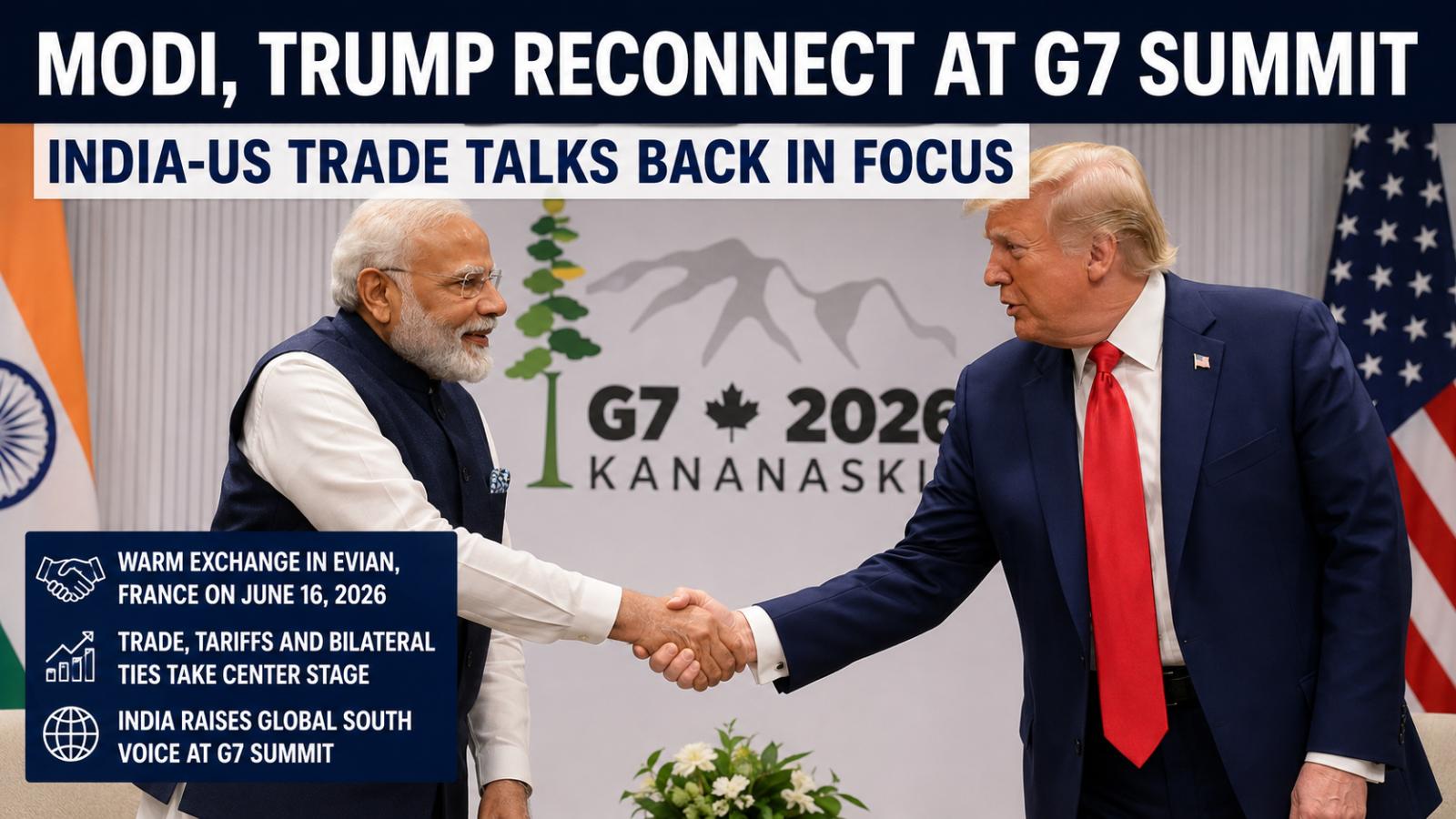
ÉVIAN-LES-BAINS, France — The Modi-Trump G7 meeting in Evian brought India-U.S. trade relations back into focus on Tuesday, June 16, 2026. Prime Minister Narendra Modi and U.S. President Donald Trump exchanged a handshake and brief remarks at the summit venue in France, marking their first face-to-face interaction in about 16 months. Modi-Trump G7 Meeting in Evian Comes Before Trade Discussions Modi approached his seat as Trump turned
Modi-Trump G7 Meeting in Evian Puts India-US Trade in Focus
ÉVIAN-LES-BAINS, France — The Modi-Trump G7 meeting in Evian brought India-U.S. trade relations back into focus on Tuesday, June 16, 2026. Prime Minister Narendra Modi and U.S. President Donald Trump exchanged a handshake and brief remarks at the summit venue in France, marking their first face-to-face interaction in about 16 months. Modi-Trump G7 Meeting in Evian Comes Before Trade Discussions Modi approached his seat as Trump turned
Iran says US demands hinder progress on 14-point peace plan
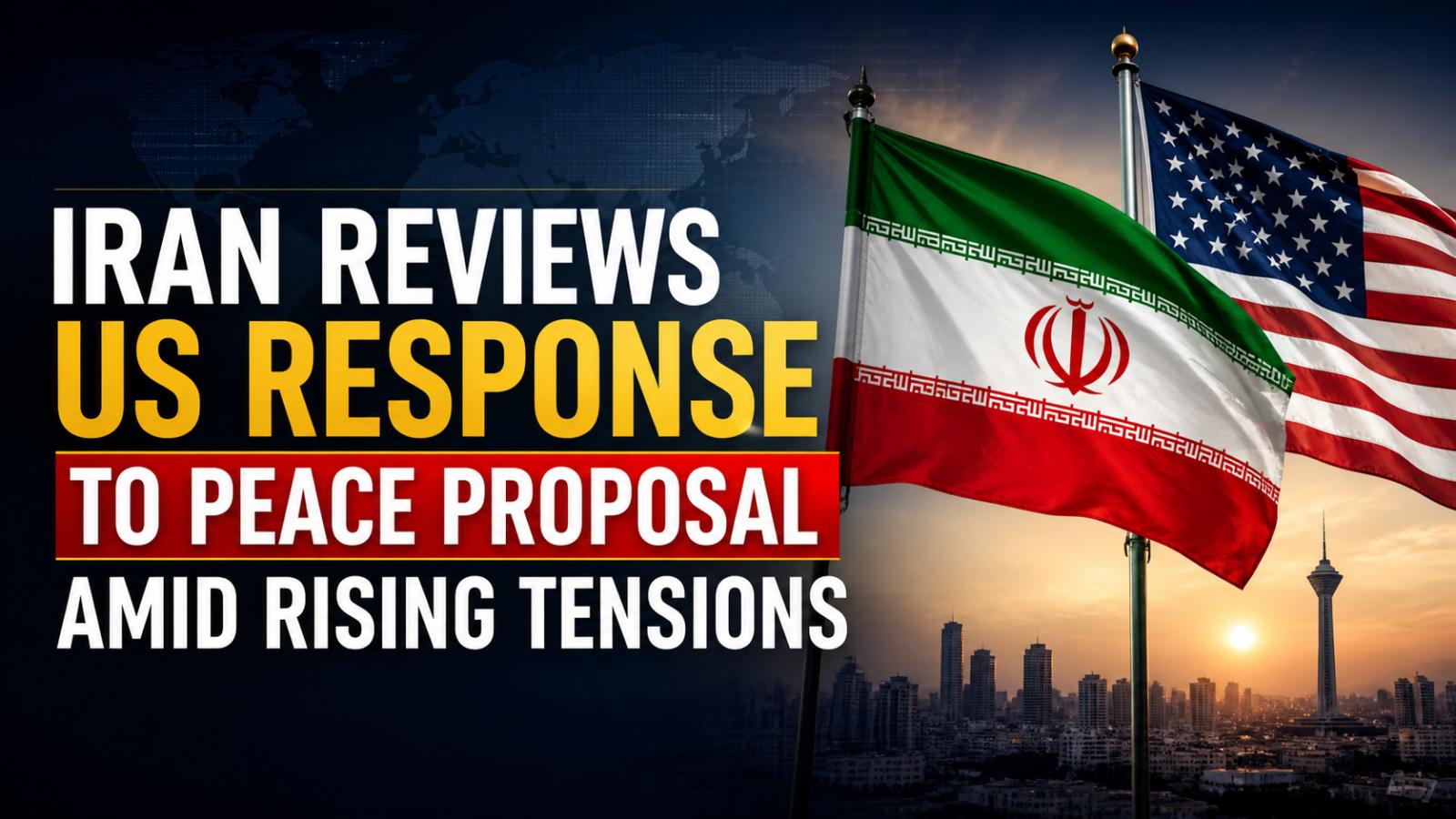
Iran reviews US response to peace proposal as tensions with Washington continue to shape the future of diplomacy and conflict in the region. In a recent press briefing, Iran’s Foreign Ministry confirmed that it has received Washington’s reply to a 14-point peace proposal, but officials say the response includes demands that could complicate progress. The development highlights key areas such as peace negotiations, diplomatic efforts, and the ongoing conflict resolution process.
Iran says US demands hinder progress on 14-point peace plan
Iran reviews US response to peace proposal as tensions with Washington continue to shape the future of diplomacy and conflict in the region. In a recent press briefing, Iran’s Foreign Ministry confirmed that it has received Washington’s reply to a 14-point peace proposal, but officials say the response includes demands that could complicate progress. The development highlights key areas such as peace negotiations, diplomatic efforts, and the ongoing conflict resolution process.
Putin and Trump discuss Iran tensions and Ukraine in lengthy phone call
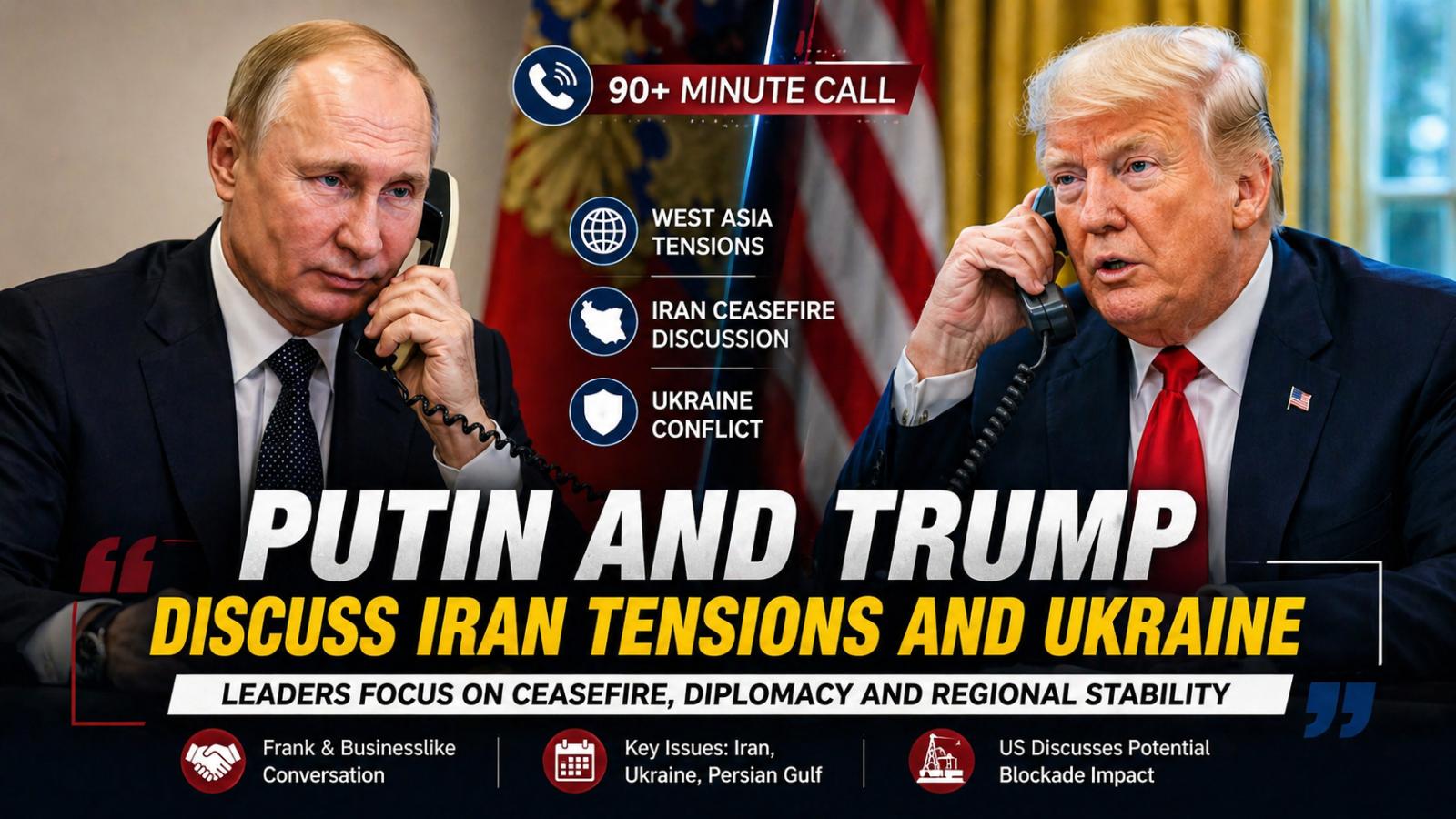
Russian President Vladimir Putin and US President Donald Trump held a 90-minute call on Iran, Ukraine, and Gulf tensions, discussing ceasefire efforts, diplomacy, and possible US actions on Iranian ports. Putin and Trump discuss Iran tensions and Ukraine in lengthy phone call as Vladimir Putin held a phone conversation with Donald Trump addressing ongoing conflicts in West Asia and Ukraine, according to statements from the Kremlin. The discussion, confirmed by aide Yuri Ushakov on Wednesday, lasted more than 90 minutes and was described as both “frank” and “businesslike,” reflecting the seriousness of the geopolitical issues involved. A central topic of the conversation was the situation in Iran and the broader Persian Gulf. Putin reportedly welcomed Trump’s decision to extend a ceasefire involving Iran, emphasizing that the move could provide critical time for diplomatic negotiations and help reduce escalating tensions across the region. The call highlighted mutual concerns about stability in key global energy corridors and the potential consequences of prolonged conflict. According to a White House official, Trump also discussed strategies with U.S. oil companies to mitigate the economic and logistical impact of a possible long-term U.S. blockade targeting Iranian ports. The potential blockade, which could last for months, is part of broader efforts to pressure Tehran amid ongoing disputes over regional security and nuclear negotiations. During the conversation, Trump urged Iranian leadership to act swiftly, signaling that diplomatic opportunities remain open but limited. His remarks underscored Washington’s push for a negotiated agreement while maintaining pressure through economic and strategic measures. The exchange between the two leaders reflects continued engagement between the United States and Russia on key international crises, even amid broader tensions in bilateral relations.
Putin and Trump discuss Iran tensions and Ukraine in lengthy phone call
Russian President Vladimir Putin and US President Donald Trump held a 90-minute call on Iran, Ukraine, and Gulf tensions, discussing ceasefire efforts, diplomacy, and possible US actions on Iranian ports. Putin and Trump discuss Iran tensions and Ukraine in lengthy phone call as Vladimir Putin held a phone conversation with Donald Trump addressing ongoing conflicts in West Asia and Ukraine, according to statements from the Kremlin. The discussion, confirmed by aide Yuri Ushakov on Wednesday, lasted more than 90 minutes and was described as both “frank” and “businesslike,” reflecting the seriousness of the geopolitical issues involved. A central topic of the conversation was the situation in Iran and the broader Persian Gulf. Putin reportedly welcomed Trump’s decision to extend a ceasefire involving Iran, emphasizing that the move could provide critical time for diplomatic negotiations and help reduce escalating tensions across the region. The call highlighted mutual concerns about stability in key global energy corridors and the potential consequences of prolonged conflict. According to a White House official, Trump also discussed strategies with U.S. oil companies to mitigate the economic and logistical impact of a possible long-term U.S. blockade targeting Iranian ports. The potential blockade, which could last for months, is part of broader efforts to pressure Tehran amid ongoing disputes over regional security and nuclear negotiations. During the conversation, Trump urged Iranian leadership to act swiftly, signaling that diplomatic opportunities remain open but limited. His remarks underscored Washington’s push for a negotiated agreement while maintaining pressure through economic and strategic measures. The exchange between the two leaders reflects continued engagement between the United States and Russia on key international crises, even amid broader tensions in bilateral relations.
King Charles III Attends White House State Dinner Hosted by President Trump
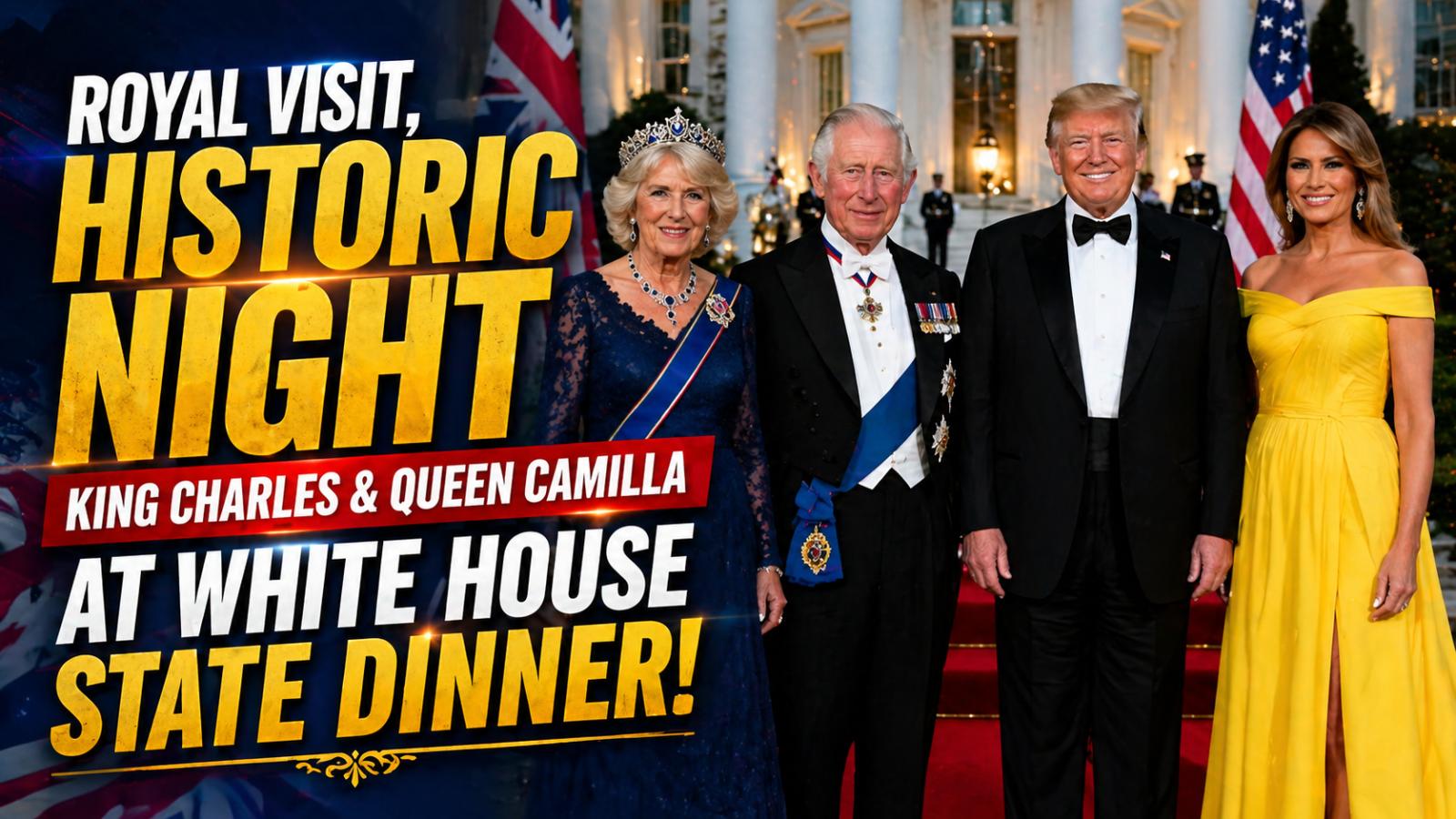
King Charles III and Queen Camilla arrived at the White House on Tuesday evening for a formal state dinner hosted by Donald
King Charles III Attends White House State Dinner Hosted by President Trump
King Charles III and Queen Camilla arrived at the White House on Tuesday evening for a formal state dinner hosted by Donald
West Asia tensions rise as US envoys head to Pakistan for Iran talks
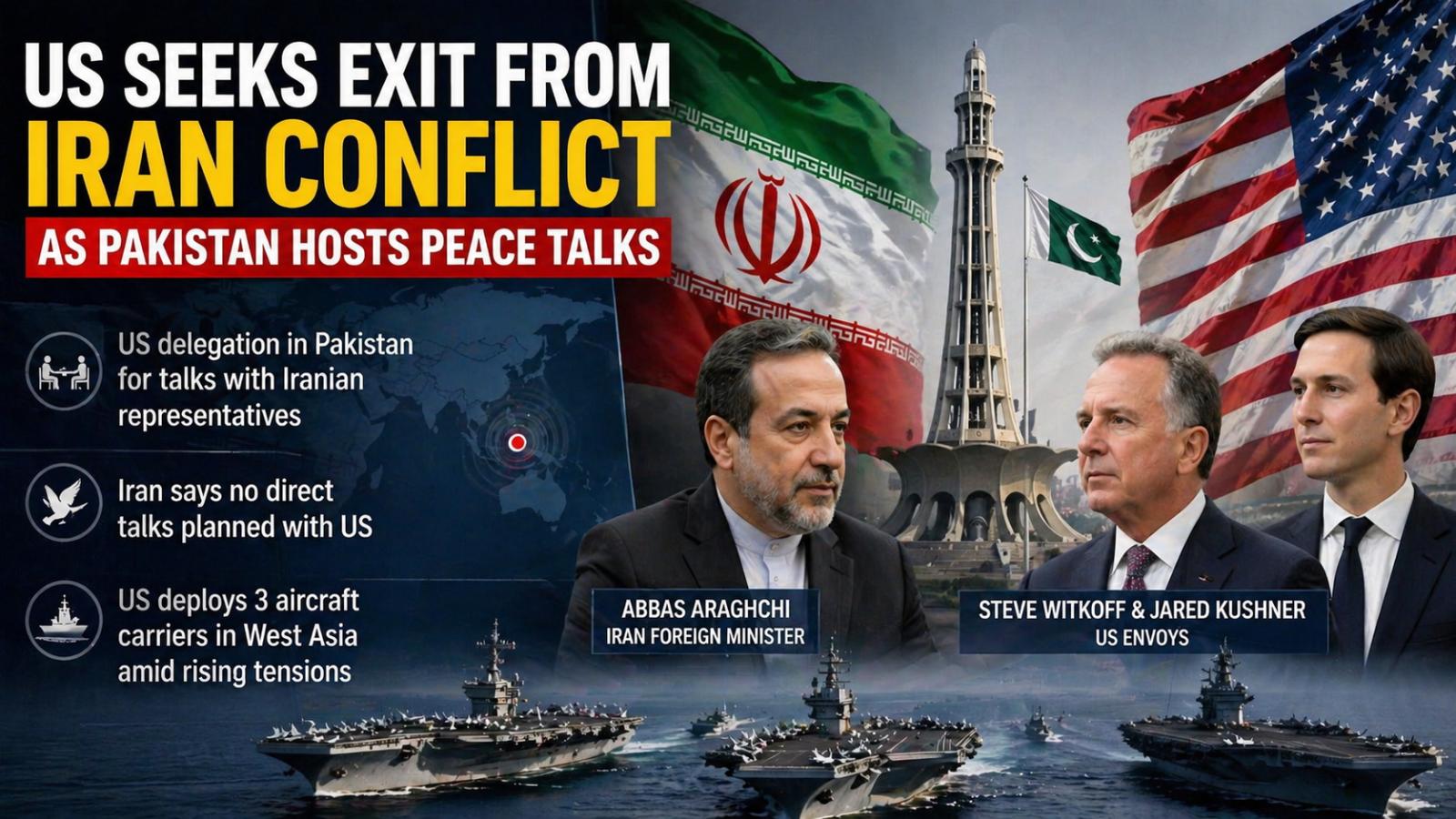
The US Iran conflict has entered a critical phase as Iran’s Defence Ministry claimed that the United States is seeking a “face-saving” way to exit the war, even as Washington sends a delegation to Pakistan for peace talks. The statement highlights growing diplomatic activity alongside rising military tensions in West Asia, with Pakistan emerging as a key mediator in the crisis. According to Iranian media reports, a defence ministry spokesperson said that Iran’s military strength has become dominant in the region, forcing the United States to look for a way out of what it described as a prolonged and difficult conflict. The remarks come at a time when US envoys Steve Witkoff and Jared Kushner are heading to Pakistan for discussions that the White House said would include talks with Iranian representatives. However, Iran has publicly denied plans for direct negotiations with the United States. Iranian Foreign Minister Abbas Araghchi arrived in Islamabad for an official visit and is scheduled to meet senior Pakistani officials. Iranian Foreign Ministry spokesperson Esmaeil Baqaei clarified that the visit is focused on consultations with Pakistan as part of its mediation efforts and not on direct dialogue with the US. He added that Iran’s position would be communicated through Pakistani channels. The diplomatic developments unfold against a backdrop of intensifying West Asia tensions, particularly around the Strait of Hormuz, a vital global oil route. The United States has significantly increased its military presence in the region, deploying three aircraft carrier strike groups, marking the largest such deployment since the Iraq war in 2003. According to US Central Command, the deployment includes more than 200 aircraft and around 15,000 personnel. As both diplomatic and military activities escalate, uncertainty remains over whether meaningful progress toward de-escalation can be achieved. While Pakistan continues its mediation role, the absence of direct Iran-US talks suggests that a resolution may still be distant, keeping the region on edge.
West Asia tensions rise as US envoys head to Pakistan for Iran talks
The US Iran conflict has entered a critical phase as Iran’s Defence Ministry claimed that the United States is seeking a “face-saving” way to exit the war, even as Washington sends a delegation to Pakistan for peace talks. The statement highlights growing diplomatic activity alongside rising military tensions in West Asia, with Pakistan emerging as a key mediator in the crisis. According to Iranian media reports, a defence ministry spokesperson said that Iran’s military strength has become dominant in the region, forcing the United States to look for a way out of what it described as a prolonged and difficult conflict. The remarks come at a time when US envoys Steve Witkoff and Jared Kushner are heading to Pakistan for discussions that the White House said would include talks with Iranian representatives. However, Iran has publicly denied plans for direct negotiations with the United States. Iranian Foreign Minister Abbas Araghchi arrived in Islamabad for an official visit and is scheduled to meet senior Pakistani officials. Iranian Foreign Ministry spokesperson Esmaeil Baqaei clarified that the visit is focused on consultations with Pakistan as part of its mediation efforts and not on direct dialogue with the US. He added that Iran’s position would be communicated through Pakistani channels. The diplomatic developments unfold against a backdrop of intensifying West Asia tensions, particularly around the Strait of Hormuz, a vital global oil route. The United States has significantly increased its military presence in the region, deploying three aircraft carrier strike groups, marking the largest such deployment since the Iraq war in 2003. According to US Central Command, the deployment includes more than 200 aircraft and around 15,000 personnel. As both diplomatic and military activities escalate, uncertainty remains over whether meaningful progress toward de-escalation can be achieved. While Pakistan continues its mediation role, the absence of direct Iran-US talks suggests that a resolution may still be distant, keeping the region on edge.
India-US leaders review strategic ties amid Strait of Hormuz concerns
United States President Donald Trump on Thursday said he had a “very good conversation” with Indian Prime Minister Narendra Modi, describing the discussion as constructive and reaffirming strong ties between the two nations. The leaders spoke for approximately 40 minutes, focusing on regional security
India-US leaders review strategic ties amid Strait of Hormuz concerns
United States President Donald Trump on Thursday said he had a “very good conversation” with Indian Prime Minister Narendra Modi, describing the discussion as constructive and reaffirming strong ties between the two nations. The leaders spoke for approximately 40 minutes, focusing on regional security
US and Israel share identical goals on Iran, Netanyahu says
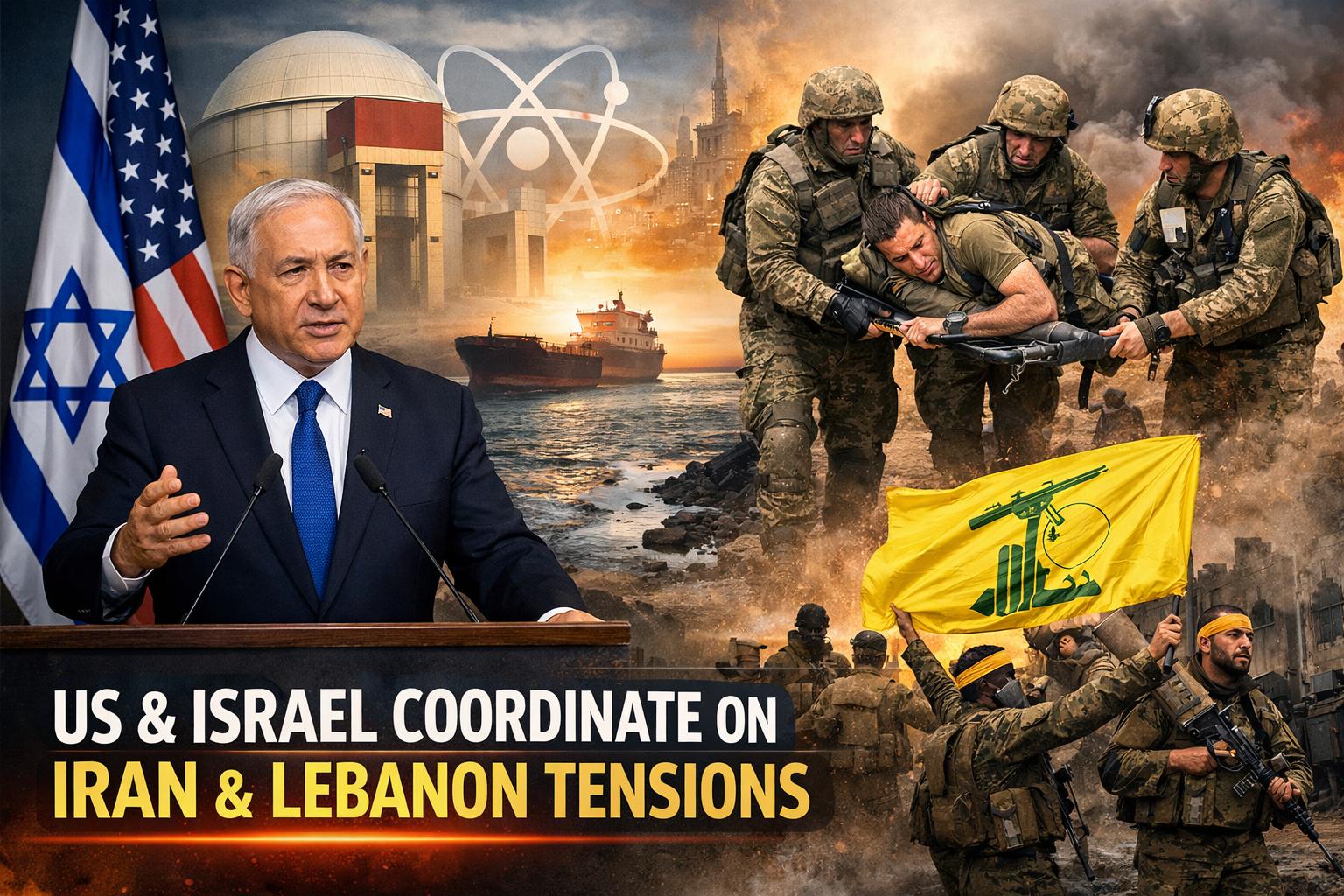
Israeli Prime Minister Benjamin Netanyahu said on Wednesday, April 15, 2026, that Israel and the United States are closely aligned in their approach toward Iran, emphasizing shared strategic objectives and ongoing coordination. In a televised address, Netanyahu stated that U.S. officials continue to keep Israel informed about their diplomatic engagements with Tehran, underscoring the depth of cooperation between the two allies. “Our American friends keep us constantly updated on the
US and Israel share identical goals on Iran, Netanyahu says
Israeli Prime Minister Benjamin Netanyahu said on Wednesday, April 15, 2026, that Israel and the United States are closely aligned in their approach toward Iran, emphasizing shared strategic objectives and ongoing coordination. In a televised address, Netanyahu stated that U.S. officials continue to keep Israel informed about their diplomatic engagements with Tehran, underscoring the depth of cooperation between the two allies. “Our American friends keep us constantly updated on the
Russia signals unlimited energy supply to India, ambassador says
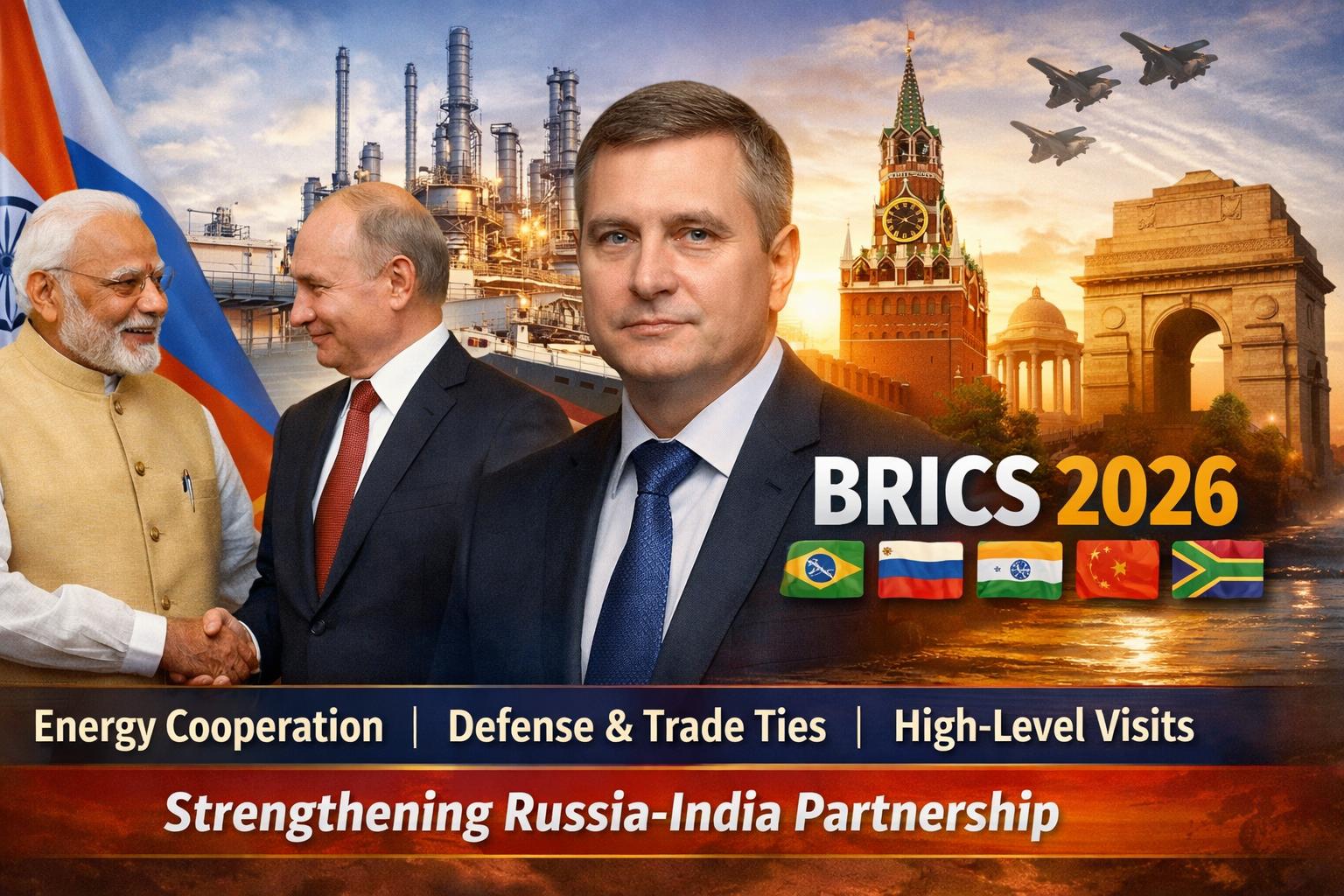
Russia has signaled its readiness to expand energy exports to India, reinforcing a long-standing strategic partnership that continues to evolve across multiple sectors. In remarks made during a recent interaction, Russian Ambassador to India Denis Alipov emphasized Moscow’s willingness to supply “as much energy as India wants,” underscoring the central role of energy cooperation in bilateral ties. Alipov also pointed to upcoming high-level engagements that are expected to furthe
Russia signals unlimited energy supply to India, ambassador says
Russia has signaled its readiness to expand energy exports to India, reinforcing a long-standing strategic partnership that continues to evolve across multiple sectors. In remarks made during a recent interaction, Russian Ambassador to India Denis Alipov emphasized Moscow’s willingness to supply “as much energy as India wants,” underscoring the central role of energy cooperation in bilateral ties. Alipov also pointed to upcoming high-level engagements that are expected to furthe
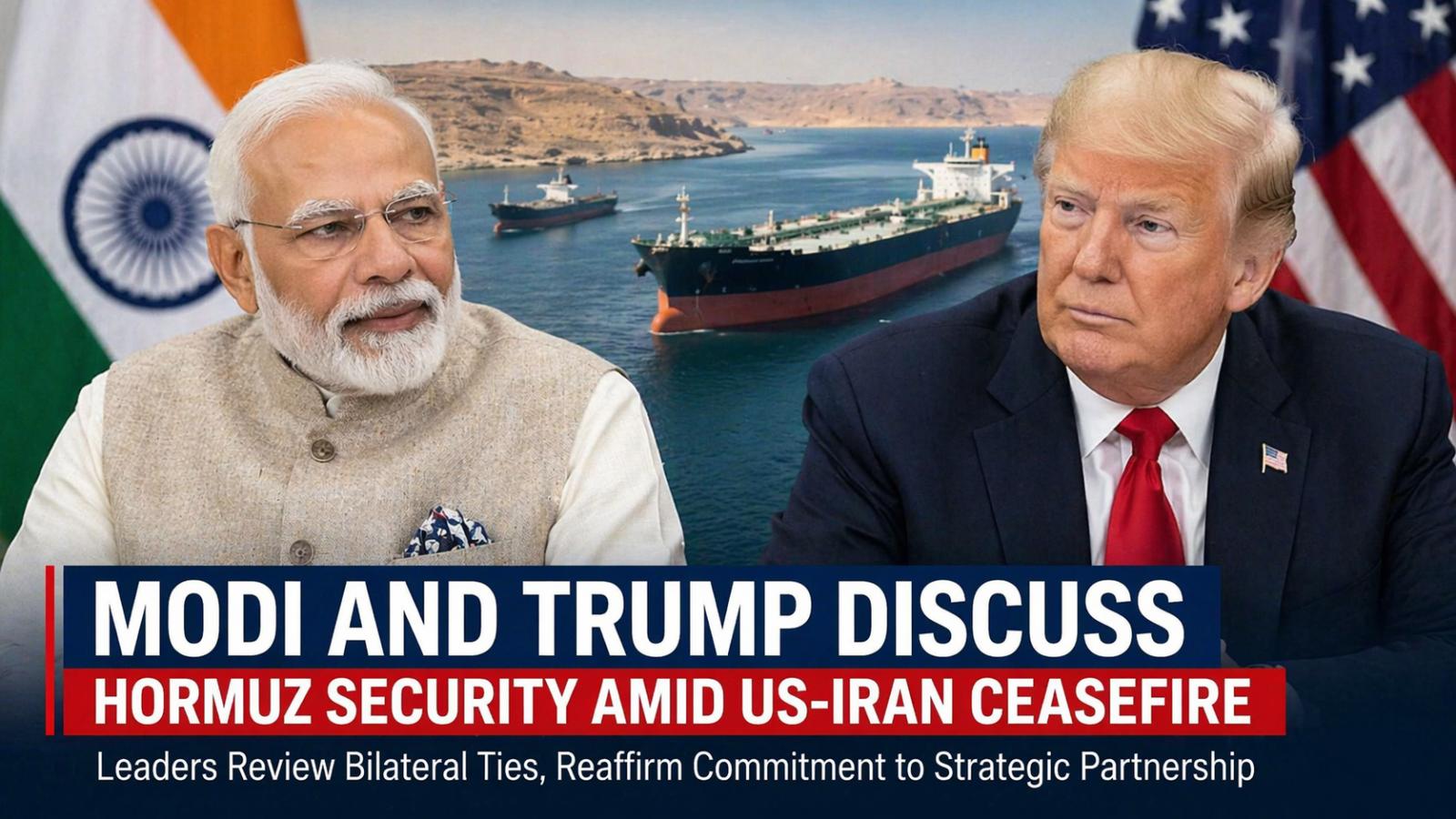
Modi and Trump discuss Hormuz security amid US-Iran ceasefire
Indian Prime Minister Narendra Modi held a phone conversation with U.S. President Donald Trump on Tuesday, April 14, 2026, marking their first discussion since a ceasefire between the United States and Iran took effect on Tuesday, April 8, 2026, following nearly 39 days of intense conflict that disrupted ener
Modi and Trump discuss Hormuz security amid US-Iran ceasefire
Indian Prime Minister Narendra Modi held a phone conversation with U.S. President Donald Trump on Tuesday, April 14, 2026, marking their first discussion since a ceasefire between the United States and Iran took effect on Tuesday, April 8, 2026, following nearly 39 days of intense conflict that disrupted ener
Modi-Trump call highlights rising tensions in Iran conflict
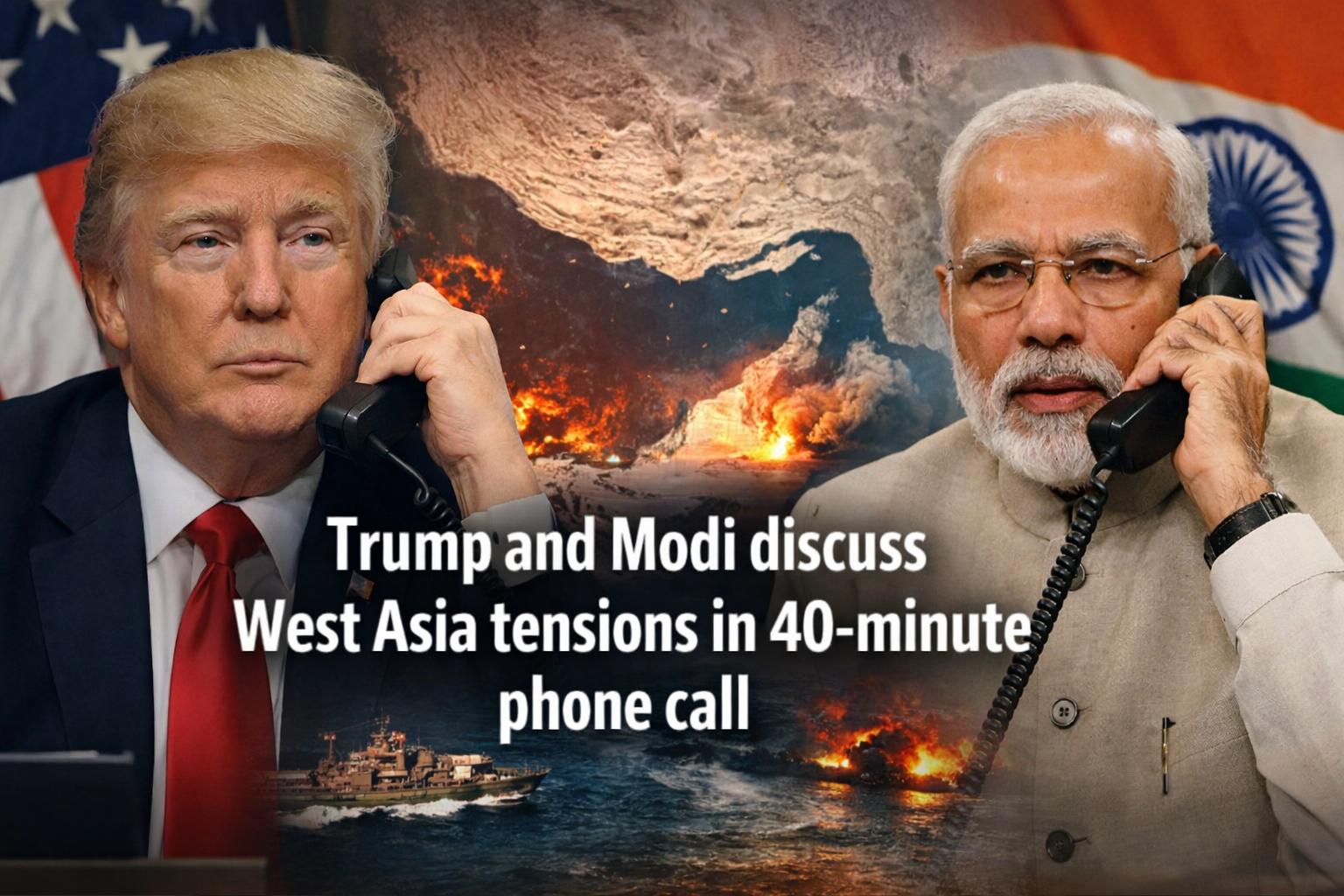
Indian Prime Minister Narendra Modi and U.S. President Donald Trump held a nearly 40-minute phone conversation on Tuesday, April 14, 2026, according to official reports. The call took place as tensions continue to rise amid the ongoing Iran conflict. The discussion comes shortly after peace talks betwee
Modi-Trump call highlights rising tensions in Iran conflict
Indian Prime Minister Narendra Modi and U.S. President Donald Trump held a nearly 40-minute phone conversation on Tuesday, April 14, 2026, according to official reports. The call took place as tensions continue to rise amid the ongoing Iran conflict. The discussion comes shortly after peace talks betwee
Trump reiterates “locked and loaded” warning after Islamabad talks
The United States has reiterated its military readiness following high-level diplomatic talks in Islamabad, with President Donald Trump stating the country is fully “locked and loaded” if negotiations fail. The statement echoes his earlier warning that the US military would be prepared to act if no agreement is reached, signaling potential global ramifications beyond Pakistan. The talks marked a historic moment, as both sides met face-to-face for the first time in decades. Offic
Trump reiterates “locked and loaded” warning after Islamabad talks
The United States has reiterated its military readiness following high-level diplomatic talks in Islamabad, with President Donald Trump stating the country is fully “locked and loaded” if negotiations fail. The statement echoes his earlier warning that the US military would be prepared to act if no agreement is reached, signaling potential global ramifications beyond Pakistan. The talks marked a historic moment, as both sides met face-to-face for the first time in decades. Offic
US-Iran talks face uncertainty as Tehran sets strict preconditions
Delegations from the United States and Iran are scheduled to meet in Islamabad on Saturday, though the planned talks face significant uncertainty amid escalating regional tensions and unresolved preconditions set by Tehran. The negotiations come at a time when a fragile two-week ceasefire is already under strain, particularly due to renewed violence in Lebanon. On Friday, April 10, 2026, Iran’s parliament speaker
US-Iran talks face uncertainty as Tehran sets strict preconditions
Delegations from the United States and Iran are scheduled to meet in Islamabad on Saturday, though the planned talks face significant uncertainty amid escalating regional tensions and unresolved preconditions set by Tehran. The negotiations come at a time when a fragile two-week ceasefire is already under strain, particularly due to renewed violence in Lebanon. On Friday, April 10, 2026, Iran’s parliament speaker
Pentagon and Vatican clash over disputed meeting amid Iran war tensions
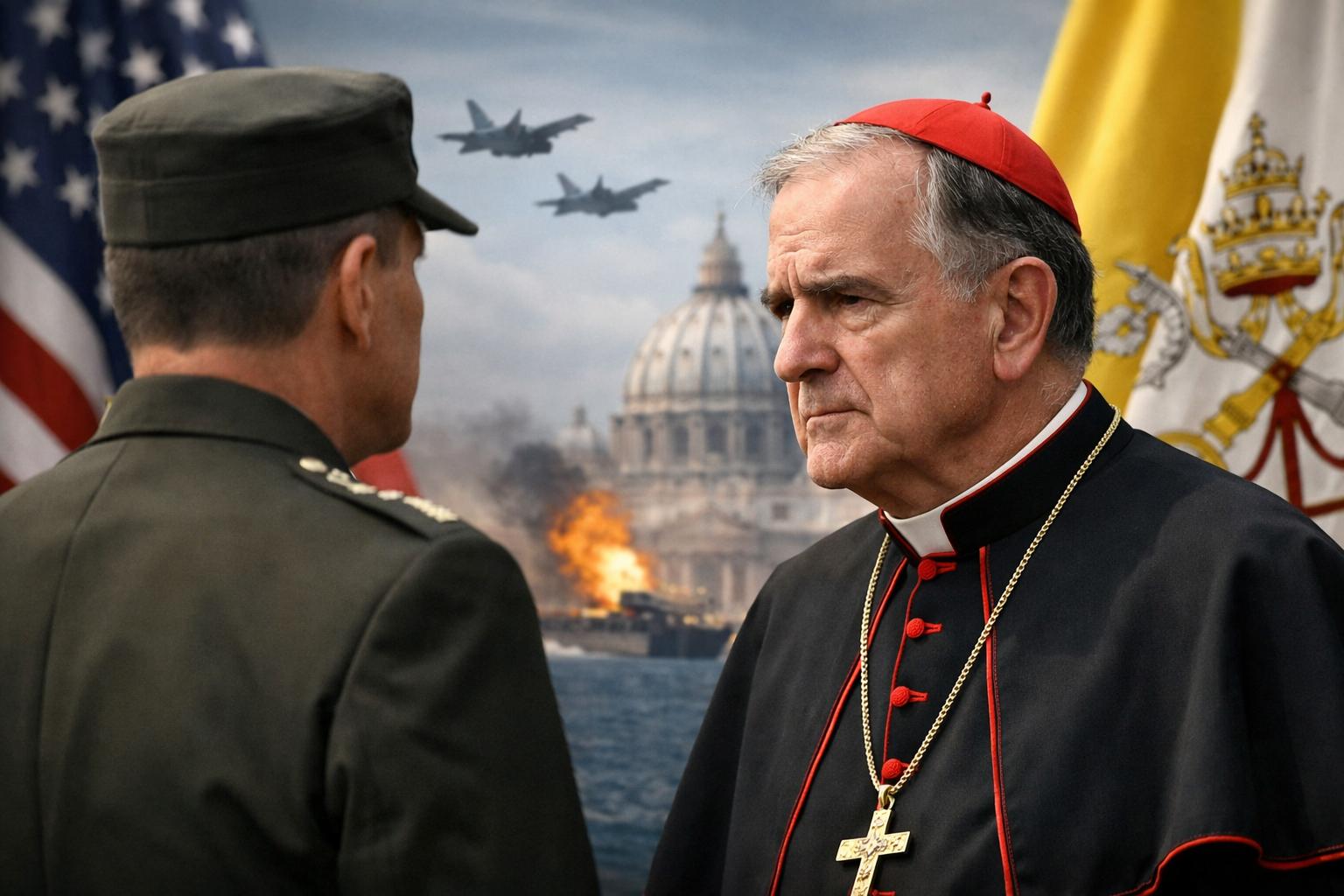
A meeting between officials from the U.S. Department of Defense and the Vatican has drawn scrutiny after sharply conflicting accounts emerged, raising questions about diplomatic tensions between Washington and the Holy See during an escalating global crisis. According to a source close to Pope Leo XIV, the meeting involving Cardinal Christophe Pierre was described as confrontational. Separate reports characterized the exchange as a stern warning emphasizing U.S. military strength and urging alignment with American policy. However, Pentagon officials strongly disputed that portrayal, stating the discussion was respectful and constructive, underscoring a commitment to continued dialogue with the Vatican. Adding to the conflicting narratives, Vatican ambassador Brian Burch stated on Thursday that Cardinal Pierre rejected media reports describing the meeting as hostile, calling them fabricated. He said the meeting, which occurred two months earlier, was “frank and cordial,” suggesting that accounts of tension may have been overstated. The dispute comes amid increasingly pointed remarks from Pope Leo XIV, the first U.S.-born pontiff from Chicago, who has taken an unusually direct stance on the ongoing conflict involving Iran. On Tuesday, the pope criticized U.S. President Donald Trump’s warning of severe consequences for Iran, calling such rhetoric “truly unacceptable” and warning that attacks on civilian infrastructure violate international law. In recent appeals, Leo has urged global leaders and citizens to pursue peace and avoid further escalation, particularly in a conflict he described as unjust and destabilizing. He also encouraged individuals to contact political leaders and advocate against actions targeting civilians, emphasizing the moral and legal implications of such strategies. The Vatican’s concerns extend beyond Iran, particularly to Lebanon, where renewed fighting involving Israeli forces and Hezbollah has intensified instability. Church officials have expressed alarm over the impact on Christian communities in southern Lebanon, which hold significant importance for the region’s religious presence. The broader geopolitical situation remains fragile. A ceasefire related to the Iran conflict appeared uncertain after Iran moved to close the Strait of Hormuz following Israeli strikes in Lebanon, prompting renewed calls from the White House to maintain open waterways and continue peace negotiations. While both the Pentagon and Vatican have emphasized the importance of ongoing dialogue, the divergence in accounts surrounding their recent meeting highlights the complexity of diplomatic relations during a period of heightened global tension.
Pentagon and Vatican clash over disputed meeting amid Iran war tensions
A meeting between officials from the U.S. Department of Defense and the Vatican has drawn scrutiny after sharply conflicting accounts emerged, raising questions about diplomatic tensions between Washington and the Holy See during an escalating global crisis. According to a source close to Pope Leo XIV, the meeting involving Cardinal Christophe Pierre was described as confrontational. Separate reports characterized the exchange as a stern warning emphasizing U.S. military strength and urging alignment with American policy. However, Pentagon officials strongly disputed that portrayal, stating the discussion was respectful and constructive, underscoring a commitment to continued dialogue with the Vatican. Adding to the conflicting narratives, Vatican ambassador Brian Burch stated on Thursday that Cardinal Pierre rejected media reports describing the meeting as hostile, calling them fabricated. He said the meeting, which occurred two months earlier, was “frank and cordial,” suggesting that accounts of tension may have been overstated. The dispute comes amid increasingly pointed remarks from Pope Leo XIV, the first U.S.-born pontiff from Chicago, who has taken an unusually direct stance on the ongoing conflict involving Iran. On Tuesday, the pope criticized U.S. President Donald Trump’s warning of severe consequences for Iran, calling such rhetoric “truly unacceptable” and warning that attacks on civilian infrastructure violate international law. In recent appeals, Leo has urged global leaders and citizens to pursue peace and avoid further escalation, particularly in a conflict he described as unjust and destabilizing. He also encouraged individuals to contact political leaders and advocate against actions targeting civilians, emphasizing the moral and legal implications of such strategies. The Vatican’s concerns extend beyond Iran, particularly to Lebanon, where renewed fighting involving Israeli forces and Hezbollah has intensified instability. Church officials have expressed alarm over the impact on Christian communities in southern Lebanon, which hold significant importance for the region’s religious presence. The broader geopolitical situation remains fragile. A ceasefire related to the Iran conflict appeared uncertain after Iran moved to close the Strait of Hormuz following Israeli strikes in Lebanon, prompting renewed calls from the White House to maintain open waterways and continue peace negotiations. While both the Pentagon and Vatican have emphasized the importance of ongoing dialogue, the divergence in accounts surrounding their recent meeting highlights the complexity of diplomatic relations during a period of heightened global tension.
India rejects mediation role amid US-Iran tensions, Jaishankar clarifies stance
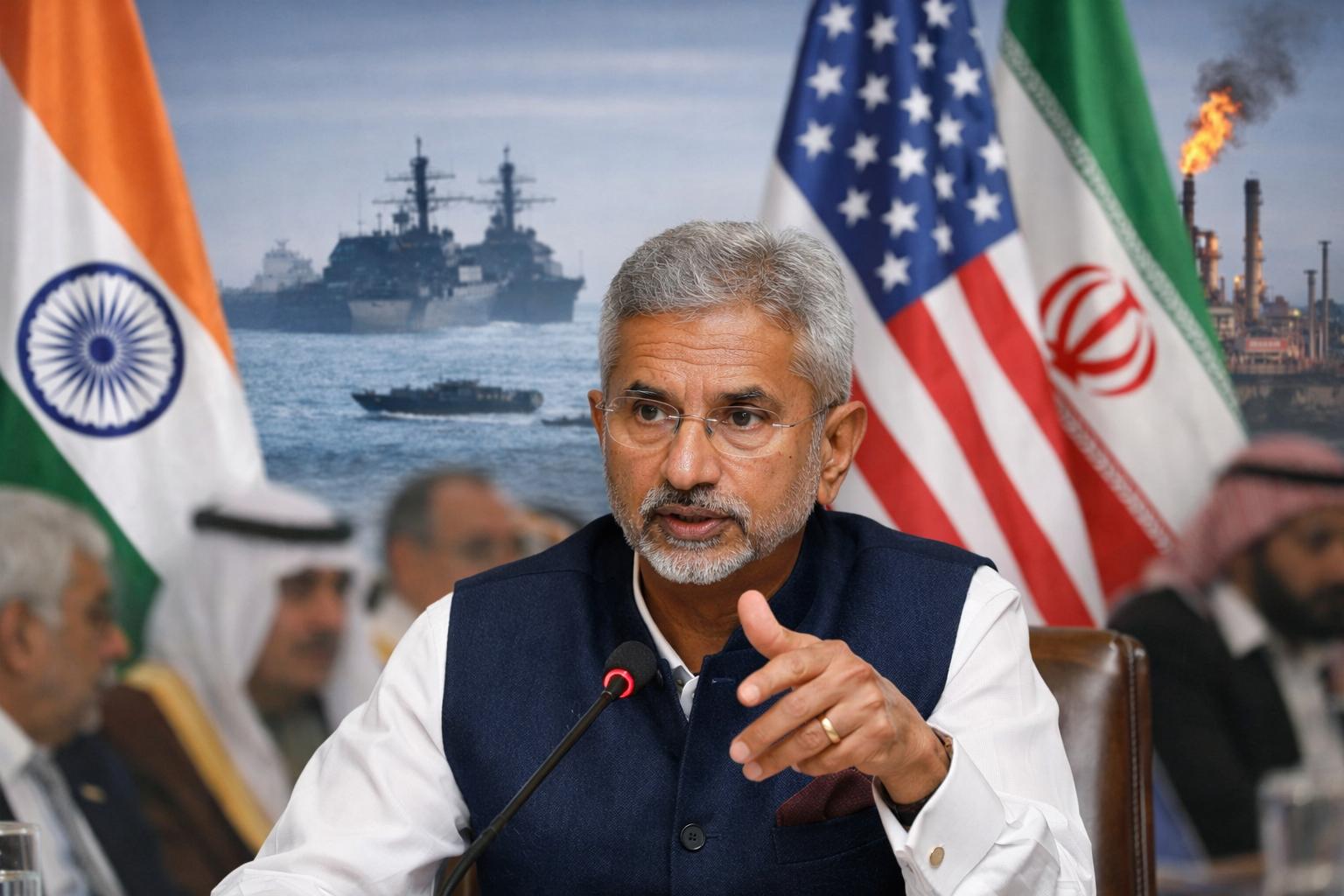
India has firmly ruled out any role as a mediator in the ongoing tensions between the United States and Iran, with External Affairs Minister S Jaishankar stating that New Delhi does not engage in diplomatic brokerage. His remarks came during an all-party meeting convened to brief political leaders on the government’s approach to the escalating West Asia crisis and its implications for India’s strategic interests. Addressing concerns raised by opposition leaders, Jaishankar clarified that India’s foreign policy is guided by its national priorities rather than intermediary roles. He noted that attempts by countries such as Pakistan to position themselves as mediators are not new, adding that such efforts have historically aligned with external interests. Government sources emphasized that India has been actively responding to developments in the region and rejected claims that it has remained silent. The meeting also focused on India’s preparedness in ensuring energy security and safeguarding its citizens in the Gulf region. Officials highlighted that maintaining stable crude oil supplies remains a key priority, particularly as tensions threaten critical shipping routes such as the Strait of Hormuz. The government informed leaders that advance procurement measures have been taken and that India is currently sourcing oil and gas from a diversified network of 41 countries to mitigate risks. Participants were also briefed on maritime developments, including the safe passage of several India-bound vessels carrying petroleum products through the Strait of Hormuz, while others remain in the vicinity awaiting clearance. The government described these developments as a reflection of effective coordination and diplomatic engagement. On diplomatic outreach, the government reiterated that India maintains balanced relations with all major stakeholders in the region, including the United States, Iran, and Israel. It also underscored steps taken to convey condolences following recent developments in Iran, indicating continued engagement at the diplomatic level. Despite these assurances, opposition leaders expressed dissatisfaction with the government’s responses and called for a detailed discussion in Parliament. The government, however, maintained that the situation is under control and there is no immediate cause for concern, reiterating its commitment to protecting national interests amid evolving geopolitical challenges.

India rejects mediation role amid US-Iran tensions, Jaishankar clarifies stance
India has firmly ruled out any role as a mediator in the ongoing tensions between the United States and Iran, with External Affairs Minister S Jaishankar stating that New Delhi does not engage in diplomatic brokerage. His remarks came during an all-party meeting convened to brief political leaders on the government’s approach to the escalating West Asia crisis and its implications for India’s strategic interests. Addressing concerns raised by opposition leaders, Jaishankar clarified that India’s foreign policy is guided by its national priorities rather than intermediary roles. He noted that attempts by countries such as Pakistan to position themselves as mediators are not new, adding that such efforts have historically aligned with external interests. Government sources emphasized that India has been actively responding to developments in the region and rejected claims that it has remained silent. The meeting also focused on India’s preparedness in ensuring energy security and safeguarding its citizens in the Gulf region. Officials highlighted that maintaining stable crude oil supplies remains a key priority, particularly as tensions threaten critical shipping routes such as the Strait of Hormuz. The government informed leaders that advance procurement measures have been taken and that India is currently sourcing oil and gas from a diversified network of 41 countries to mitigate risks. Participants were also briefed on maritime developments, including the safe passage of several India-bound vessels carrying petroleum products through the Strait of Hormuz, while others remain in the vicinity awaiting clearance. The government described these developments as a reflection of effective coordination and diplomatic engagement. On diplomatic outreach, the government reiterated that India maintains balanced relations with all major stakeholders in the region, including the United States, Iran, and Israel. It also underscored steps taken to convey condolences following recent developments in Iran, indicating continued engagement at the diplomatic level. Despite these assurances, opposition leaders expressed dissatisfaction with the government’s responses and called for a detailed discussion in Parliament. The government, however, maintained that the situation is under control and there is no immediate cause for concern, reiterating its commitment to protecting national interests amid evolving geopolitical challenges.

India rebukes Pakistan at UN over Islamophobia claims and minority record
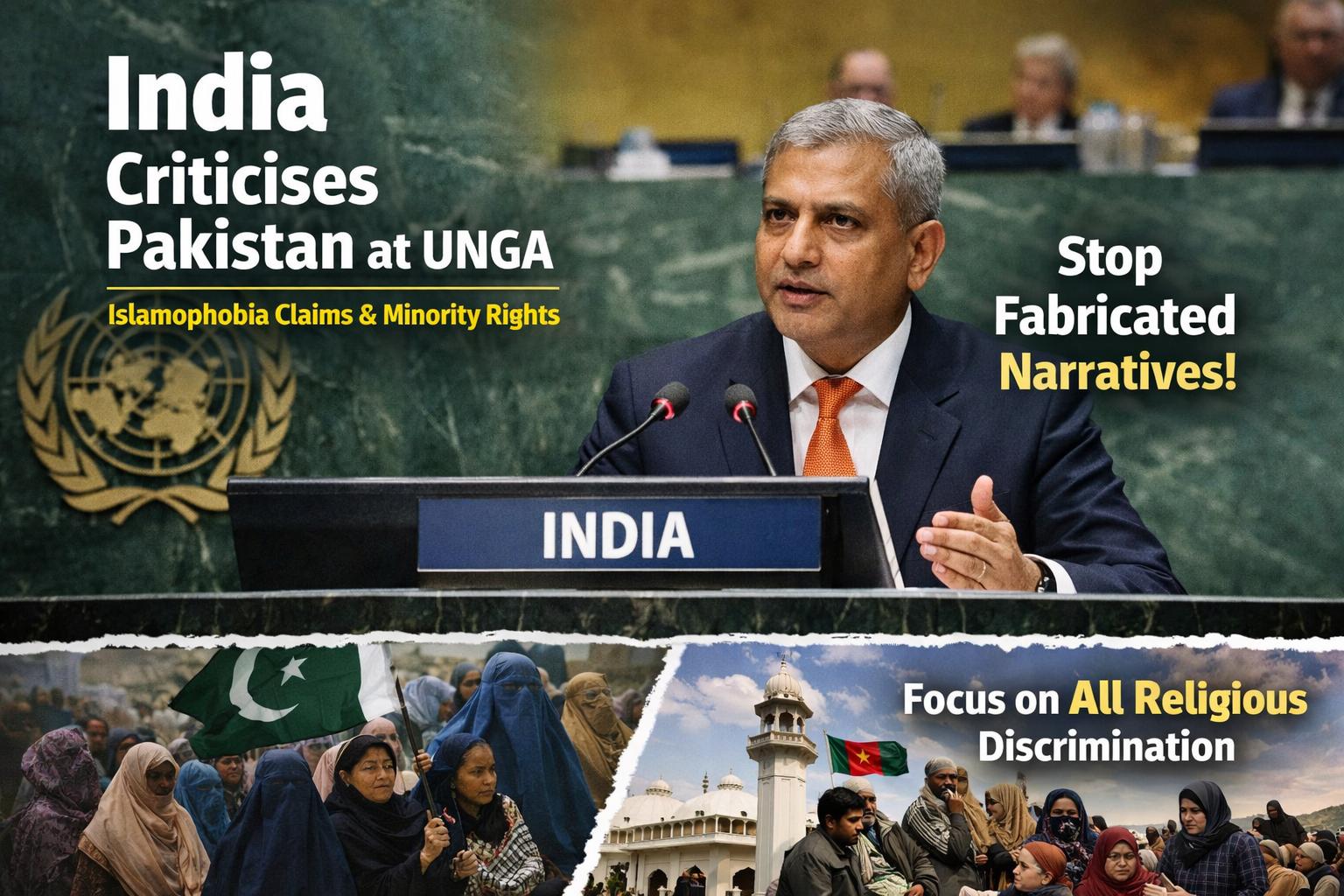
India has sharply criticised Pakistan at the United Nations, accusing it of repeatedly fabricating narratives around Islamophobia to target neighbouring countries while diverting attention from its own domestic and regional record. The remarks were made during a session of the UN General Assembly marking the International Day to Combat Islamophobia, where India’s Permanent Representative Parvathaneni Harish delivered a firm and direct response to Pakistan’s allegations. Addressing
India rebukes Pakistan at UN over Islamophobia claims and minority record
India has sharply criticised Pakistan at the United Nations, accusing it of repeatedly fabricating narratives around Islamophobia to target neighbouring countries while diverting attention from its own domestic and regional record. The remarks were made during a session of the UN General Assembly marking the International Day to Combat Islamophobia, where India’s Permanent Representative Parvathaneni Harish delivered a firm and direct response to Pakistan’s allegations. Addressing
PM Modi Calls for Diplomatic Solution to End Ukraine and Iran Wars
Prime Minister Narendra Modi on Thursday called for the early end to the ongoing conflicts in Ukraine and the Middle East, underlining that dialogue and diplomacy remain the only way to resolve global disputes. His remarks came during a joint press conference in New Delhi with Finnish President Alexander Stubb, where Modi highlighted the growing instability in the world, particularly due to the ongoing wars in Ukraine and the escalating confrontation between the US, Israel, and Iran.

PM Modi Calls for Diplomatic Solution to End Ukraine and Iran Wars
Prime Minister Narendra Modi on Thursday called for the early end to the ongoing conflicts in Ukraine and the Middle East, underlining that dialogue and diplomacy remain the only way to resolve global disputes. His remarks came during a joint press conference in New Delhi with Finnish President Alexander Stubb, where Modi highlighted the growing instability in the world, particularly due to the ongoing wars in Ukraine and the escalating confrontation between the US, Israel, and Iran.

US–Israel–Iran War | Iran warns Israel over Beirut embassy threat amid rising military tensions
Tensions between Israel and Iran intensified on Wednesday after a senior Iranian military spokesperson warned that any attack on Iran’s embassy in Beirut could trigger retaliatory strikes against Israeli diplomatic missions worldwide. The statement reflects growing hostility between the two regional rivals as security concerns continue to rise across West Asia. Brigadier General Abolfazl Shekarchi, spokesperson for Iran’s Armed Forces, said Israel had threatened to target the Iranian emb
US–Israel–Iran War | Iran warns Israel over Beirut embassy threat amid rising military tensions
Tensions between Israel and Iran intensified on Wednesday after a senior Iranian military spokesperson warned that any attack on Iran’s embassy in Beirut could trigger retaliatory strikes against Israeli diplomatic missions worldwide. The statement reflects growing hostility between the two regional rivals as security concerns continue to rise across West Asia. Brigadier General Abolfazl Shekarchi, spokesperson for Iran’s Armed Forces, said Israel had threatened to target the Iranian emb
Narendra Modi receives rare honours from both Israel and Palestine
Prime Minister Narendra Modi was on Wednesday conferred with the prestigious Speaker of the Knesset Medal, marking a significant milestone in India-Israel relations. The honour, considered the highest award of Israel’s Parliament, was presented in recognition of Modi’s exceptional contribution to strengthening the strategic partnership between the two nations. Knesset Speaker Amir Ohana presented the medal to the Indian prime minister following his address to the Israeli Parliam
Narendra Modi receives rare honours from both Israel and Palestine
Prime Minister Narendra Modi was on Wednesday conferred with the prestigious Speaker of the Knesset Medal, marking a significant milestone in India-Israel relations. The honour, considered the highest award of Israel’s Parliament, was presented in recognition of Modi’s exceptional contribution to strengthening the strategic partnership between the two nations. Knesset Speaker Amir Ohana presented the medal to the Indian prime minister following his address to the Israeli Parliam