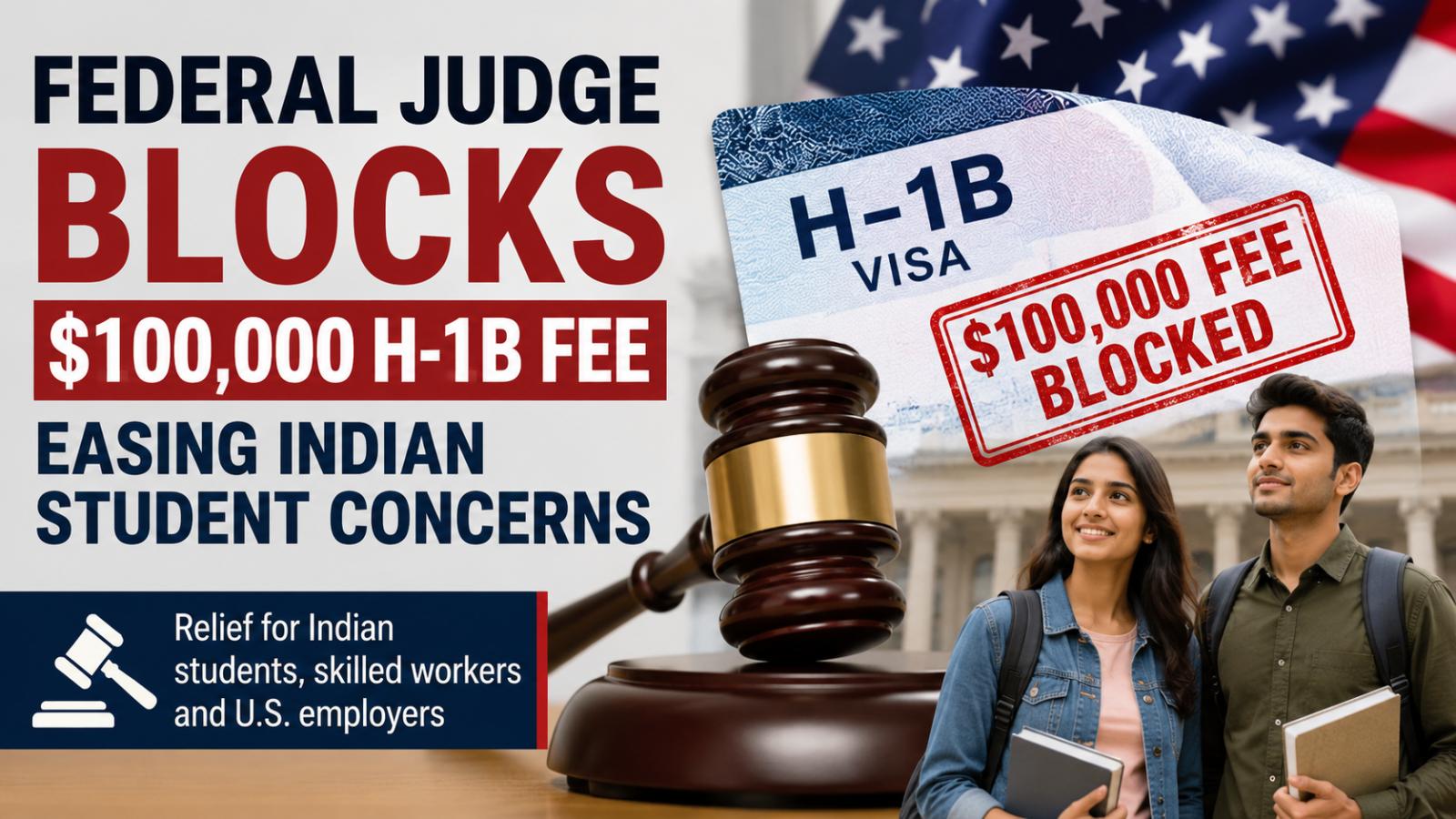
The H-1B visa fee ruling has eased concerns for Indian students, skilled workers and US employers after a federal judge in Boston blocked the Trump administration’s proposed $100,000 fee on new H-1B visa petitions.
US District Judge Leo Sorokin ruled on Monday, June 8, 2026, that the fee was unlawful because it effectively operated as a tax on H-1B petitions without approval from Congress. The policy, announced on Friday, September 19, 2025, had raised immediate concern among students, employers and professionals who rely on the H-1B program as a route from US education to long-term employment.
H-1B Visa Fee Ruling Removes Major Cost Concern
For Indian students, the ruling removes a major uncertainty from the path between a US degree and a US career. Indian nationals have received a large share of H-1B approvals in recent years, and India has also become the largest source of international students in the United States, with more than 330,000 students enrolled during the 2023-24 academic year.
Immigration advocates and diaspora groups had warned that a $100,000 visa fee could sharply reduce employer sponsorship for early-career workers, especially graduates seeking their first full-time role after completing studies in the United States.
Saurabh Arora, Founder and CEO of University Living, said such a cost would have made sponsorship prohibitively expensive for many employers.
Why US Employers Were Watching the Case
The impact would not have been limited to major technology companies. Employers in engineering, healthcare, finance, research, artificial intelligence and cybersecurity continue to compete for specialized global talent.
A sudden increase in H-1B costs could have pushed sponsorship toward only senior or critical roles. Startups, universities and mid-sized businesses may have faced the greatest pressure because they often have fewer resources than large corporations.
What the Ruling Means Now
The ruling does not end broader uncertainty around US immigration policy or future changes to skilled worker programs. Still, for Indian students and skilled workers planning careers in America, the decision keeps the H-1B pathway open for now.
The case also signals that major changes affecting global talent mobility, student career planning and employer hiring costs may face close legal scrutiny before taking effect.