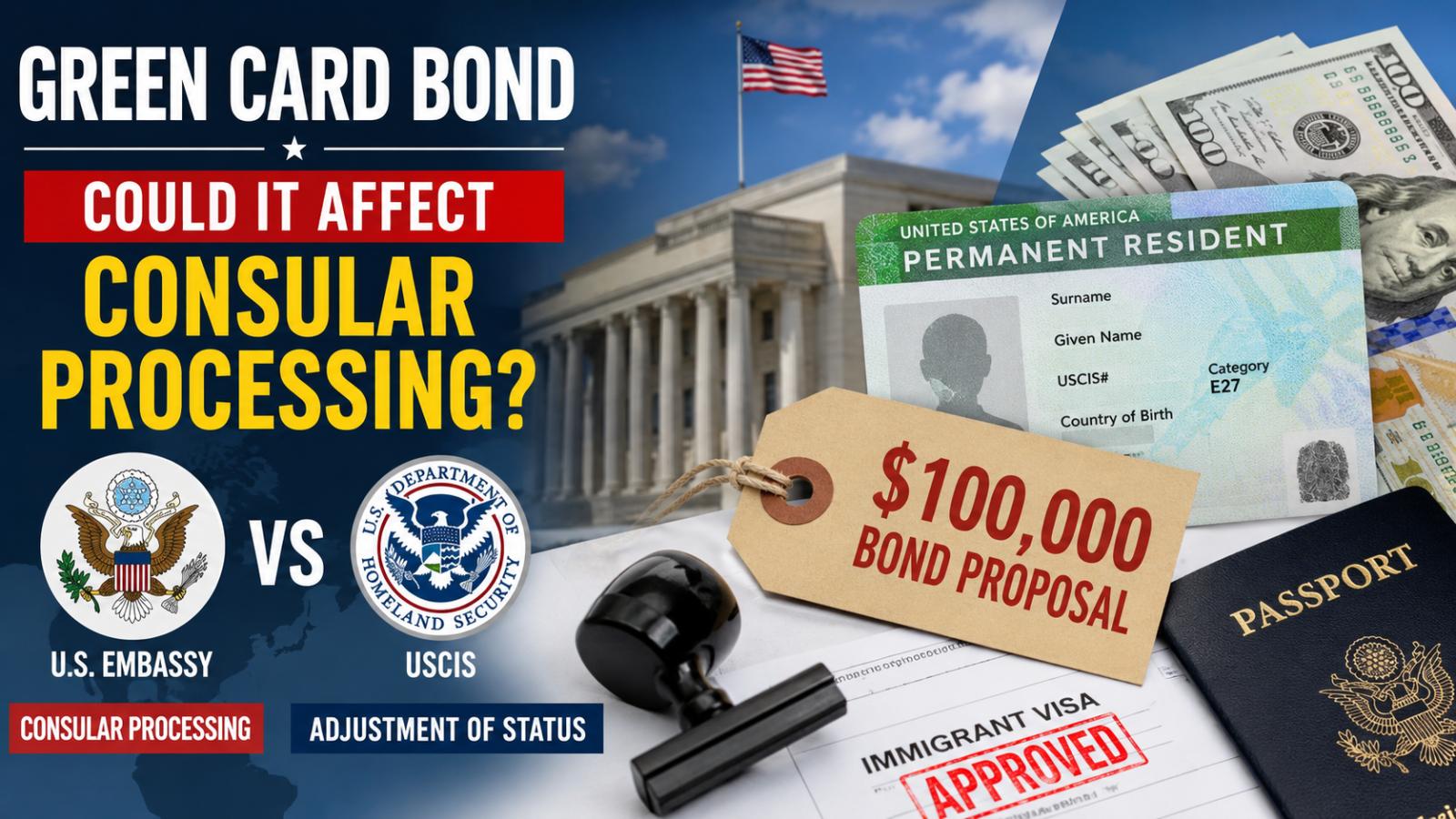
The proposed green card bond has raised questions for immigrants applying through U.S. embassies and consulates. Understanding the difference between Consular Processing and Adjustment of Status is important because the reported proposal has primarily been linked to immigrant visa applicants processing their cases outside the United States.
Could the Green Card Bond Affect Consular Processing?
The Trump administration's reported proposal to require certain green card applicants to post bonds of up to $100,000 has prompted many immigrants to question whether their application could be affected. While the proposal has not been formally adopted, published reports have primarily linked it to applicants completing consular processing rather than those applying for permanent residency from within the United States.
The proposal remains under consideration and has not become a final rule. Read the full report: Trump Administration Weighs $100,000 Green Card Bond
What Is Consular Processing?
Consular Processing is the immigration pathway used by applicants who complete their immigrant visa application at a U.S. embassy or consulate outside the United States. Once the immigrant visa is approved, the individual enters the country as a lawful permanent resident.
This process is commonly used by family-sponsored immigrants living abroad and by some employment-based applicants who are not eligible to complete their green card application inside the United States.
How Is It Different From Adjustment of Status?
Adjustment of Status allows eligible immigrants already living legally in the United States to apply for permanent residency without leaving the country. Applicants generally file USCIS Form I-485, and their case is handled by U.S. Citizenship and Immigration Services instead of a U.S. embassy or consulate.
Many H-1B professionals pursuing employment-based green cards complete their permanent residency through Adjustment of Status.
Many H-1B professionals complete their employment-based green card cases through Adjustment of Status rather than consular processing. Read: Will H-1B Holders Have to Pay the Proposed $100,000 Green Card Bond?
Why Could Consular Processing Matter?
Reports indicate the proposed green card bond is being considered for certain applicants processing immigrant visas through U.S. consulates abroad. However, the administration has not announced which visa categories, countries or applicants would be included if the proposal moves forward.
There has also been no official confirmation that applicants filing Form I-485 inside the United States would automatically be required to provide a bond.
What Should Applicants Do?
Individuals with pending immigrant visa or green card applications should continue following current USCIS and State Department procedures because no new bond requirement has taken effect.
Applicants should avoid making immigration decisions based solely on media reports and instead rely on official government announcements if the proposal advances.
Because eligibility details remain unclear, applicants should review which groups could potentially be affected. See: Who Could Pay the Proposed Green Card Bond?
What Happens Next?
The administration has not released formal regulations explaining how the proposed bond would work, who would qualify or whether exemptions would apply. Until those details are published, the proposal remains under review rather than an active immigration requirement.
The proposed bond would be separate from the regular filing and immigrant visa charges applicants already pay. Learn more: Green Card Bond vs. Green Card Fees: What’s the Difference?
Applicants completing Consular Processing should continue preparing their cases under existing immigration rules while monitoring official updates from the State Department and the Department of Homeland Security.