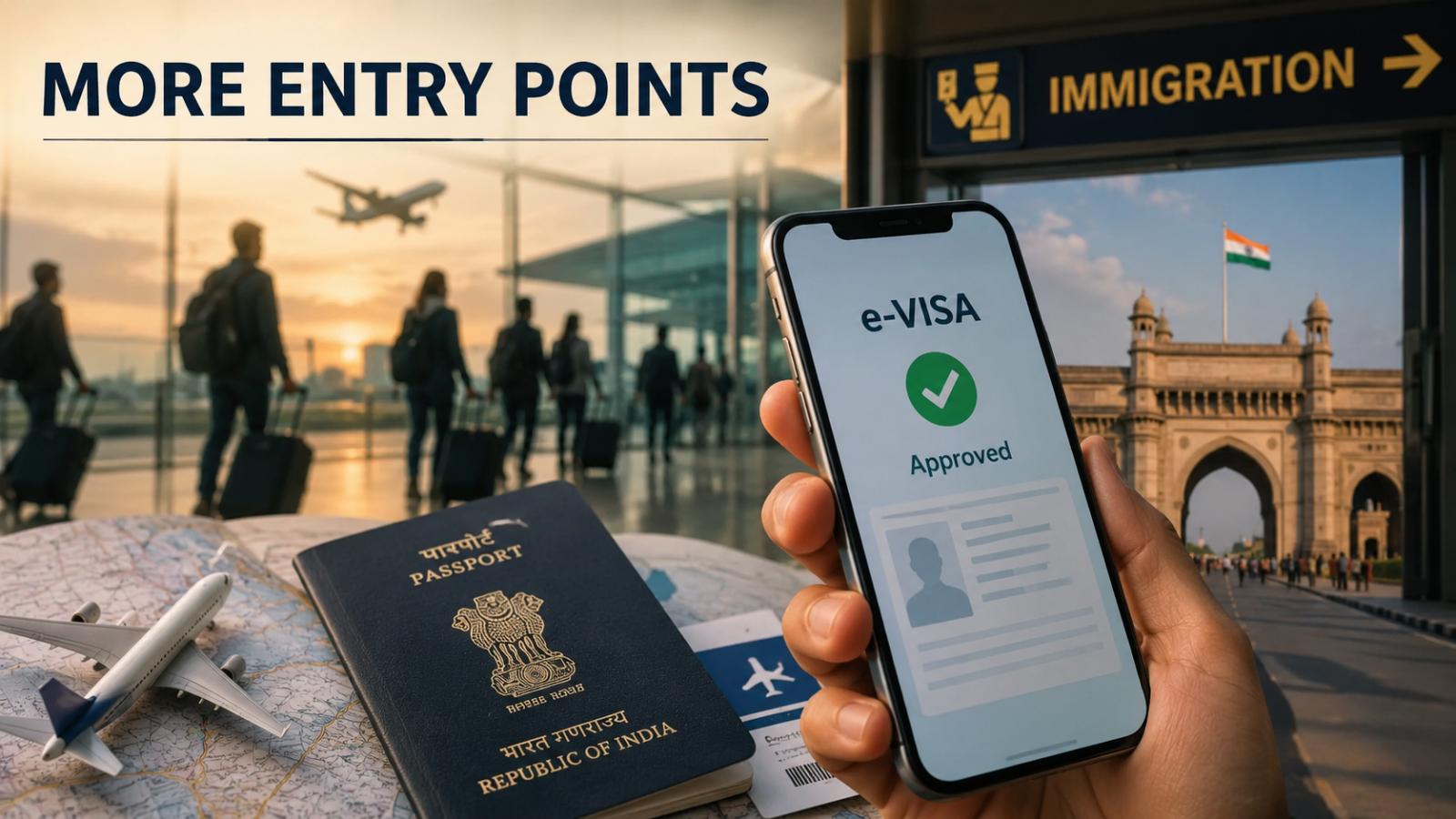
India e-visa entry points have expanded to 88 nationwide, including 37 airports, 38 seaports and 13 land ports. The additions include the Attari border crossing, several other land ports, and Bhopal and Tirupati airports.
India has expanded its network of e-visa entry points to 88 locations, giving eligible international travelers more airports, seaports and land crossings through which they can enter the country using an electronic visa.
The expanded network now covers 37 airports, 38 seaports and 13 land ports, according to information provided by the government.
India e-visa expansion adds 22 entry points
The latest expansion adds 22 locations to India's electronic visa entry network.
Among the most notable additions is the Attari road crossing on the India-Pakistan border. Other newly included land ports are Darranga, Gede, Ghojadanga, Haridaspur, Jaigaon, Dawki and Moreh.
Bhopal and Tirupati airports have also been added, expanding the number of destinations available to travelers entering India with approved electronic visas.
India visa eligibility rules remain unchanged
The expansion does not change existing eligibility restrictions.
India's e-visa facility remains unavailable to Pakistani passport holders and people of Pakistani origin. Those travelers must apply for a regular visa through an Indian diplomatic mission abroad.
The electronic visa program covers 17 travel sub-categories, including tourism, business, medical treatment, student visits, mountaineering, cruises, group travel and transit.
According to the government, about 95% of e-visa applications are processed within 72 hours.
E-visa network has grown sharply since 2014
India introduced its electronic visa facility in 2014 for citizens of 43 countries. Eligibility has since expanded to travelers from 172 countries.
E-visas now account for approximately 78% of all visas issued by India, reflecting the increasing use of digital processing within the country's immigration system.
Government links expansion to travel and border management
Officials said the broader expansion is intended to make entry easier for legitimate foreign travelers while maintaining immigration screening requirements.
The government's visa reforms have focused on simplifying applications, increasing the number of eligible entry locations and strengthening the technology supporting border management and internal security.
With more airports and land crossings now accepting electronic visas, eligible travelers have additional entry options, while existing nationality restrictions and screening requirements remain in place.