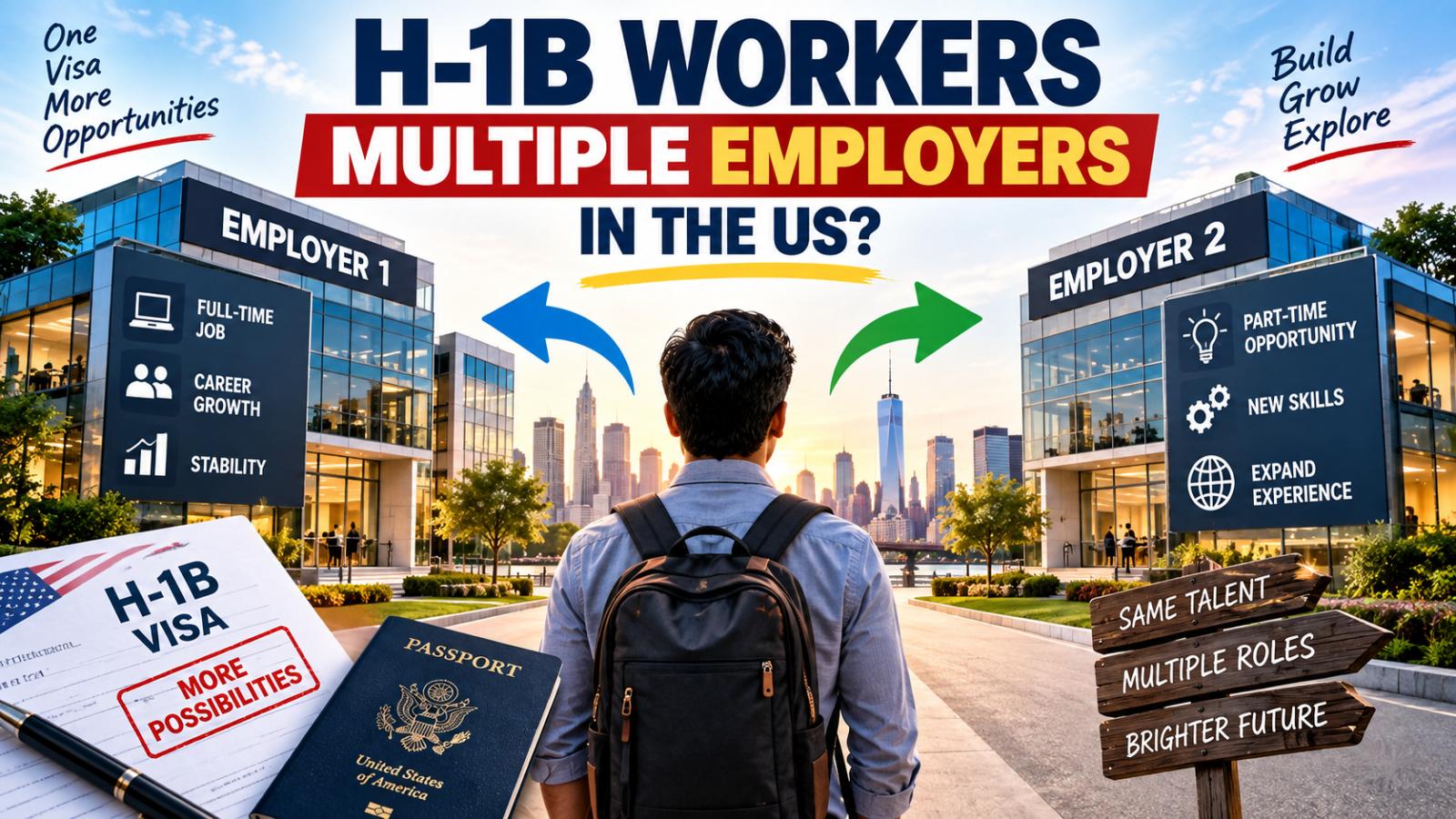
H-1B workers can work for more than one US employer, but they cannot simply take an unrestricted second job. Each employer generally must file its own H-1B petition and Labor Condition Application. This guide explains concurrent employment and job changes.
How concurrent H-1B employment works
An H-1B worker can legally work for more than one US employer at the same time. This arrangement is commonly known as concurrent H-1B employment.
However, an existing H-1B approval from one company does not automatically authorize work for another company. USCIS guidance states that each employer generally must file its own Labor Condition Application and a separate Form I-129 petition covering the employment it is offering.
For example, a worker could potentially maintain a primary H-1B position with one employer while working a qualifying part-time H-1B position for another employer, provided the required petitions and employment conditions are satisfied.
Can an H-1B worker take a second job?
An H-1B worker generally cannot simply accept freelance, side or part-time employment outside the terms of authorized H-1B employment.
For a qualifying second job, the additional employer generally needs to establish its own H-1B employment relationship, obtain an appropriate Labor Condition Application and file a separate H-1B petition.
Department of Labor rules require each H-1B employer to comply with wage, work-condition and LCA requirements for the employment it provides.
Does concurrent employment require another H-1B lottery?
Workers who have already been counted against the H-1B numerical cap can generally have petitions filed for continuing or concurrent H-1B employment without being counted again simply because an additional employer files.
USCIS records specifically recognize concurrent employment petitions for H-1B workers who intend to work simultaneously for an additional employer.
Different rules can apply when a worker's existing H-1B employment is cap-exempt and the second employer is cap-subject. That situation should be evaluated separately rather than assuming the second job is automatically exempt from the annual cap.
When job changes may require an amended petition
Employment changes do not always involve a new employer. A worker may be promoted, reassigned or moved to another worksite while remaining with the same company.
When there is a material change in the terms and conditions of H-1B employment, the employer may need to file an amended or new H-1B petition. USCIS specifically requires an amendment when a worksite change moves the employee to a geographic area requiring a new LCA, unless an applicable exception applies.
Workers should therefore confirm that every job, employer and material employment change remains covered by appropriate H-1B authorization rather than assuming an existing approval permits unrestricted employment.