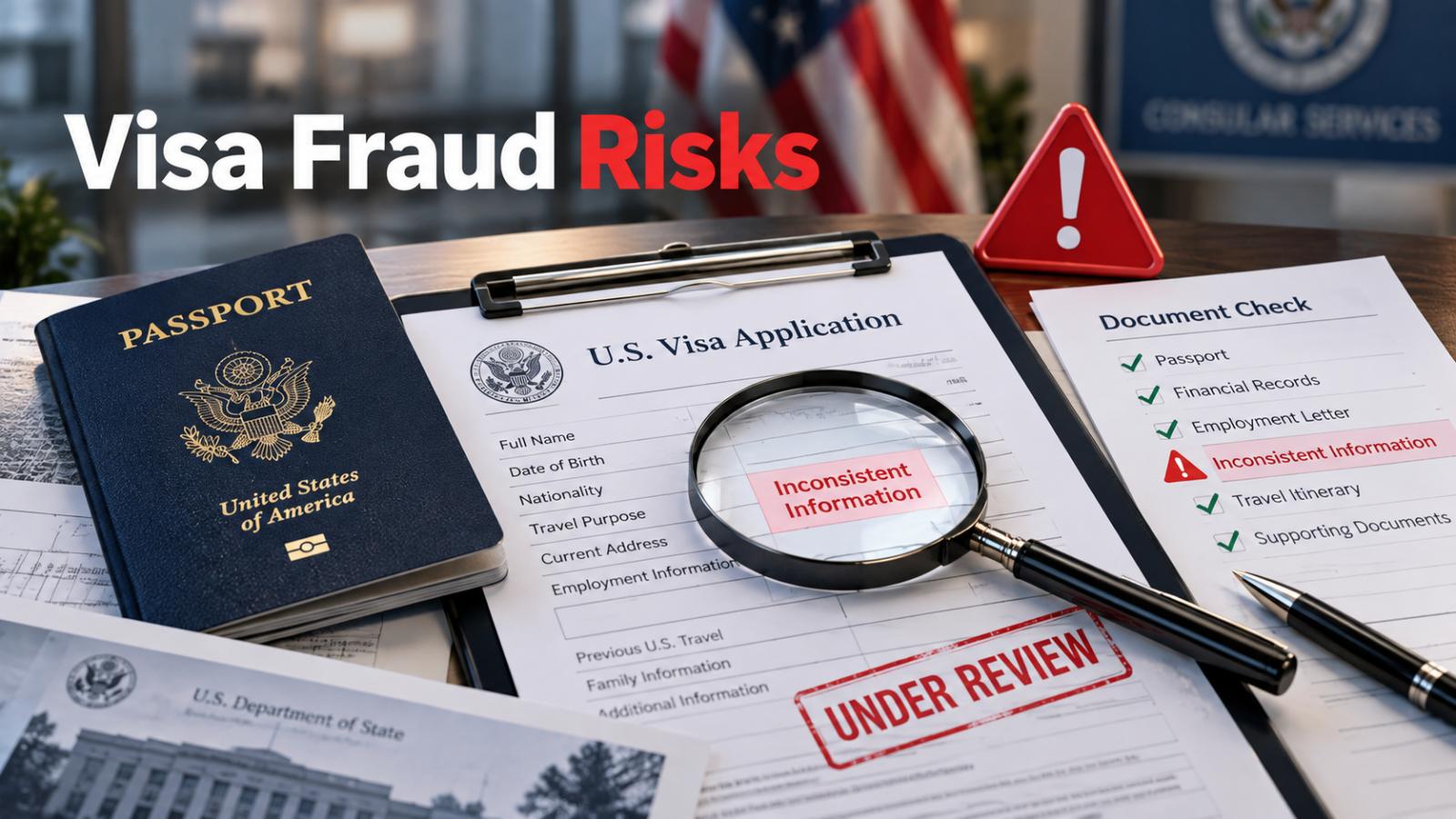
US visa misrepresentation can lead to permanent visa ineligibility when an applicant willfully provides a false material fact to obtain a visa or admission. This guide explains fraud, materiality, application mistakes, fake documents and possible waivers.
Providing false information during a U.S. visa or immigration process can have consequences far beyond a single application.
Under Immigration and Nationality Act Section 212(a)(6)(C)(i), a person who commits fraud or willfully misrepresents a material fact in seeking a visa, admission to the United States or another immigration benefit can be found inadmissible. The State Department describes this as a permanent ground of visa ineligibility unless an authorized waiver applies.
What is material misrepresentation?
Not every incorrect answer automatically meets the legal standard.
The State Department says a fact is considered material when the truth would have affected the person's eligibility for the visa or admission being sought.
USCIS decisions similarly explain that willful misrepresentation requires a false representation that was knowingly made and was material to obtaining an immigration benefit.
Examples can involve information about marital status, criminal history, employment, previous immigration history or other facts relevant to eligibility.
Can false information on the DS-160 cause problems?
Yes.
The DS-160 is part of the formal nonimmigrant visa application process, and applicants certify that the information supplied is true and accurate.
A knowingly false answer about an important eligibility issue can create a problem separate from the underlying fact itself.
For example, hiding a prior arrest can potentially create both a criminal-history question and a separate misrepresentation issue if the information was intentionally concealed and material to the visa decision.
What about fake documents?
Submitting altered, fabricated or fraudulent supporting documents can create serious immigration consequences when they are used to obtain a visa or other benefit.
Documents can include employment letters, bank records, education records, civil documents or other evidence supplied during an immigration process.
The key legal question is not simply whether a document contains an error, but whether fraud or a willful material misrepresentation was used in seeking the immigration benefit.
Is an honest mistake the same as fraud?
No.
The legal standard requires more than the mere existence of an inaccurate statement.
USCIS has explained that a willful misrepresentation generally involves knowingly and deliberately providing false material information. Fraud involves additional elements, including an intent to deceive.
A typographical mistake, misunderstanding or accidental error therefore should not automatically be described as immigration fraud.
However, applicants who discover an important error should not simply ignore it. The appropriate way to correct information can depend on where the application is in the process.
Can visa misrepresentation lead to a permanent bar?
Yes, in qualifying cases.
The State Department states that a finding under INA 212(a)(6)(C)(i) for fraud or material misrepresentation is a permanent ineligibility. That means the same ground can continue to apply in future visa applications unless the person qualifies for and receives an authorized waiver.
This is why a misrepresentation finding can have consequences extending well beyond one refused application.
Are waivers available?
Sometimes.
The availability of a waiver depends on the immigration benefit sought, the legal ground involved and the applicant's individual circumstances.
The State Department says applicants found ineligible are informed when a waiver may be available. A waiver is not automatic merely because an applicant wishes to apply again.
Because fraud and misrepresentation findings can be permanent and legally complex, applicants facing such a determination may need individualized immigration-law advice before submitting another application.
The safest approach is straightforward: provide complete and accurate information, do not submit fabricated evidence, and correct significant errors through the proper process rather than attempting to hide them.