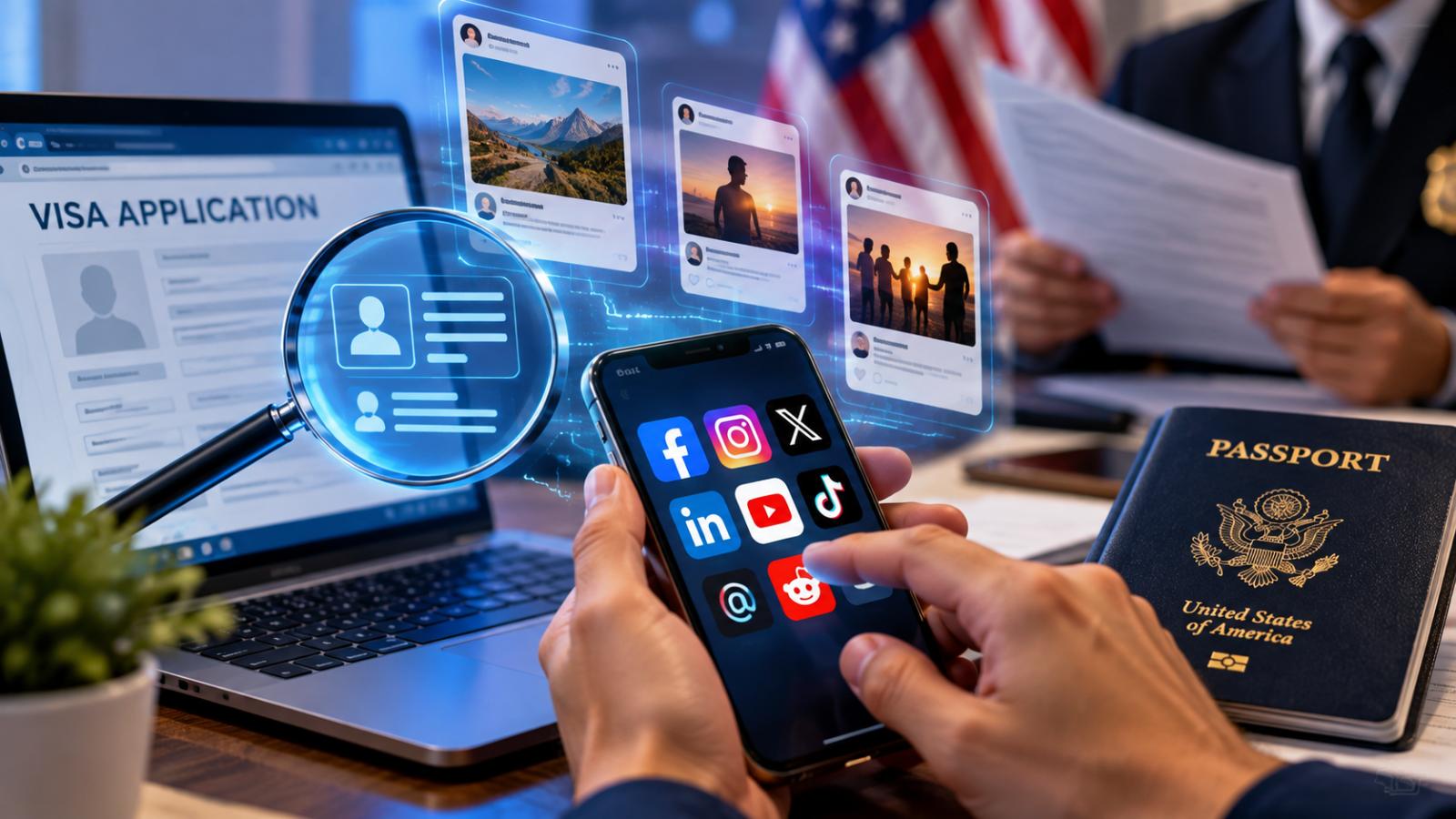
US visa social media screening has expanded to more nonimmigrant categories in 2026. Applicants may be asked to provide social media identifiers, while several visa groups are now instructed to keep profiles public or open for online-presence review.
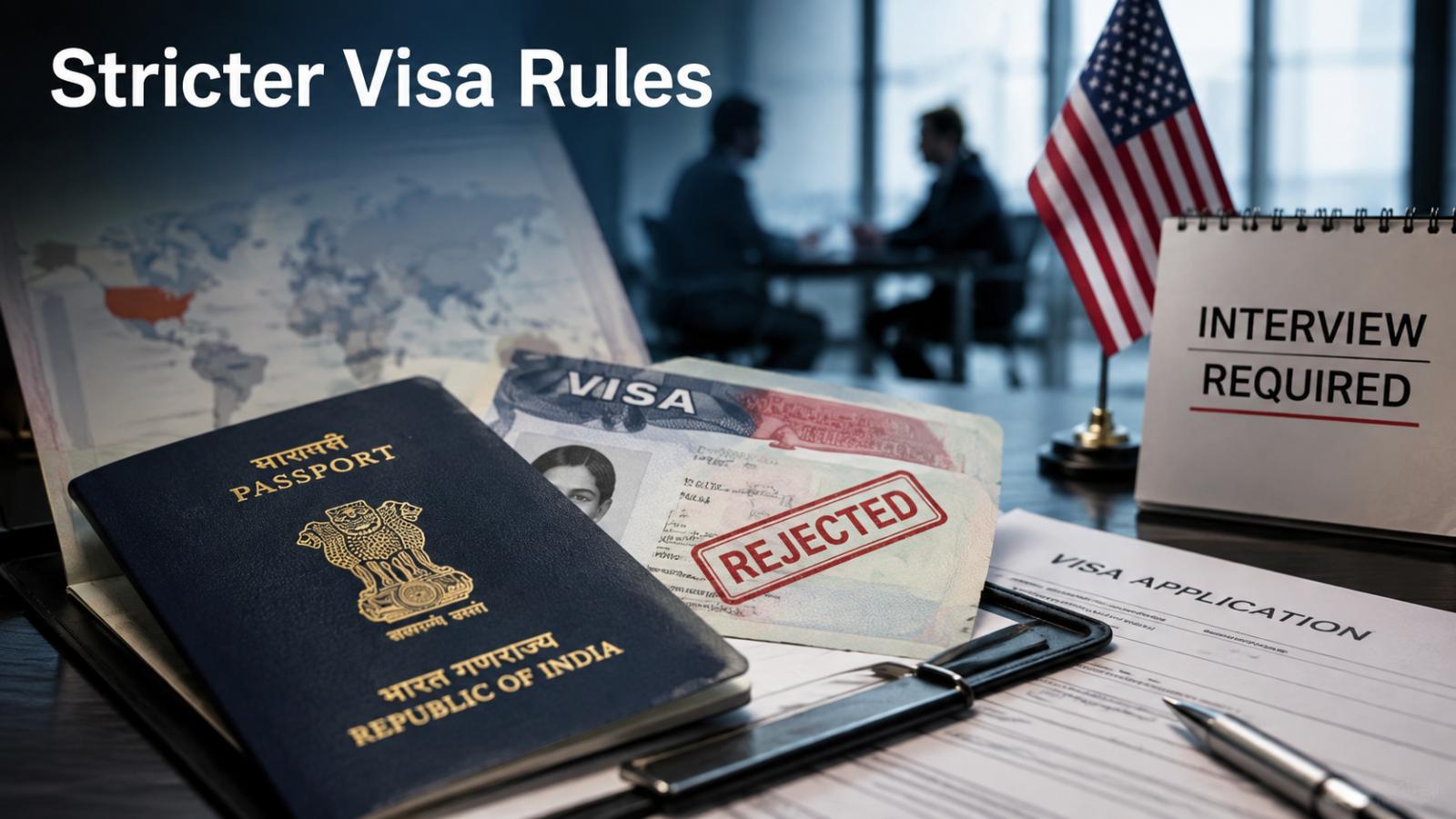
Social media has become an increasingly important part of U.S. visa screening, with the State Department expanding online-presence review to additional nonimmigrant visa categories in 2026.
Most U.S. visa applicants have already been required since 2019 to provide certain social media identifiers on visa application forms. The newer screening measures go further for selected visa categories by instructing applicants to make their social media profiles public or open for review.
Which visa applicants face online-presence review?
As of October 1, 2026, the State Department expanded online-presence review to I visas for foreign media representatives and TN and TD visas for eligible USMCA professionals and their dependents.
Those categories joined several others already subject to online-presence review, including:
- H-1B workers and H-4 dependents
- F and M students and dependents
- J exchange visitors and dependents
- selected diplomatic and domestic-worker classifications
- H-3 trainees
- K fiancé and family visa categories
- R-1 and R-2 religious-worker categories
- certain S, T and U classifications
The State Department says applicants in covered categories should set their social media profiles to “public” or “open” to facilitate vetting.
What information do visa applicants provide?
The State Department updated its visa application forms on May 31, 2019, to request social media identifiers from most immigrant and nonimmigrant visa applicants worldwide.
Applicants are generally asked for usernames, handles or other identifiers associated with listed social media platforms. They are not asked to provide social media passwords.
For nonimmigrant visas, information provided through the DS-160 is used by consular officers along with other application information and the visa interview to determine eligibility.
What does the State Department review?
The department says it uses all available information during visa screening and vetting to determine whether an applicant may be inadmissible or whether the person's intended activities are consistent with the visa being requested.
The government has not published a simple checklist of individual posts that automatically cause visa refusal.
That means applicants should avoid assuming that a single political opinion, photograph or ordinary online interaction automatically determines the outcome of a visa application. Eligibility is assessed under applicable U.S. immigration law and the facts of the individual case.
Should applicants delete old social media posts?
There is no State Department instruction telling applicants to delete old posts before applying for a visa.
More importantly, applicants should not attempt to conceal identities, accounts or other information that the visa application requires them to disclose.
Accuracy and consistency remain important because the information submitted on the DS-160 forms part of the visa adjudication process.
Why did screening expand in 2026?
The State Department expanded online-presence review in stages.
On December 15, 2025, it extended the requirement to H-1B applicants and H-4 dependents, in addition to students and exchange visitors already covered.
On March 30, 2026, additional classifications including H-3, K, R, S, T and U applicants were added.
The latest expansion took effect on October 1, 2026, adding I, TN and TD applicants.
The State Department says the broader review is part of its effort to assess visa eligibility, national-security concerns and whether applicants intend to comply with the conditions of their requested visa.
Applicants should therefore treat their online-presence information as part of the formal visa-screening process and ensure that information supplied to U.S. authorities is complete and accurate.